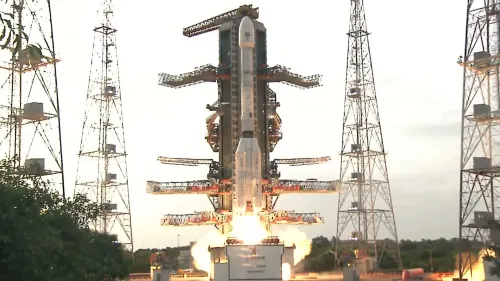
India eyes space-based drug development via microgravity research
Synopsis
India wants to be more than the pharmacy of the world — it wants to be the pharmacy of outer space too. With the ISS retiring by 2030 and the Bharatiya Antariksh Station targeted for 2035, scientists and companies like Biocon are racing to turn microgravity's protein-crystal advantages into proprietary drug IP, adding a high-value, science-intensive layer to India's historically cost-driven pharma dominance.
Key Takeaways
India is exploring space-based pharmaceutical research , combining its pharma manufacturing strength with its expanding space programme.
The Bengaluru Tech Summit , which concluded on 19 November 2026 , hosted discussions on microgravity's potential for drug development.
Biocon Executive Chairperson Kiran Mazumdar-Shaw said space technologies could generate new intellectual property, novel molecules and enhanced drug functionalities.
Microgravity allows some protein crystals to grow more uniformly than on Earth, potentially improving drug formulations and accelerating therapy development.
India's proposed Bharatiya Antariksh Station is expected to be fully operational by 2035 , and could serve as a hub for international biotech and pharma research.
Scientists note meaningful microgravity experiments can begin before a permanent station is ready, via short-duration missions and commercial platforms.
India is positioning itself to combine its formidable pharmaceutical manufacturing base with its expanding space programme, as scientists, biotechnology firms and startups explore how microgravity conditions could unlock the next generation of medicines. The convergence of two of India's greatest industrial strengths — its reputation as the pharmacy of the world and a rapidly maturing space infrastructure — is drawing serious attention from researchers and policymakers alike.
Key Discussions at Bengaluru Tech Summit
The possibility of manufacturing and testing drugs in space emerged as a focal point at the Bengaluru Tech Summit, which concluded on 19 November 2026. Researchers, policymakers and entrepreneurs gathered at the summit's space bio symposium to examine how India's future orbital infrastructure could support biotechnology research. The session reflected a growing consensus that space-based science is no longer purely the domain of astronomy and defence — it has clear commercial and medical applications.
The Science Behind Microgravity Pharmaceuticals
Scientists believe microgravity — the near-weightless condition experienced aboard orbiting spacecraft — offers distinct advantages for pharmaceutical research. On Earth, gravity interferes with the formation of protein crystals, causing inconsistencies that limit structural analysis. In microgravity, some protein crystals reportedly grow more uniformly, enabling researchers to study molecular structures in far greater detail. According to the report, such insights could improve drug formulations and potentially accelerate the development of new therapies. This scientific rationale has underpinned microgravity pharmaceutical experiments aboard the International Space Station (ISS) for decades, and India now seeks to participate in this research frontier at scale.
Biocon, Kiran Mazumdar-Shaw See Structural Opportunity
Leading biopharmaceutical company Biocon has signalled strong interest in the emerging field. The company's Executive Chairperson Kiran Mazumdar-Shaw said space technologies could help modify molecular structures, leading to the creation of new intellectual property, novel molecules and enhanced functionalities for drug development. Her remarks underscore that for India's pharma majors, space is not an abstract aspiration — it represents a potential source of proprietary science and competitive differentiation in global drug markets.
Bharatiya Antariksh Station and the Post-ISS Window
The timing of this push is deliberate. The International Space Station is expected to retire around 2030, prompting governments and private players worldwide to develop commercial orbital laboratories. India is working towards its proposed Bharatiya Antariksh Station, which is expected to be fully operational by 2035. Experts at the Bengaluru summit discussed how the planned station could eventually serve as an international hub for biotechnology and pharmaceutical research. Notably, some scientists argue that meaningful microgravity experiments can begin even before a permanent station becomes operational — through short-duration missions and commercial low-Earth orbit platforms — meaning India's pharma-space ambitions need not wait for 2035.
What This Means for India's Pharma and Space Sectors
India supplies a significant share of the world's generic medicines and vaccines, and microgravity research could add a high-value, IP-intensive layer to what has traditionally been a cost-driven manufacturing advantage. If translated into concrete research programmes, space-based drug development could attract global pharmaceutical partnerships, generate novel patent filings, and position India as a destination for orbital biotechnology — not just a source of affordable generics. The convergence is early-stage, but the institutional signals from both government and industry suggest momentum is building.
Point of View
And short-duration missions offer only limited experimental windows. The critical question is whether India will fund and structure a pipeline of incremental microgravity experiments now, or whether this remains a 2035 promise that competes with more immediate R&D priorities. Biocon's interest is a credible signal, but one company does not make an industry. A coordinated ISRO-DST-pharma framework — with dedicated mission time and IP-sharing agreements — would separate genuine strategy from summit enthusiasm.
NationPress
22 Nov 2026
Frequently Asked Questions
What is India's space-based drug development initiative?
India is exploring the use of microgravity conditions aboard spacecraft to conduct pharmaceutical research, with the goal of developing next-generation medicines. Scientists believe the near-weightless environment of space allows protein crystals to grow more uniformly, enabling deeper structural analysis and potentially improving drug formulations.
Why is microgravity useful for pharmaceutical research?
In microgravity, gravity does not interfere with the formation of protein crystals the way it does on Earth, allowing them to grow more uniformly. This gives researchers a clearer view of molecular structures, which can inform better drug design and accelerate the development of new therapies.
What role does the Bharatiya Antariksh Station play in this effort?
India's proposed Bharatiya Antariksh Station, expected to be fully operational by 2035, could serve as a dedicated hub for international biotechnology and pharmaceutical research in orbit. However, experts note that meaningful microgravity experiments can begin before the station is ready, through shorter missions and commercial orbital platforms.
What did Biocon's Kiran Mazumdar-Shaw say about space-based pharma?
Biocon Executive Chairperson Kiran Mazumdar-Shaw said space technologies could help modify molecular structures, leading to new intellectual property, novel molecules and enhanced functionalities for drug development. Her remarks came at the Bengaluru Tech Summit, which concluded on 19 November 2026.
How does this fit into India's broader pharma identity?
India is widely known as the pharmacy of the world for supplying affordable generic medicines and vaccines globally. Space-based drug development would add a high-value, IP-intensive dimension to this identity, potentially shifting India's pharmaceutical profile from cost-driven manufacturing toward proprietary science and novel therapies.