India adds record 15.3 GW solar capacity in Q1 2026, up 143% year-on-year
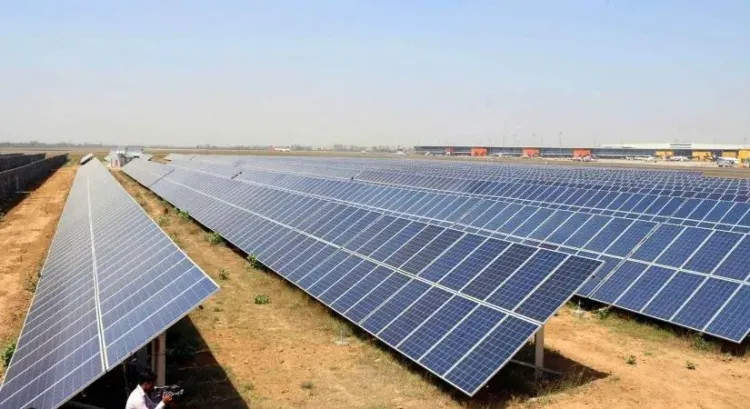
Synopsis
India's solar sector just posted its biggest-ever quarter — 15.3 GW in three months, nearly doubling year-on-year. But the real story is what comes next: with ALMM List-II looming and grid evacuation infrastructure lagging badly behind capacity growth, the record may be a high-water mark before a policy-driven slowdown tests the sector's resilience.
Key Takeaways
India added a record 15.3 GW of solar capacity in Q1 2026 (January–March) , the highest quarterly addition ever.
The figure represents a 143 per cent year-on-year jump from 6.3 GW in Q1 2025, per Mercom India Research .
Cumulative installed solar capacity reached 152 GW as of March 2026 , now 28 per cent of India's total power capacity.
Rajasthan leads with 32 per cent of cumulative large-scale solar; Gujarat and Rajasthan drove nearly four-fifths of new large-scale Q1 additions.
The ALMM List-II deadline of June 2026 and PM-KUSUM scheme execution were key drivers of the record quarter.
Grid transmission and evacuation infrastructure are reportedly struggling to keep pace with capacity growth, flagging a key risk ahead.
India installed a record 15.3 GW of new solar capacity in the first quarter of 2026 (January–March), the highest quarterly addition in the country's history, according to a report by Mercom India Research. The surge represents a 143 per cent year-on-year jump from the 6.3 GW added in the same period of 2025, and a significant step-up from the 10.3 GW commissioned in the preceding October–December 2025 quarter.
Scale of Installations
Large-scale solar projects dominated the quarter, contributing 12.6 GW — nearly 82 per cent of total additions. Within that segment, open access projects accounted for 21 per cent of large-scale capacity additions. Solar's share of India's overall power generation capacity added during the quarter stood at 77 per cent, with the country commissioning 19.9 GW of total generation capacity in the three-month period.
India's Cumulative Solar Position
As of March 2026, India's cumulative installed solar capacity reached 152 GW. Large-scale projects account for 85 per cent of this base, while rooftop solar contributes the remaining 15 per cent. Solar energy now represents 28 per cent of India's total installed power capacity and 55 per cent of its installed renewable energy capacity — a milestone that underscores the technology's growing dominance in the country's energy mix.
State-Level Leaders
Rajasthan retained its position as the largest large-scale solar market, holding 32 per cent of cumulative installed capacity, followed by Gujarat at 21 per cent and Karnataka at 11 per cent. During the quarter, Gujarat and Rajasthan together accounted for nearly four-fifths of new large-scale installations, reflecting the continued concentration of utility-scale solar in the country's western belt.
What Drove the Record Quarter
According to the Mercom report, the record commissioning activity was driven by a combination of approaching policy deadlines and improved transmission readiness in key solar markets. A primary catalyst was the impending rollout of the Approved List of Models and Manufacturers (ALMM) List-II from June 2026, which prompted developers to fast-track project commissioning under the existing procurement framework amid concerns over limited domestic cell availability and rising module procurement costs.
Installations were also supported by stronger execution under the Pradhan Mantri Kisan Urja Suraksha evam Utthaan Mahabhiyan (PM-KUSUM) scheme — the government's solar programme targeting farmers and rural communities — and accelerated commissioning of open access projects ahead of the next phase of Inter-State Transmission System (ISTS) waiver reductions. The average cost of large-scale solar projects using TOPCon DCR modules declined marginally on a quarterly basis, though costs remained higher compared to a year earlier.
Grid Infrastructure: The Critical Bottleneck
'While project execution and commissioning activity remain strong, transmission readiness and evacuation infrastructure are struggling to keep pace with the rapid growth in renewable capacity. As renewable penetration increases, curtailment, grid flexibility, and storage integration are becoming critical to sustaining future growth,' said Raj Prabhu, CEO of Mercom Capital Group. This comes amid a broader national push to reach 500 GW of non-fossil fuel capacity by 2030 — a target that will require not just record installations but equally record-pace grid upgrades.
Point of View
But it is partly a policy artefact — developers rushed to commission projects before ALMM List-II tightens procurement rules in June 2026. That front-loading effect means Q2 2026 could see a sharp deceleration, making the record quarter a less reliable signal of sustained momentum than it appears. More fundamentally, Mercom's own CEO is flagging that grid evacuation infrastructure cannot keep up — which means India is adding capacity it cannot always use. Curtailment losses could quietly erode the economics of projects already commissioned, and will almost certainly slow investment decisions for the next pipeline. The 500 GW target by 2030 demands grid investment at the same pace as panel installation — and that race is currently being lost.
NationPress
25 Sept 2026
Frequently Asked Questions
How much solar capacity did India add in Q1 2026?
India added a record 15.3 GW of solar capacity in Q1 2026 (January–March), the highest quarterly addition in the country's history, according to Mercom India Research. This was a 143 per cent jump from the 6.3 GW added in the same quarter of 2025.
What is India's total installed solar capacity as of 2026?
As of March 2026, India's cumulative installed solar capacity stood at 152 GW, with large-scale projects accounting for 85 per cent and rooftop solar contributing 15 per cent. Solar now represents 28 per cent of India's total installed power capacity.
Which states led India's solar installations in Q1 2026?
Rajasthan and Gujarat together accounted for nearly four-fifths of new large-scale solar installations in Q1 2026. Rajasthan holds the largest cumulative share at 32 per cent, followed by Gujarat at 21 per cent and Karnataka at 11 per cent.
Why did solar installations surge so sharply in Q1 2026?
The record quarter was primarily driven by developers rushing to commission projects ahead of the ALMM List-II policy deadline in June 2026, which tightens domestic procurement rules. Stronger execution under the PM-KUSUM scheme and accelerated open access commissioning ahead of ISTS waiver reductions also contributed.
What are the key risks facing India's solar sector going forward?
The main risk flagged by Mercom Capital Group CEO Raj Prabhu is that transmission readiness and grid evacuation infrastructure are not keeping pace with rapid capacity additions. Rising curtailment, the need for grid flexibility, and storage integration are identified as critical challenges to sustaining future growth.