India's infrastructure spend nears ₹12.2 lakh crore in FY26, highways and bullet train lead push
Synopsis
India's public infrastructure spending has nearly doubled in five years, with a record ₹12.2 lakh crore earmarked for FY26. From the 594-km Ganga Expressway to a bullet train corridor that is 80 per cent built, the scale of capital deployment is unprecedented — and the semiconductor bet signals that this is no longer just a roads-and-rails story.
Key Takeaways
India's public works expenditure reached ₹11 lakh crore in FY25 ; a record ₹12.2 lakh crore is budgeted for FY26 .
Infrastructure and consumer demand drove 7.7 per cent GDP growth in FY25 .
The ₹36,000 crore Ganga Expressway in Uttar Pradesh spans 594 kilometres and has been under construction since 2021 .
The Mumbai–Ahmedabad bullet train corridor is reportedly more than 80 per cent complete; partial operations are targeted by August 2027 .
Japan is financing approximately 80 per cent of the bullet train project cost via concessional yen loans.
The government is offering incentives for semiconductor manufacturing under the Make in India initiative to attract global chip investment.
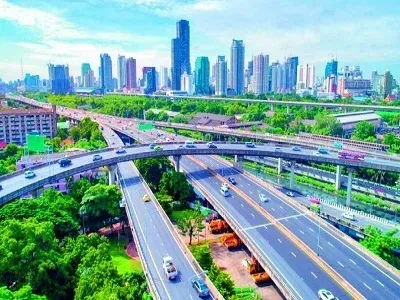
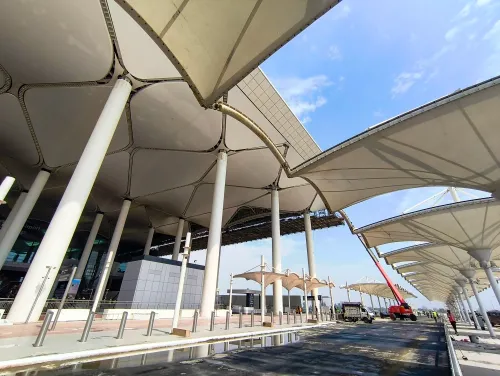
India is sharply scaling up public investment in infrastructure, with government spending on highways, railways, and semiconductor manufacturing nearly doubling over the past five years, according to a Nikkei Asia report. Public works expenditure reached ₹11 lakh crore in FY25, and the government has earmarked a record ₹12.2 lakh crore for FY26, as New Delhi bets on capital spending to sustain economic momentum and crowd in private investment.
Economic backdrop
India's economy expanded at 7.7 per cent in FY25, driven by a combination of infrastructure outlays and resilient consumer demand. The infrastructure push is widely seen as a deliberate strategy to keep growth above the 7 per cent threshold even as global headwinds persist. This is the fifth consecutive year of double-digit growth in capital expenditure by the Centre.
Road network expansion
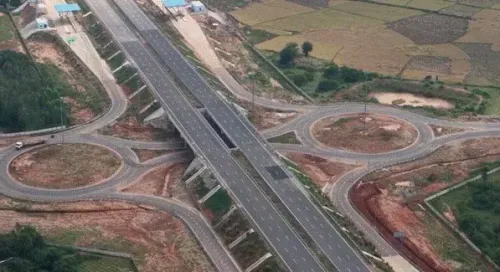
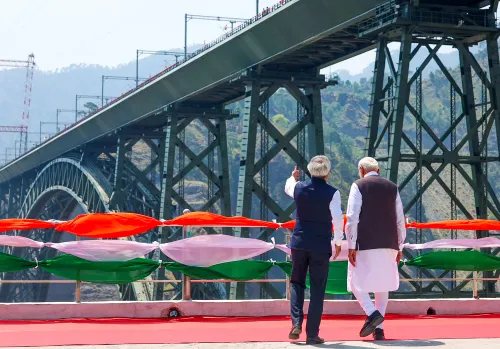
Road development has emerged as a flagship priority, with national highway construction being accelerated to meet the demands of a rapidly urbanising economy. A centrepiece of this effort is the ₹36,000 crore Ganga Expressway in Uttar Pradesh — a 594-kilometre corridor running along the Ganges basin, construction of which began in 2021. Prime Minister Narendra Modi, while inaugurating a section of the expressway in April, described it as 'a new lifeline for the state's development,' drawing parallels with the historical significance of the Ganges River. The project is expected to improve regional connectivity and stimulate economic activity across the corridor.
Bullet train and rail transformation
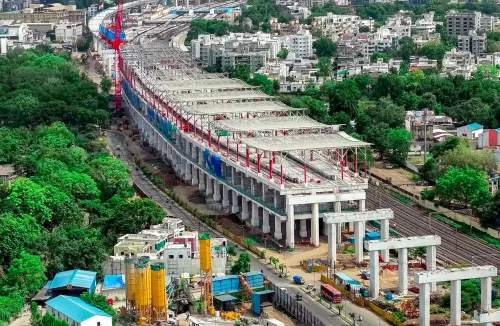
Rail infrastructure is undergoing an equally significant overhaul. The Mumbai–Ahmedabad high-speed rail corridor — India's first bullet train project — has crossed a critical milestone, with more than 80 per cent of construction reportedly completed on the approximately 500-kilometre route. Japan is funding around 80 per cent of the project cost through concessional yen loans, making it one of the largest bilateral infrastructure partnerships in South Asia. India plans to commence partial operations on the corridor by August 2027, according to the report. Next-generation E10 series trains, currently under development in Japan, are expected to be introduced on the route in the early 2030s.
Semiconductor and manufacturing push
Beyond physical connectivity, the government is deploying infrastructure investment to build out India's industrial base. Under the Make in India initiative, New Delhi has designated chip manufacturing a strategic sector and is offering financial incentives to attract global semiconductor players. The move reflects a broader ambition to reduce import dependence and position India as an alternative supply-chain node to China, particularly as Western governments diversify semiconductor sourcing.
What comes next
With the FY26 capital expenditure budget set at a record high, the pace of project execution will be closely watched. Industry analysts note that the critical variable is not the outlay itself but the speed of land acquisition, tender finalisation, and contractor capacity — bottlenecks that have historically slowed large Indian infrastructure programmes. How quickly the bullet train corridor reaches full operations and whether semiconductor incentives translate into actual fab investments will be key indicators of whether this spending cycle delivers structural returns.
Point of View
But the pattern of front-loading announcements and lagging execution is a structural risk that the headline numbers obscure. The bullet train is 80 per cent built after years of delays — completion will be the real test. On semiconductors, incentives alone have not historically been sufficient; Taiwan and South Korea built chip ecosystems over decades with deep talent pipelines that India is only beginning to develop. The ₹12.2 lakh crore FY26 outlay is the right direction, but the quality of spend — measured in commissioned assets, not sanctioned budgets — is what will ultimately determine whether this infrastructure cycle lifts India's potential growth rate or merely inflates contractor balance sheets.
NationPress
19 Sept 2026
Frequently Asked Questions
How much is India spending on infrastructure in FY26?
The Indian government has budgeted a record ₹12.2 lakh crore for public works in FY26 , up from ₹11 lakh crore spent in FY25. The outlay covers highways, railways, and emerging sectors such as semiconductor manufacturing.
What is the Ganga Expressway and when will it be completed?
The Ganga Expressway is a 594-kilometre road corridor in Uttar Pradesh running along the Ganges basin, with a project cost of approximately ₹36,000 crore . Construction began in 2021 and the project is expected to boost regional connectivity and economic activity once complete.
When will India's bullet train start running?
India plans to begin partial operations on the Mumbai–Ahmedabad high-speed rail corridor by August 2027 , according to reports. The approximately 500-kilometre route is reportedly more than 80 per cent constructed, with Japan funding around 80 per cent of the cost through concessional yen loans.
What is India's role in semiconductor manufacturing?
Under the Make in India initiative, the government has identified chip manufacturing as a strategic sector and is offering financial incentives to attract global semiconductor investment. The goal is to reduce import dependence and establish India as an alternative supply-chain hub.
How fast is India's economy growing?
India's economy grew at 7.7 per cent in FY25 , supported by sustained infrastructure spending and resilient consumer demand. The government's record capital expenditure is aimed at maintaining growth above the 7 per cent mark amid global uncertainty.