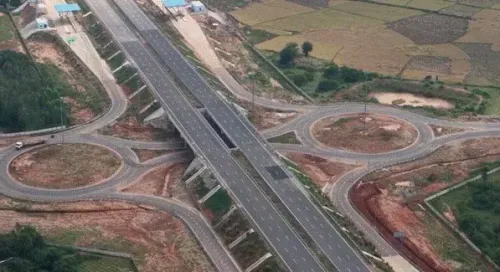
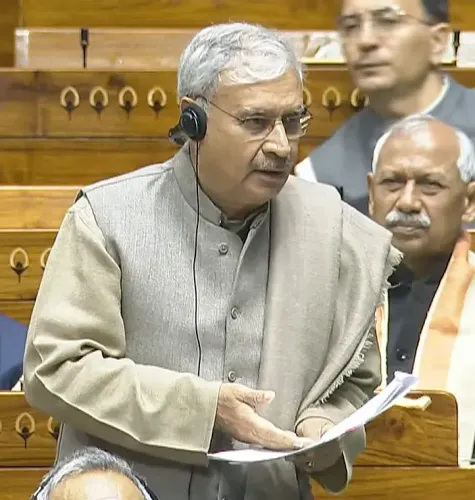
Centre spends ₹21.97 lakh crore on 1,847 infra projects, 54% of total outlay deployed
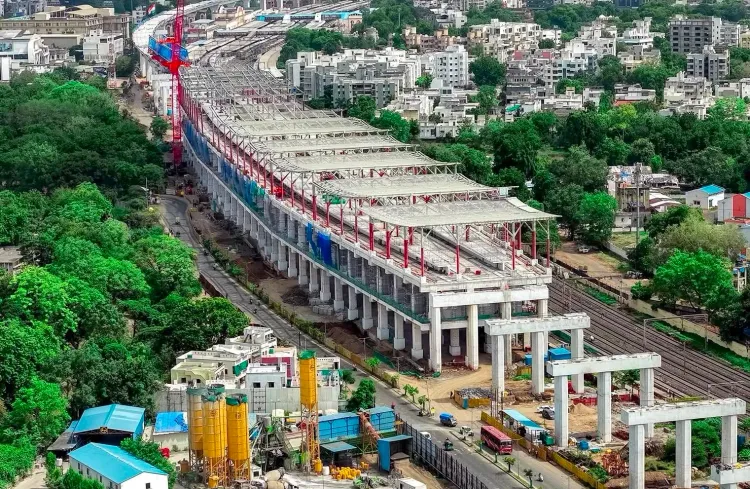
Synopsis
India's Centre has crossed the halfway mark on its ₹40.54 lakh crore infrastructure pipeline, deploying ₹21.97 lakh crore across 1,847 projects as of June 2026. With 709 projects over 80% physically complete and a 165-indicator digital dashboard now tracking six sectors, the government is making a visible push to pair spending scale with execution accountability.
Key Takeaways
The Centre has spent ₹21.97 lakh crore on 1,847 major infrastructure projects as of June 2026 — over 54% of the total ₹40.54 lakh crore outlay.
Around 709 projects have crossed 80% physical completion ; another 337 have exceeded 80% financial completion .
The transport and logistics sector leads with 1,341 projects worth ₹22.32 lakh crore .
PAIMANA , developed by MoSPI , monitors all Central Sector projects costing ₹150 crore or more .
The Performance Monitoring Dashboard , launched on 16 April 2026 , now covers 165 indicators across 6 infrastructure sub-sectors after adding 54 new indicators .
The Centre has deployed ₹21.97 lakh crore — over 54 per cent of the total sanctioned outlay of ₹40.54 lakh crore — across 1,847 major infrastructure projects as of June 2026, according to an official factsheet released on Monday, 10 August 2026. The data signals sustained execution momentum across the government's flagship infrastructure drive.
Project Completion Status
A significant share of projects have moved into advanced stages of delivery. Around 709 projects have crossed the 80 per cent physical progress mark, while another 337 projects have exceeded 80 per cent financial completion. Together, these figures suggest that a substantial portion of the pipeline is approaching the finish line rather than stalling at the planning stage — a pattern that has historically plagued large public infrastructure in India.
Transport and Logistics Lead the Charge
The transport and logistics sector accounts for the largest share, comprising 1,341 projects valued at ₹22.32 lakh crore. This reflects the government's sustained emphasis on connectivity infrastructure — roads, railways, ports, and waterways — as the primary lever for unlocking regional economic growth and reducing logistics costs, which remain among the highest as a share of GDP in the developing world.
PAIMANA: The Digital Monitoring Backbone
Project oversight is being conducted through PAIMANA (Project Assessment, Infrastructure Monitoring and Analytics for Nation-Building), a digital platform developed by the Ministry of Statistics and Programme Implementation (MoSPI). The platform tracks all Central Sector infrastructure projects costing ₹150 crore or more.
A dedicated Performance Monitoring Dashboard, launched on 16 April 2026, has expanded PAIMANA's role beyond project-level tracking to sector-wide performance benchmarking. The dashboard now covers 165 indicators across six infrastructure sub-sectors — Power, Civil Aviation, Telecommunications, Railways, Roads, and Ports, Shipping and Waterways — following the addition of 54 new indicators in the latest update.
What the Dashboard Offers
The unified interface provides interactive visualisation and time-series analysis, enabling policymakers, researchers, and stakeholders to track year-on-year, month-on-month, and cumulative growth, alongside targets and capacity utilisation across chosen sectors. A centralised cross-sector view deepens inter-sectoral analysis — a capability that was previously fragmented across individual ministry reports.
Why This Matters
Infrastructure spending at this scale has direct implications for economic growth and employment generation, according to the government factsheet. Notably, the pace of financial deployment — crossing the halfway mark of a ₹40.54 lakh crore pipeline — comes at a time when private capital expenditure has remained cautious, making public infrastructure the primary growth engine. The expansion of PAIMANA's monitoring framework to 165 indicators also signals a shift toward data-driven accountability in project execution, which analysts and industry bodies have long called for.
Point of View
But the more consequential number is what happens to the remaining ₹18.57 lakh crore. Large infrastructure programmes in India have historically front-loaded easy projects and stalled on the complex, land-heavy ones. The 709 projects above 80% physical completion look strong on paper, but the real test is whether the laggards — those below 50% progress — are being actively de-risked or quietly rolled over. PAIMANA's expansion to 165 indicators is a welcome step toward transparency, but indicator proliferation without independent verification risks becoming a data-rich, accountability-poor exercise.
NationPress
24 Sept 2026
Frequently Asked Questions
How much has the Centre spent on major infrastructure projects so far?
As of June 2026, the Centre has spent ₹21.97 lakh crore on 1,847 major infrastructure projects, representing over 54% of the total sanctioned outlay of ₹40.54 lakh crore, according to an official government factsheet released on 10 August 2026.
How many infrastructure projects have crossed 80% completion?
Around 709 projects have exceeded 80% physical progress, while another 337 have crossed 80% of financial completion, indicating that a large share of the pipeline is in advanced stages of delivery.
Which sector has the most infrastructure projects under the Centre?
The transport and logistics sector leads with 1,341 projects valued at ₹22.32 lakh crore, reflecting the government's priority on connectivity infrastructure including roads, railways, ports, and waterways.
What is PAIMANA and how does it help monitor infrastructure projects?
PAIMANA (Project Assessment, Infrastructure Monitoring and Analytics for Nation-Building) is a digital platform developed by the Ministry of Statistics and Programme Implementation (MoSPI) to monitor Central Sector infrastructure projects costing ₹150 crore or more. It provides real-time tracking, interactive visualisation, and time-series analysis for policymakers and stakeholders.
What is the Performance Monitoring Dashboard and what does it cover?
The Performance Monitoring Dashboard, launched on 16 April 2026 as part of PAIMANA, tracks infrastructure performance across six sub-sectors: Power, Civil Aviation, Telecommunications, Railways, Roads, and Ports, Shipping and Waterways. It now covers 165 indicators after the addition of 54 new ones, enabling cross-sector analysis from a single digital interface.