India's infrastructure capex jumps 6x to ₹12.2 lakh crore since 2014
Synopsis
India's public infrastructure capex has grown six-fold in a decade — from ₹2 lakh crore to ₹12.2 lakh crore — with railways nearly fully electrified, national highways up 61%, and UDAN connecting 1.64 crore passengers. The scale is unprecedented, but the real question is whether logistics costs and manufacturing competitiveness have moved in step.
Key Takeaways
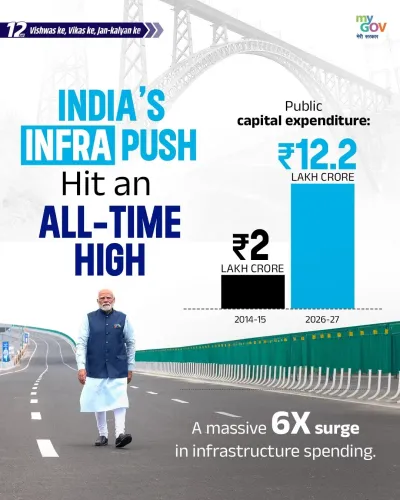
India's public infrastructure capex rose from ₹2 lakh crore in FY2014–15 to ₹12.2 lakh crore in FY2026–27 — a six-fold increase.
Indian Railways budgetary support grew nearly nine-fold ; network electrification reached 99.6% by March 2026 .
National highway length grew 61% to 1,46,566 km ; India now has the second-largest road network in the world at 63.73 lakh km .
PMGSY connected 99.6% of eligible habitations; completed bridges rose from 484 to 10,293 between 2014 and 2026.
UDAN has served over 1.64 crore passengers across 665 routes ; Modified UDAN (₹28,840 crore) targets 120 new destinations .
25 greenfield airports were approved after 2014, including Navi Mumbai and Noida (Jewar) .
India's public capital expenditure on infrastructure surged from approximately ₹2 lakh crore in FY2014–15 to ₹12.2 lakh crore in FY2026–27, according to an official factsheet released on Tuesday, 9 June 2026. The six-fold increase reflects a decade-long strategic shift from fragmented project execution to integrated infrastructure planning, spanning railways, highways, airports, and rural roads across India.
Railways: A Near Nine-Fold Budget Jump
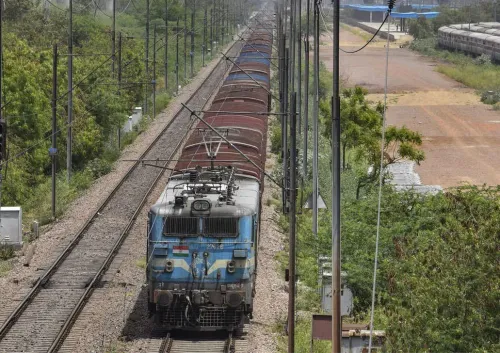
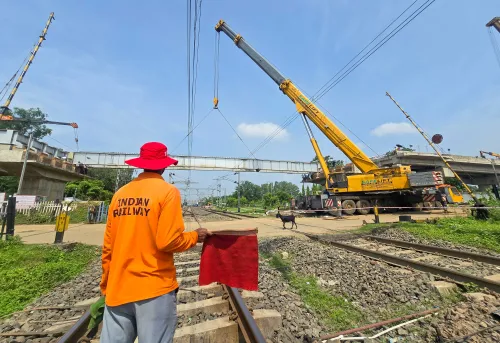
Budgetary support for Indian Railways rose from roughly ₹32,000 crore in FY2014–15 to ₹2.78 lakh crore in FY2026–27 — nearly a nine-fold increase. Network electrification advanced from about 20% before 2014 to 99.6% by March 2026, covering 69,873 route kilometres, reducing fossil fuel dependence and lowering operating costs.
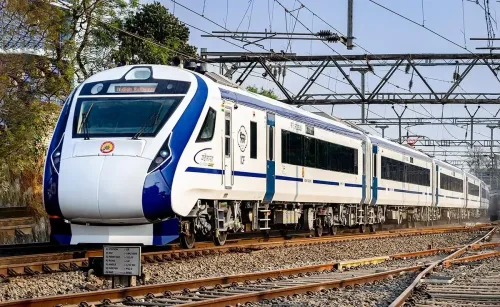
The indigenously developed Vande Bharat trains have added speed, comfort, and onboard technology to passenger services. As of April 2026, 162 Vande Bharat services operate across the country, with higher-capacity 16-coach and 20-coach configurations being rolled out to boost passenger throughput.
Roads: Second-Largest Network in the World
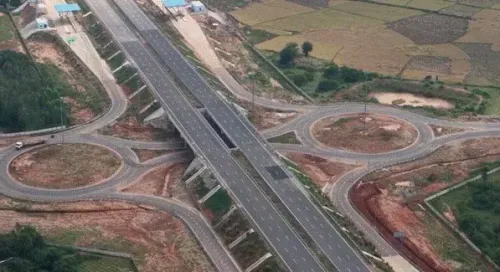
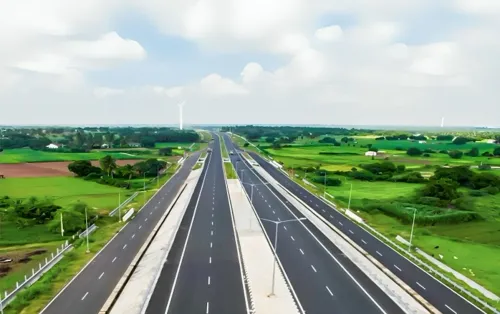
India's total road network now stands at 63.73 lakh km, making it the second-largest in the world. National highway length grew by 61%, from 91,287 km in FY2013–14 to 1,46,566 km by March 2026. Four-lane and above national highways expanded from 18,371 km in 2014 to 45,516 km, while 3,644 km of access-controlled expressways have been operationalised.
Bharatmala Pariyojana, approved in 2017, targeted freight corridors, border roads, and coastal expressways. Under the programme, 22,590 km of roads were completed by 31 March 2026, accelerating cargo movement across difficult terrains and strategic regions.
Rural connectivity saw a parallel transformation under Pradhan Mantri Gram Sadak Yojana (PMGSY). Budgetary allocation for the scheme rose from ₹386 crore in FY2014–15 to ₹19,000 crore in FY2026–27. As of the latest data, 99.6% of eligible habitations have been connected. Completed road length under the programme grew from 3.86 lakh km during 2000–2014 to 4.11 lakh km during 2014–2026, while completed bridges jumped from 484 to 10,293 in the same period.
Aviation: UDAN Reaches 1.64 Crore Passengers
The UDAN (Ude Desh Ka Aam Nagrik) scheme, launched in 2016, has expanded affordable air connectivity to underserved regions. By 2026, 665 routes link 95 airports, heliports, and water aerodromes, benefiting over 1.64 crore passengers. A Modified UDAN scheme, launched in 2026 with an outlay of ₹28,840 crore, targets 120 new destinations.
Greenfield airport development accelerated alongside UDAN, with 25 greenfield airports approved after 2014, including Mopa, Kannur, Hollongi, Navi Mumbai, and Noida (Jewar).
Broader Programmes Linking Infrastructure to Welfare
Major national programmes — including Sagarmala, PM GatiShakti, PMAY, Jal Jeevan Mission, and PM Ujjwala Yojana — have linked physical infrastructure expansion to household welfare and regional development goals, according to the official factsheet. This integrated approach marks a structural departure from earlier siloed project planning. Analysts note that the scale of capital deployment, if sustained, positions India to address longstanding logistics cost disadvantages that have historically weighed on manufacturing competitiveness.
Point of View
Not an end: India's logistics costs as a share of GDP remain among the highest in major economies, and manufacturing's share of GDP has barely shifted despite record road and rail spending. The factsheet documents inputs well but is silent on outcomes — freight cost per tonne-km, port turnaround times, or rural income changes post-PMGSY. Until output metrics are as prominently tracked as capital allocations, the infrastructure story risks being measured by what was built rather than what it delivered.
NationPress
25 Sept 2026
Frequently Asked Questions
How much has India's infrastructure capital expenditure grown since 2014?
India's public capital expenditure on infrastructure grew from approximately ₹2 lakh crore in FY2014–15 to ₹12.2 lakh crore in FY2026–27, a six-fold increase over roughly a decade, according to an official government factsheet.
What is the current status of Indian Railways electrification?
As of March 2026, 99.6% of the Indian Railways network has been electrified, covering 69,873 route kilometres. This is up from around 20% before 2014, significantly reducing fossil fuel dependence and operating costs.
How many Vande Bharat train services are currently running?
As of April 2026, 162 Vande Bharat train services are operational across India. Higher-capacity 16-coach and 20-coach configurations are also being introduced to increase passenger capacity.
What has the UDAN scheme achieved by 2026?
The UDAN scheme had connected 665 routes across 95 airports, heliports, and water aerodromes by 2026, benefiting over 1.64 crore passengers. A Modified UDAN scheme launched in 2026 with a ₹28,840 crore outlay aims to add 120 new destinations.
How has rural road connectivity changed under PMGSY since 2014?
Under PMGSY, 99.6% of eligible habitations have been connected with all-weather roads as of 2026. Completed road length rose from 3.86 lakh km during 2000–2014 to 4.11 lakh km during 2014–2026, and completed bridges increased from 484 to 10,293 in the same period.