India's space sector pivots to state-startup model, GalaxEye and Pixxel lead charge

Synopsis
India's space sector is no longer an ISRO monopoly. With GalaxEye launching the world's first OptoSAR satellite and Pixxel landing a US National Reconnaissance Office contract, a new breed of deep-tech startups is rewriting the rules — backed by a government that has finally opened the door to private innovation.
Key Takeaways
India's space sector is evolving into a state-startup developmental partnership model, according to a report by The Diplomat .
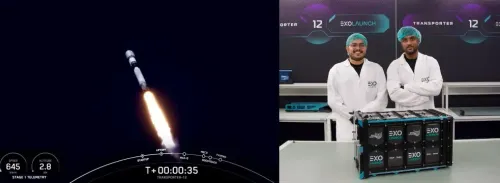
GalaxEye launched the world's first OptoSAR satellite in May 2025 , combining optical and SAR imaging for earth observation in tropical cloud cover.
Pixxel secured a contract linked to the US National Reconnaissance Office in May 2025 , one of the few Indian startups to achieve such high-level international collaboration.
The government established IN-SPACe around 2020 to open the sector to private participation after decades of state dominance under ISRO .
India currently holds roughly 2 per cent of the global space economy, valued at approximately $8.4 billion .
India's space sector is undergoing a structural transformation, with a new generation of private deep-tech startups forging partnerships with government institutions to drive innovation that was once the exclusive domain of the state. According to a report by The Diplomat, the country's traditionally government-led space programme is evolving into what analysts are calling a 'state-startup developmental partnership' model.
Startups Filling the Technological Gaps
The report highlights firms such as GalaxEye and Bengaluru-based Pixxel as emblematic of this shift. 'Indian startups are increasingly identifying technological gaps that global players have often overlooked and are attempting to provide localised and globally competitive solutions,' the report noted, citing GalaxEye as a prime example.
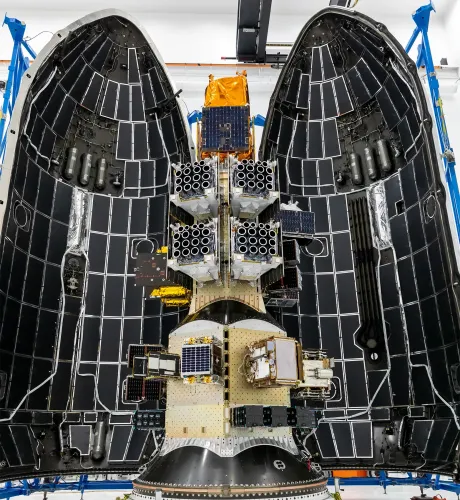
In May 2025, GalaxEye announced the launch of the world's first OptoSAR satellite — a system that combines optical and synthetic aperture radar (SAR) imaging to deliver high-quality earth observation data even under cloudy tropical conditions. Many existing global satellite systems struggle with the persistent cloud cover common across South Asia, a challenge GalaxEye specifically engineered its technology to overcome.
Pixxel's International Breakthrough
Pixxel has developed hyperspectral imaging satellites capable of producing highly detailed earth observation data for sectors including agriculture, climate monitoring, mining, defence, and environmental analysis. In a significant milestone, the company secured a contract linked to the US National Reconnaissance Office in May 2025, becoming, according to the report, 'one of the few Indian startups to establish such high-level international collaboration' in the space sector.
This development underscores a broader trend: Indian deep-tech startups are no longer limiting their ambitions to domestic markets but are competing for — and winning — partnerships with some of the world's most demanding clients.
From State Monopoly to Open Ecosystem
For decades, India's space programme was almost entirely state-driven, with the Indian Space Research Organisation (ISRO) managing everything from research and launch missions to satellite development and strategic innovation. Private companies were largely confined to manufacturing and supply-chain roles, remaining, as the report put it, 'largely disconnected from core innovation and mission development.'
The inflection point came around 2020, when the government began liberalising the sector and established the Indian National Space Promotion and Authorisation Centre (IN-SPACe) to facilitate private participation. Financial incentives and public-private partnership mechanisms were subsequently rolled out to accelerate satellite development and commercialisation.
India's Share of the Global Space Economy
Despite this momentum, India currently accounts for roughly 2 per cent of the global space economy, which is valued at approximately $8.4 billion — a figure that underscores the scale of the opportunity ahead. The global deep-tech rivalry between the United States and China has added strategic urgency, pushing India to strengthen its indigenous capabilities at pace.
'Startups are becoming increasingly ambitious and willing to take on complex technological challenges traditionally associated with major state institutions or global aerospace giants,' the report observed. As the policy environment matures and early commercial successes accumulate, India's space sector appears poised to claim a meaningfully larger share of the global market in the years ahead.
Point of View
But the real test is whether regulatory clearances, spectrum access, and launch slot allocation keep pace with startup ambition. GalaxEye and Pixxel are outliers today; the question is whether the ecosystem can produce them at scale. India's 2 per cent share of a $8.4 billion global market is both an indictment of decades of state monopoly and a signpost for where patient capital and smart deregulation could take the sector over the next decade.
NationPress
21 Oct 2026
Frequently Asked Questions
What is the state-startup developmental partnership model in India's space sector?
It refers to a new framework in which private deep-tech startups collaborate with government institutions such as ISRO and IN-SPACe to drive space innovation, rather than leaving core mission development entirely to the state. The model has gained traction since the government liberalised the sector around 2020.
What did GalaxEye launch in May 2025?
GalaxEye launched the world's first OptoSAR satellite in May 2025, combining optical and synthetic aperture radar (SAR) imaging to deliver high-quality earth observation data in cloudy tropical conditions — a challenge that has constrained many existing global satellite systems.
What is significant about Pixxel's US National Reconnaissance Office contract?
Pixxel's contract linked to the US National Reconnaissance Office makes it one of the few Indian startups to secure such high-level international collaboration in the space sector, signalling that Indian deep-tech firms are now competitive at the very top tier of global space clients.
What is IN-SPACe and why was it created?
The Indian National Space Promotion and Authorisation Centre (IN-SPACe) was established around 2020 to facilitate private sector participation in India's space programme. It was created as part of a broader liberalisation drive to move beyond the decades-long state monopoly under ISRO.
How large is India's share of the global space economy?
India currently accounts for roughly 2 per cent of the global space economy, which is valued at approximately $8.4 billion, according to the report. This relatively modest share highlights the significant room for expansion as private participation accelerates.