GalaxEye to launch two OptoSAR satellites within 24 months after Mission Drishti anomaly

Synopsis
GalaxEye's Mission Drishti — the world's first OptoSAR satellite — validated its core technology before a geomagnetic solar storm knocked out communication. Rather than retreating, the Bengaluru startup is doubling down: two next-generation OptoSAR satellites are now planned within 24 months, armed with engineering data that no simulation could have provided.
Key Takeaways
GalaxEye announced plans to launch two next-generation OptoSAR satellites within 24 months , building on Mission Drishti.
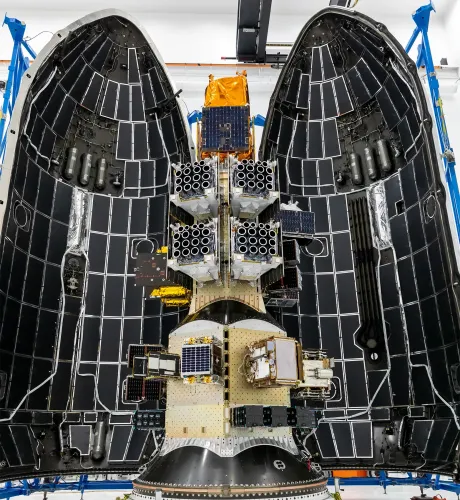
Mission Drishti , launched on 3 May 2025 aboard a SpaceX mission, was the world's first OptoSAR satellite .
The satellite validated critical systems including attitude control, onboard computing, and communications before an anomaly struck.
A geomagnetic solar storm during the final stage of LEOP likely damaged a critical onboard system, leading to loss of communication; recovery appears unlikely.
CEO Suyash Singh said the mission yielded 'invaluable engineering insights' that will directly strengthen future missions.
PM Narendra Modi and industry leaders recognised the mission's significance for India's private space ecosystem.
Bengaluru-based space technology startup GalaxEye announced on Tuesday, 7 July 2025 that its maiden Mission Drishti — the world's first OptoSAR satellite — has successfully validated critical technologies and mission capabilities, clearing the path for the launch of two next-generation OptoSAR satellites within the next 24 months. The announcement comes despite the spacecraft suffering an anomaly following a geomagnetic solar storm that ultimately led to a loss of communication.
What Mission Drishti Achieved
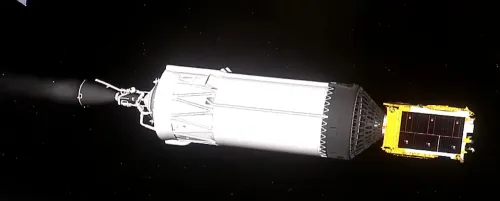
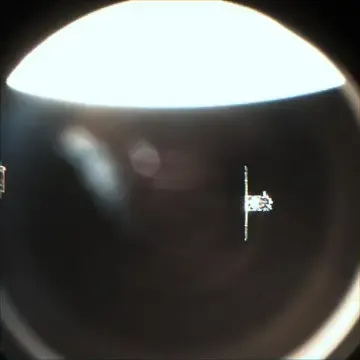
Launched aboard a SpaceX mission on 3 May 2025, Mission Drishti successfully established communication and completed a major portion of its Launch and Early Orbit Phase (LEOP). The satellite validated critical spacecraft systems including deployment mechanisms, attitude control, onboard computing, and communications infrastructure.
The mission also demonstrated GalaxEye's full in-house mission operations capability through its Mission Control Centre in Bengaluru, reinforcing the company's technological standing and market credibility. During its operational phase, the satellite validated the processes and infrastructure required to design, build, launch, and operate advanced Earth observation systems.
The Anomaly and Its Cause
GalaxEye confirmed that the spacecraft encountered an anomaly during the final stage of LEOP following an extreme geomagnetic solar storm. Preliminary analysis indicates that radiation from the space weather event likely affected a critical onboard system, causing communication to become intermittent before being lost entirely.
The company stated that recovery efforts are ongoing, but acknowledged that the likelihood of restoring contact currently appears low. Notably, this is the kind of space weather risk that even established satellite operators have grappled with — the May 2024 geomagnetic storm was among the most powerful in two decades and disrupted multiple low-Earth orbit missions globally.
What the CEO Said
Suyash Singh, Founder and CEO of GalaxEye, said the mission represents the culmination of years of engineering effort. 'Mission Drishti marks the culmination of years of innovation, engineering and execution by our team. While the satellite experienced an anomaly following an extreme space weather event, the mission has provided invaluable engineering insights that will directly strengthen our future missions,' Singh said.
Singh added that the company is accelerating the transition towards bringing a significant portion of its supply chain, manufacturing, and satellite development processes in-house to gain greater visibility and control over the entire value chain.
The Road Ahead: Two New Satellites
Building on the lessons from Mission Drishti, GalaxEye said it is incorporating the learnings into its next-generation spacecraft architecture. The company plans to launch two new OptoSAR satellites within 24 months, while significantly expanding in-house capabilities to strengthen quality, reliability, and execution.
The mission also drew recognition from Prime Minister Narendra Modi and industry leaders, underscoring its significance for India's private space ecosystem and global Earth observation capabilities. This comes amid a broader acceleration in India's commercial space sector following the liberalisation of the space policy framework in recent years.
With the next two satellites incorporating hard-won engineering data from Mission Drishti, GalaxEye's OptoSAR programme — which fuses optical and synthetic aperture radar imaging — is now positioned to move from proof-of-concept to operational deployment.
Point of View
With ISRO's commercial arm and global players all competing for the same government and defence contracts. GalaxEye's OptoSAR fusion technology is a genuine differentiator, but the 24-month clock starts now, and execution — not validation — will determine whether this becomes a footnote or a foundation.
NationPress
5 Oct 2026
Frequently Asked Questions
What is GalaxEye's Mission Drishti?
Mission Drishti is GalaxEye's maiden satellite, launched on 3 May 2025 aboard a SpaceX mission as the world's first OptoSAR satellite, which combines optical and synthetic aperture radar imaging for advanced Earth observation. It successfully validated critical spacecraft systems before communication was lost due to a solar storm anomaly.
Why did GalaxEye lose contact with Mission Drishti?
A geomagnetic solar storm during the final stage of the Launch and Early Orbit Phase caused radiation that likely damaged a critical onboard system, making communication intermittent and eventually cutting it off entirely. GalaxEye said recovery efforts are ongoing but the likelihood of restoring contact is currently low.
What is an OptoSAR satellite?
An OptoSAR satellite fuses optical imaging with synthetic aperture radar (SAR) technology, enabling Earth observation in all weather conditions and at any time of day. Mission Drishti was the world's first such satellite, developed entirely by GalaxEye's in-house team in Bengaluru.
When will GalaxEye launch its next satellites?
GalaxEye plans to launch two new next-generation OptoSAR satellites within the next 24 months. The new spacecraft will incorporate engineering lessons from Mission Drishti and feature significantly expanded in-house manufacturing and development capabilities.
Who recognised Mission Drishti's significance?
Prime Minister Narendra Modi and several industry leaders publicly recognised Mission Drishti, highlighting its importance for India's private space ecosystem and global Earth observation capabilities.