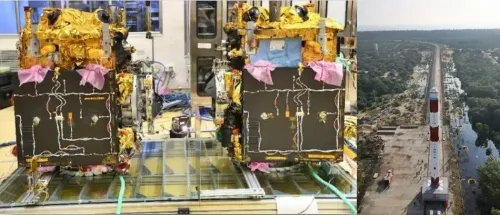
ISRO tackles space debris, LEO congestion with Debris Free Space Mission
Synopsis
ISRO has had a seat at the global space debris table since 1996, but the threat has never been more acute. With LEO increasingly crowded by mega-constellations and untraceable fragments capable of ending missions on impact, India's Debris Free Space Mission and Active Debris Removal push mark a significant escalation in ambition — one that will test both ISRO's technical depth and its ability to shape international norms.
Key Takeaways
ISRO is confronting LEO satellite congestion and space debris accumulation, Parliament was informed on 13 August .
The Debris Free Space Mission will pursue Active Debris Removal (ADR) and end-of-life satellite disposal guidelines.
ISRO has been a member of the IADC — the leading space debris body — since 1996 .
IN-SPACe Norms, Guidelines and Procedures (2024) require Indian space actors to adopt post-mission disposal or ensure limited orbital life.
India is represented in UN-COPUOS , UN-STSC , and the Expert Group on Space Situational Awareness .
Indigenous capacity building for space object monitoring will be pursued alongside international collaboration.
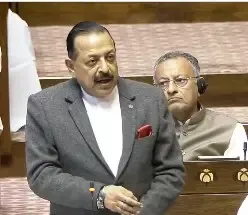
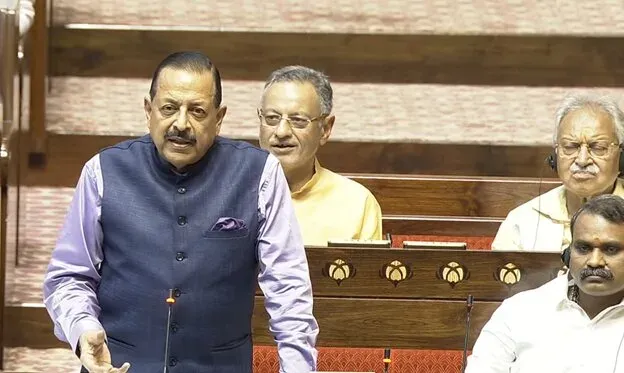
The Indian Space Research Organisation (ISRO) is actively confronting the twin challenges of Low Earth Orbit (LEO) satellite congestion and accumulating space debris, with targeted mitigation measures underway, Parliament was informed on Thursday, 13 August. Minister of State for Science and Technology Dr Jitendra Singh made the disclosure in the Rajya Sabha, outlining India's institutional, regulatory, and international responses to one of the most pressing challenges in modern space operations.
The Debris Free Space Mission
ISRO's Debris Free Space Mission is central to India's strategy, designed to safeguard space assets and limit further debris generation through Active Debris Removal (ADR) and complementary measures. The initiative also implements internationally recognised guidelines on end-of-life disposal of satellites — a critical step as orbital clutter grows.
Dr Singh noted that the Indian Space Policy mandates adoption of these guidelines across the Indian space programme, covering end-of-life disposal and related debris mitigation measures. The Norms, Guidelines and Procedures released by IN-SPACe in 2024 further encourage all Indian space actors to adopt adequate post-mission disposal measures or ensure their assets have very limited orbital life through natural orbital decay.
The Scale of the Challenge
Internet satellite constellations — often comprising thousands of satellites — are raising collision risks in crowded orbital regions. Some satellites may fail on-orbit and become unable to manoeuvre away from potential collisions. Small, untraceable debris compounds the problem: such fragments cannot be avoided through collision avoidance manoeuvres and are too small to shield against adequately. A single impact, Dr Singh warned, can cause mission-ending damage, rendering a satellite non-functional and generating yet more debris in a cascading cycle.
India's Institutional Engagement
India has maintained a long-standing presence in global space debris governance. ISRO has been a member of the Inter-Agency Space Debris Coordination Committee (IADC) — considered the most recognised body on space debris monitoring and mitigation — since 1996. The IADC regularly deliberates on debris-related matters and revises mitigation guidelines in response to the evolving orbital environment.
India is also represented in the United Nations Committee on the Peaceful Uses of Outer Space (UN-COPUOS), the UN Scientific and Technical Subcommittee (UN-STSC) Working Group on Long-Term Sustainability, and the Expert Group on Space Situational Awareness (SSA). These forums address debris mitigation, safety of space operations, and long-term sustainability of the space environment.
Self-Reliance and International Collaboration
Dr Singh stressed that comprehensive Space Situational Awareness requires both international collaboration and data sharing. In parallel, India will pursue self-reliance through indigenous capacity building for space object monitoring, alongside innovative R&D to address emerging challenges. This dual-track approach — global cooperation combined with domestic capability — reflects India's broader strategic posture in space.
As satellite launches accelerate globally and LEO becomes increasingly congested, ISRO's policy and technical responses will be closely watched by the international space community.
Point of View
Not a policy leap. The Debris Free Space Mission is a meaningful upgrade, but Active Debris Removal remains one of the hardest unsolved problems in orbital mechanics; no agency has demonstrated it at scale. The real question is whether ISRO has the budget, timeline, and technology roadmap to operationalise ADR before LEO congestion reaches a tipping point. With commercial players like OneWeb and Starlink densifying orbits that Indian missions depend on, the cost of delay is not abstract.
NationPress
28 Sept 2026
Frequently Asked Questions
What is ISRO's Debris Free Space Mission?
ISRO's Debris Free Space Mission is an initiative to safeguard India's space assets and reduce further debris generation through Active Debris Removal (ADR) and end-of-life satellite disposal measures. It operationalises internationally recognised debris mitigation guidelines within the Indian space programme.
Why is space debris a growing concern for ISRO?
Low Earth Orbit is increasingly congested by large satellite constellations, some of which may fail on-orbit and become uncontrollable collision hazards. Small, untraceable debris fragments cannot be avoided or shielded against, and a single impact can destroy a satellite while creating additional debris in a cascading effect.
Since when has ISRO been part of the IADC?
ISRO has been a member of the Inter-Agency Space Debris Coordination Committee (IADC) since 1996. The IADC is considered the most recognised international body for space debris monitoring and mitigation, and regularly updates its guidelines as the orbital environment evolves.
What do the IN-SPACe 2024 guidelines require?
The Norms, Guidelines and Procedures released by IN-SPACe in 2024 require all Indian space actors to adopt adequate post-mission disposal measures or ensure their satellites have a very limited orbital lifespan through natural orbital decay, reducing long-term debris risk.
How is India represented in international space debris forums?
India participates in the UN Committee on the Peaceful Uses of Outer Space (UN-COPUOS), the UN Scientific and Technical Subcommittee Working Group on Long-Term Sustainability, and the Expert Group on Space Situational Awareness, in addition to its long-standing IADC membership.