South Korea bonds: Foreign investors turn net sellers in August for first time since 2023

Synopsis
For the first time in three and a half years, foreign investors turned net sellers of South Korean bonds in August, offloading a net 839.7 billion won as the currency-hedged yield advantage swung to minus 30 basis points. With WGBI inflows providing only a partial cushion and the Fed's path unclear, the structural case for Korean bonds among global investors looks shakier than at any point since early 2023.
Key Takeaways
Foreign investors sold a net 839.7 billion won (US$624.8 million) of South Korean bonds in August 2026 — the first monthly net selling since January 2023 .
Cumulative net buying in the year through 11 September stood at 63.26 trillion won , down 35.2 percent year-on-year.
Foreign bond holdings dropped by 12.9 trillion won over 27 trading days — the steepest such decline in five years .
The currency-hedged arbitrage spread collapsed from +68.3 basis points (end-2025) to -30 basis points (10 September), erasing the yield advantage over US assets.
Passive inflows from South Korea's phased WGBI inclusion cushioned the selling; outflows would have been larger without them.
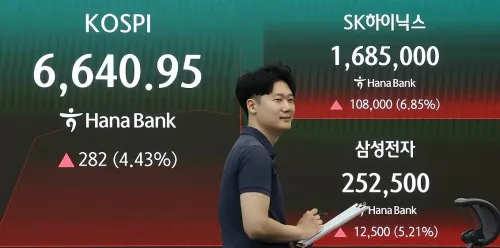
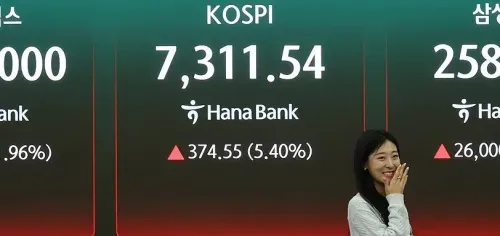
The KOSPI fell 124.01 points (1.76%) to 6,909.91 amid surging oil prices and pre-US inflation data caution.
Foreign investors turned net sellers of South Korean bonds in August 2026 for the first time in roughly three and a half years, according to industry data released on Sunday, 13 September, as the yield advantage from currency-hedged investments eroded sharply. The shift marks the first monthly net selling since January 2023.
Scale of the Selloff
Foreign investors offloaded a net 839.7 billion won (approximately US$624.8 million) worth of Korean bonds in August, according to data from investment banks and debt market sources. While they remained net buyers of 63.26 trillion won in the year through 11 September, that cumulative figure is down 35.2 percent from the same period a year earlier — a significant deceleration in appetite.
Korean bond holdings by foreign investors fell sharply during the period, dropping by about 12.9 trillion won from a record 356.6 trillion won on 24 July to 343.6 trillion won by 2 September. According to market sources, this represents the largest decline over a comparable 27-trading-day period in the past five years.
Why the Yield Advantage Has Vanished
The primary driver behind the retreat is the collapse of arbitrage opportunities. The spread that made currency-hedged Korean bond investments attractive has deteriorated sharply — falling from 68.3 basis points at the end of last year to minus 30 basis points as of 10 September. At that level, short-term Korean bonds, once currency-hedged, offer less return than comparable US dollar assets, effectively reversing the trade that drew in foreign capital over the past three years.
This is a structural shift, not a one-off. The erosion reflects both a rise in US yields driven by the Federal Reserve's prolonged tightening cycle and a narrowing of Korean domestic rates relative to global benchmarks.
WGBI Inclusion Provides a Partial Buffer
Notably, the selling would likely have been heavier were it not for passive inflows linked to South Korea's phased inclusion in the World Government Bond Index (WGBI). Market watchers indicate that WGBI-related inflows have cushioned the pressure, acting as a structural bid even as discretionary foreign investors pulled back. This context matters: the net-selling headline understates how much active selling was offset by index-linked buying.
KOSPI Falls, Won Weakens
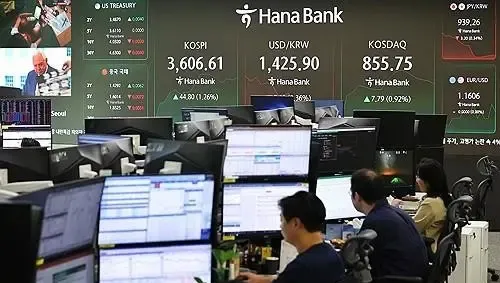
South Korean equities also came under pressure recently, with the benchmark Korea Composite Stock Price Index (KOSPI) closing down 124.01 points, or 1.76 percent, at 6,909.91 on the previous Friday. The index had opened as much as 3.29 percent lower before paring losses. Surging oil prices heightened inflation concerns, with investors watching for key US inflation data for guidance on the Fed's interest rate trajectory. The Korean won also weakened against the US dollar during the session. Trade volume was moderate at 265.92 million shares worth 19.39 trillion won (approximately US$14.4 billion), with losers outnumbering gainers 473 to 368.
With the arbitrage spread in negative territory and US monetary policy still uncertain, the trajectory of foreign bond flows into South Korea will hinge heavily on the Fed's next moves and the pace of WGBI inclusion-linked buying.
Point of View
And no amount of WGBI-related passive buying fully replaces discretionary conviction flows. Seoul should note that the 35.2 percent year-on-year drop in cumulative net buying predates the August selloff, suggesting the trend was building quietly for months. The real risk now is a feedback loop: sustained won weakness raises hedging costs further, which deepens the spread inversion, which triggers more selling.
NationPress
13 Sept 2026
Frequently Asked Questions
Why did foreign investors sell South Korean bonds in August 2026?
Foreign investors sold South Korean bonds in August 2026 primarily because the yield advantage from currency-hedged investments disappeared. The arbitrage spread fell from 68.3 basis points at the end of last year to minus 30 basis points by 10 September, making hedged Korean bonds less attractive than comparable US dollar assets.
How much did foreign investors sell in South Korean bonds in August?
Foreign investors offloaded a net 839.7 billion won (approximately US$624.8 million) worth of South Korean bonds in August 2026. This was the first monthly net selling since January 2023 and the largest 27-trading-day decline in foreign holdings in five years.
What is the WGBI and why does it matter for South Korean bonds?
The World Government Bond Index (WGBI) is a major global fixed-income benchmark, and South Korea is being phased into it. Passive funds tracking the index are required to buy Korean bonds proportionally, providing a structural inflow that has partially offset the recent discretionary selling pressure.
How did the KOSPI perform amid the bond market pressure?
The KOSPI fell 124.01 points, or 1.76 percent, to close at 6,909.91 on the previous Friday, after opening as much as 3.29 percent lower. Surging oil prices and concerns about US inflation data weighed on sentiment, with losers outnumbering gainers 473 to 368.
What should investors watch going forward on South Korean markets?
Key factors to monitor include the US Federal Reserve's interest rate decisions, upcoming US inflation data, the pace of South Korea's WGBI inclusion-related inflows, and movements in the Korean won. If the arbitrage spread remains negative, further foreign bond selling pressure is likely.