2025 Labour Participation Steady; Urban Female Unemployment Drops
Synopsis
The latest report reveals that the Labour Force Participation Rate remains stable at 59.3% in 2025, while urban female unemployment has decreased. Explore the implications of these statistics on the workforce dynamics across genders.
Key Takeaways
Labour Force Participation Rate: 59.3% in 2025.
Urban Female Unemployment: Decreased to 6.4%.
Worker Population Ratio: Remained at 57.4%.
Rural Male Participation: Strong at 80.5%.
Reasons for Non-participation: Education and personal commitments.
New Delhi, March 27 (NationPress) The Labour Force Participation Rate (LFPR) for individuals aged 15 and above was recorded at 59.3 percent in 2025, showing stability when compared to 2024, as per the latest report issued by the Ministry of Statistics on Friday.
In 2025, the LFPR was 79.1 percent for males and 40.0 percent for females.
The worker population ratio (WPR) was estimated at 57.4 percent in 2025, remaining relatively unchanged from 2024. Last month, the WPR figures for males and females were 76.6 percent and 38.8 percent, respectively.
The unemployment rate among urban females saw a decrease to 6.4 percent in 2025, down from 6.7 percent in 2024.
Additionally, the share of individuals in regular wage or salaried positions rose to 23.6 percent in 2025 compared to 22.4 percent in the previous year.
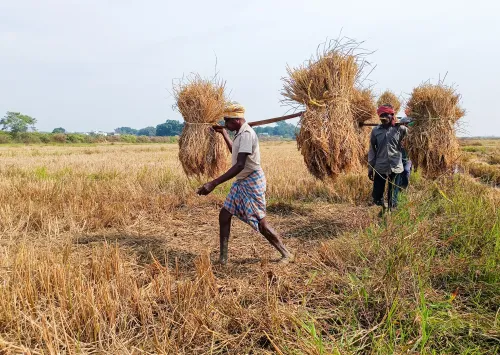
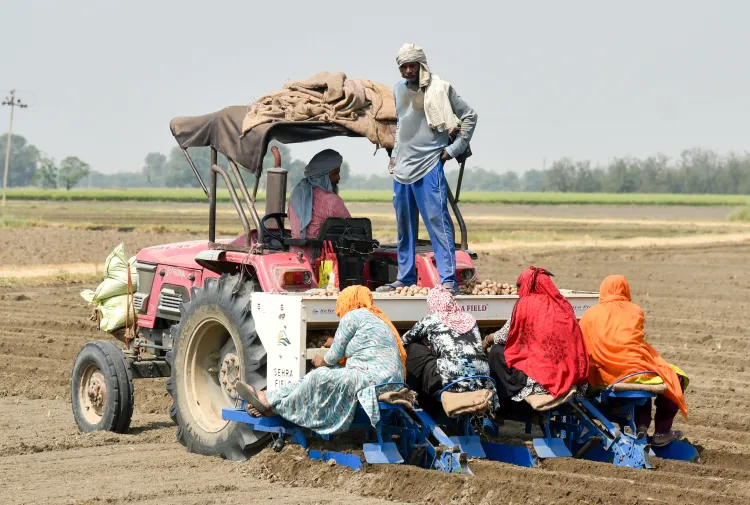
The rural male labour force participation remained robust at 80.5 percent, while rural female participation was stable at 45.9 percent, preserving the advancements of prior years.
The unemployment rate for females in rural areas was low at 2.1 percent, which is lower than the male unemployment rate of 2.6 percent in the same regions. In urban areas, the male and female unemployment rates were 4.2 percent and 6.4 percent, respectively.
The labour force participation rates for both sexes in urban areas in 2025 were largely consistent with those observed in 2024, according to the data.
Moreover, the WPR indicated significant stability in 2025 when compared to 2024. The WPR for rural males remained strong at 78.4 percent, while rural females maintained a steady 44.9 percent, continuing the positive trends established since 2022. The overall urban WPR was nearly at 50.0 percent.
Among males, 69.8 percent stated that the primary reason for not participating in the labour force was an interest in pursuing further education, while 44.4 percent of females cited childcare and personal commitments at home as their main reasons.
For males aged 15 and above, approximately 82.7 percent of those with a diploma or certificate, 79.1 percent of graduates, and 83.1 percent of individuals with post-graduate degrees were engaged in the labour force.
In urban settings, self-employed males worked about 17.5 hours more per week than their female counterparts, while in rural areas, the difference was around 12.3 hours per week. In regular salaried jobs and casual work, males logged approximately 7.9 hours and 6.9 hours more per week than females, respectively.
Point of View
It is crucial to highlight the stability in Labour Force Participation and the positive trend in urban female unemployment. This data reflects ongoing progress in gender equality in the workforce, yet it also underscores the need for continued support for women's participation in the economy.
NationPress
29 Sept 2026
Frequently Asked Questions
What is the Labour Force Participation Rate in 2025?
The Labour Force Participation Rate in 2025 was observed at **59.3 percent**, remaining stable compared to 2024.
How did urban female unemployment change from 2024 to 2025?
Urban female unemployment decreased from **6.7 percent** in 2024 to **6.4 percent** in 2025.
What was the worker population ratio in 2025?
The worker population ratio in 2025 was estimated at **57.4 percent**, similar to the previous year.
What percentage of rural males participated in the labour force?
In 2025, rural male labour force participation stood at **80.5 percent**.
What reasons do males and females cite for not being in the labour force?
Among males, **69.8 percent** mentioned pursuing studies as the main reason, while **44.4 percent** of females cited childcare and personal commitments.