Land records-ULI integration explored to speed up farm loans in India
Synopsis
India is exploring a system where a farmer's land record — verified digitally via Bhu-Aadhaar — could unlock an institutional loan almost instantly through the Unified Lending Interface. The DoLR-RBIH meeting signals a serious policy push to turn land into a trusted digital credit asset, potentially transforming how millions of rural borrowers access formal finance.
Key Takeaways
DoLR and the RBI Innovation Hub held a high-level meeting on 18 July 2025 to explore integrating digital land records with the Unified Lending Interface (ULI) .
The proposal aims to accelerate delivery of Kisan Credit Cards (KCC) and agricultural loans by using authenticated, interoperable land data.
Flag-marking mechanisms are proposed to prevent multiple loans against the same land parcel , reducing credit fraud risk.
Wider adoption of the Unique Land Parcel Identification Number (ULPIN) , or Bhu-Aadhaar , is central to making land records lender-verifiable.
The government has reaffirmed commitment to building a secure, citizen-centric Digital Public Infrastructure linking land governance with formal credit access.
The Department of Land Resources (DoLR), operating under the Ministry of Rural Development, has taken steps toward integrating digital land governance with the Unified Lending Interface (ULI) to enable seamless, consent-based credit delivery for farmers and rural citizens across India, according to an official statement released on Saturday, 18 July 2025. The move, if implemented, could significantly shorten loan processing timelines and expand access to institutional credit in rural areas.
High-Level Meeting Sets the Agenda
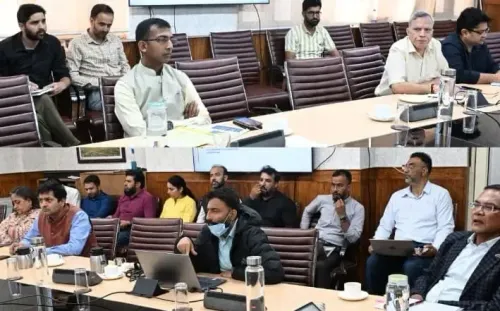
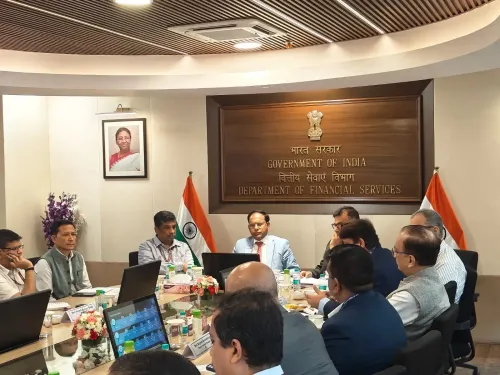
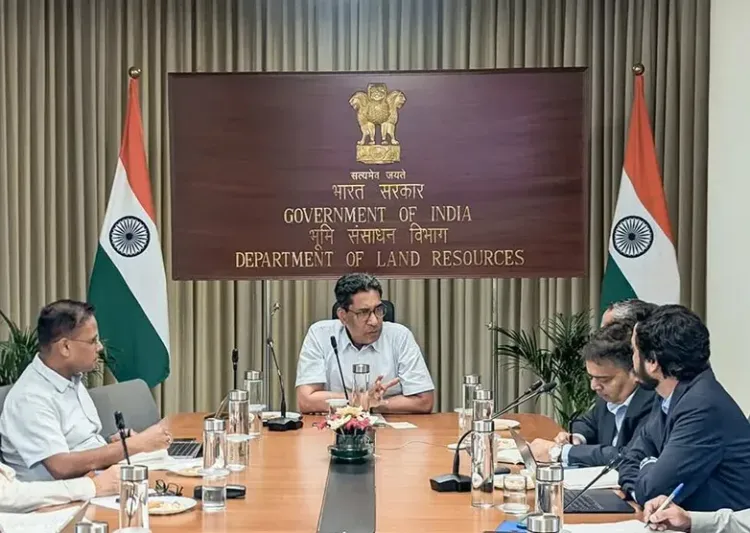
The proposal was deliberated at a high-level meeting between DoLR and the RBI Innovation Hub (RBIH), chaired by DoLR Secretary Narendra Bhooshan. The discussions centred on converging Digital Public Infrastructure (DPI) for land governance with the digital lending ecosystem to improve credit access while enhancing transparency and efficiency.
According to the official statement, both sides examined ways to leverage authenticated, interoperable digital land records as a foundation for faster and more reliable farm credit. The agenda included standardising data access protocols and ensuring that land record systems can communicate securely with lending platforms.
Key Proposals on the Table
Among the proposals discussed were enabling secure and standardised access to authenticated digital land records, accelerating the digital delivery of Kisan Credit Cards (KCC) and other agricultural loans, and reducing transaction costs while shortening loan processing time.
The two sides also deliberated on strengthening risk management through mortgage information and flag-marking mechanisms — a system designed to prevent multiple financing against the same land parcel, a long-standing vulnerability in rural credit markets. Promoting financial inclusion by transforming land into a trusted digital asset for formal credit access was also a key discussion point.
Role of Bhu-Aadhaar and Data Standards
The meeting underscored the need to adopt common data standards and ensure API interoperability across platforms. A particular focus was placed on expanding the use of the Unique Land Parcel Identification Number (ULPIN) — commonly known as Bhu-Aadhaar — which assigns a unique digital identity to each land parcel in India. Wider adoption of ULPIN is seen as critical to making land records machine-readable and lender-verifiable.
Notably, the integration of land records with ULI aligns with the broader push to build citizen-centric digital infrastructure that connects governance data with financial services — a model already demonstrated in identity-linked credit through Aadhaar-based systems.
What Comes Next
The government reaffirmed its commitment to working with the RBI Innovation Hub and other stakeholders to build a secure, interoperable, and citizen-centric Digital Public Infrastructure. No formal timeline for implementation was announced, but the discussions signal intent to move the proposal forward through inter-agency collaboration. Faster farm credit access, if realised, could benefit millions of smallholder farmers who currently face delays and documentation barriers when applying for institutional loans.
Point of View
However, lies in ground-level data quality: land records in many states remain disputed, incomplete, or digitised only partially. Plugging a flawed record into a lending pipeline does not fix the underlying title uncertainty — it could amplify it. The flag-marking mechanism for multiple financing is a necessary safeguard, but its effectiveness will depend entirely on real-time synchronisation across state land registries, which has historically been the weakest link in India's land governance chain.
NationPress
17 Oct 2026
Frequently Asked Questions
What is the proposed integration of land records with the Unified Lending Interface?
The proposal involves linking authenticated digital land records maintained by the Department of Land Resources with the Unified Lending Interface (ULI), a digital credit delivery platform, to enable faster and consent-based farm loans. If implemented, a farmer's verified land parcel data could be used directly by lenders to process Kisan Credit Cards and agricultural loans with fewer manual steps.
What is Bhu-Aadhaar or ULPIN, and why does it matter here?
Bhu-Aadhaar, officially called the Unique Land Parcel Identification Number (ULPIN), is a 14-digit unique identifier assigned to each land parcel in India — functioning like an Aadhaar number but for land. Expanding its use is central to the proposed integration, as it makes land records machine-readable and verifiable by lenders on the ULI platform.
How will this help farmers access credit faster?
By connecting verified digital land records to the lending interface, banks and financial institutions can authenticate a farmer's land ownership and collateral digitally, eliminating the need for physical document submission and manual verification. This is expected to reduce loan processing time and transaction costs significantly.
What safeguards are being proposed against loan fraud?
The discussions included a flag-marking and mortgage information mechanism designed to prevent multiple loans being sanctioned against the same land parcel — a known risk in rural lending. This system would mark a parcel as encumbered once a loan is issued against it, alerting other lenders in real time.
Has a timeline been announced for implementation?
No formal implementation timeline was announced following the DoLR-RBIH meeting. The government has reaffirmed its intent to collaborate with the RBI Innovation Hub and other stakeholders, suggesting the proposal is still in its exploratory and planning phase.