Mandaviya Hails Vikram-1 Launch as Historic Space Milestone
Synopsis
Union Minister Mansukh Mandaviya hailed the launch of Vikram-1, India's first private orbital rocket by Skyroot Aerospace, calling it a historic milestone enabled by the 2020 space sector reforms and IN-SPACe's regulatory framework for private launch providers.
Key Takeaways
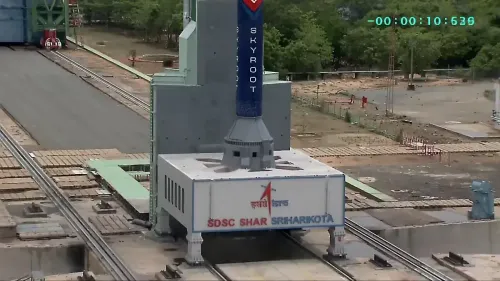
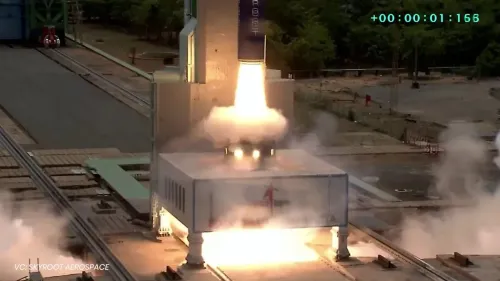
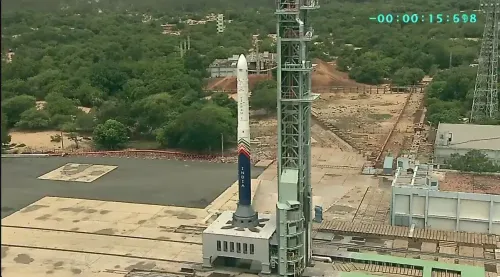
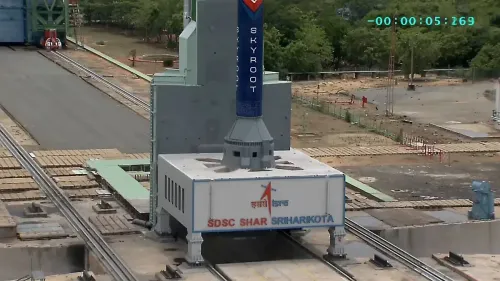
Vikram-1 , developed by Hyderabad -based Skyroot Aerospace , is India's first privately built orbital launch vehicle.
Union Minister Mansukh Mandaviya publicly celebrated the launch on 18 July 2026 , calling it a historic new flight for India in space.
The launch is a direct product of India's 2020 space sector reforms , which opened rocket development to private companies.
IN-SPACe serves as the regulatory body that authorises and promotes private space activities in India.
Skyroot Aerospace was founded by former ISRO engineers, reflecting the role of government talent in seeding the private space ecosystem.
The milestone positions India as a competitive destination for commercial small-satellite launches globally.
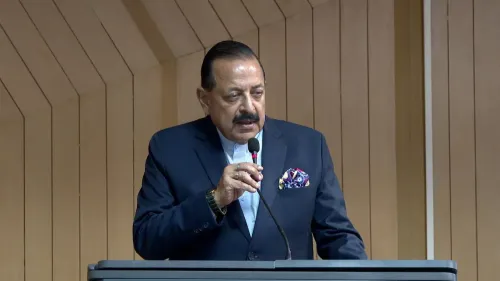
Union Labour and Sports Minister Mansukh Mandaviya on Saturday, 18 July 2026, celebrated the launch of Vikram-1, describing it as a historic new flight for India in space and hailing it as the country's first private rocket to reach orbit.
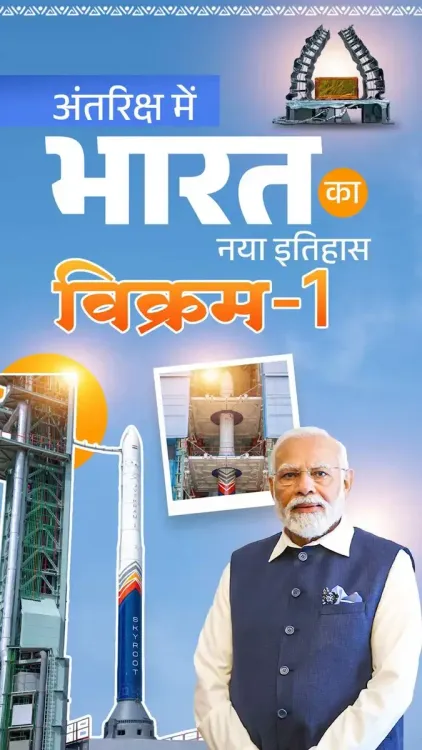
Posting on X, Mandaviya wrote: 'अंतरिक्ष में भारत की नई उड़ान! देश के पहले निजी रॉकेट 'विक्रम-1' का ऐतिहासिक प्रक्षेपण।' — translated as: 'India's new flight into space! The historic launch of the country's first private rocket, Vikram-1.'
Context
Vikram-1 is a small satellite launch vehicle developed by Skyroot Aerospace, a Hyderabad-based private space startup founded by former engineers of the Indian Space Research Organisation (ISRO). The rocket is named after Vikram Sarabhai, widely regarded as the father of India's space programme. The launch marks a watershed moment for India's commercial space sector, demonstrating that domestically built private launch vehicles can reach orbital altitudes.
Policy Backdrop
The milestone is a direct outcome of the 2020 space sector reforms introduced by the Government of India, which opened launch vehicle development and satellite deployment services to private companies for the first time. Central to those reforms was the establishment of IN-SPACe — the Indian National Space Promotion and Authorisation Centre — which serves as the nodal body for regulating, promoting, and authorising private participation in space activities.
Before these reforms, ISRO held an effective monopoly over Indian launch capabilities. The liberalisation was designed to complement ISRO's flagship programmes by allowing commercial players to serve the fast-growing global small-satellite market, where India aims to capture a significantly larger share.
Stakeholders and Impact
Skyroot Aerospace becomes the first Indian private company to successfully develop and launch an orbital rocket, setting a precedent for other approved launch-vehicle startups operating under IN-SPACe authorisation. The development is expected to energise India's broader private aerospace ecosystem, drawing in venture capital, encouraging talent from ISRO's alumni network, and creating downstream opportunities in satellite manufacturing and launch services.
Small-satellite operators — both domestic and international — stand to benefit from an additional, competitively priced Indian launch option. For the government, the success validates the policy bet placed in 2020 and strengthens India's positioning as a global hub for affordable space launches.
What's Next
Attention will now turn to subsequent orbital and commercial missions by Skyroot Aerospace, as well as follow-on regulatory clearances from IN-SPACe for other private launch providers progressing through development and test phases. Industry watchers will also track whether the Vikram-1 success accelerates foreign satellite operators' decisions to book launches through Indian private providers. A broader pipeline of private launch vehicles is expected to emerge as India seeks to position itself as a competitive alternative in the global commercial launch market.
Point of View
Framing private-sector success as a government policy victory. The post fits a broader pattern of senior ministers amplifying technology milestones to reinforce the 'New India' innovation narrative ahead of electoral cycles. The Vikram-1 launch also marks a structural shift: India's space story is no longer solely an ISRO story, and the government is keen to foreground that transition. How quickly IN-SPACe can authorise and scale additional private launch providers will determine whether this milestone becomes a trend or remains an isolated breakthrough.
NationPress
18 Jul 2026
Frequently Asked Questions
What is Vikram-1 and who built it?
Vikram-1 is India's first privately developed orbital rocket, built by Skyroot Aerospace, a Hyderabad-based startup founded by former ISRO engineers.
What did Mansukh Mandaviya say about the Vikram-1 launch?
Mandaviya posted on X calling it 'India's new flight into space' and described the launch as historic, marking the country's first private rocket reaching orbit.
What is IN-SPACe and what role did it play?
IN-SPACe, the Indian National Space Promotion and Authorisation Centre, is the government body established in 2020 to regulate and authorise private sector participation in India's space activities, including launch vehicle development.
When did India open its space sector to private companies?
India opened its space sector to private companies through reforms introduced in 2020 , allowing private firms to develop launch vehicles and deploy satellites for the first time.
What does the Vikram-1 launch mean for India's commercial space ambitions?
The successful launch validates India's policy of space liberalisation, positions the country as a competitive destination for small-satellite launches, and is expected to attract further investment into the domestic private aerospace ecosystem.