Indian Oil Corporation Reports 70% Recovery in Commercial LPG Supply Amid Global Disruptions
Synopsis
In a recent update, Indian Oil Corporation reveals that commercial LPG supply has seen a significant recovery to 70% of pre-crisis levels, despite ongoing geopolitical challenges. This move aims to ensure energy access for households and businesses alike.
Key Takeaways
Commercial LPG supply has rebounded to 70% of pre-crisis levels.
Online bookings have reached 95% , with no stock shortages reported.
Delivery Authentication Code (DAC) deliveries increased to 90% .
5 kg LPG cylinder sales surpassed 90,000 units recently.
Officials assure there is no fuel shortage in the country.
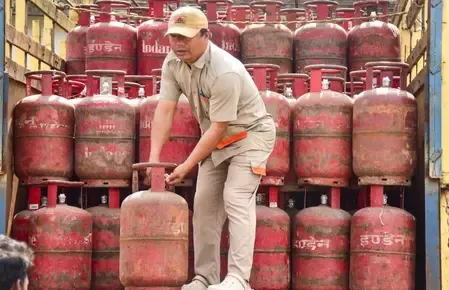
New Delhi, April 6 (NationPress) The state-owned oil marketing entity, Indian Oil Corporation Ltd (IOCL), announced on Monday that the commercial supply of LPG has rebounded to approximately 70% of its pre-crisis metrics amidst prevailing geopolitical challenges.
The public sector undertaking emphasized its commitment to ensuring dependable and efficient energy access, thereby aiding both families and enterprises during this tumultuous period.
Furthermore, the Ministry of Petroleum and Natural Gas reported a remarkable surge in online LPG bookings, now reaching 95%, with no reports of stock shortages at distribution points.
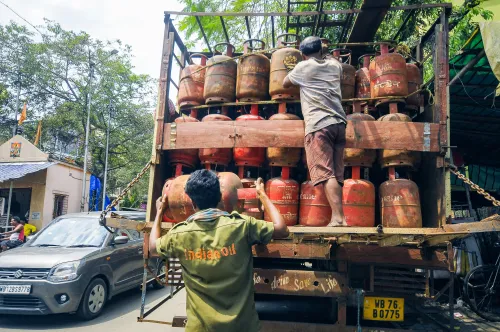
On April 4 alone, more than 5.1 million domestic cylinders were distributed, as stated by the government.
To enhance distribution efficiency and curb diversion, the use of Delivery Authentication Code (DAC)-based deliveries has surged to 90%, up from 53% in February, prior to the supply issues linked to the conflict in Iran.
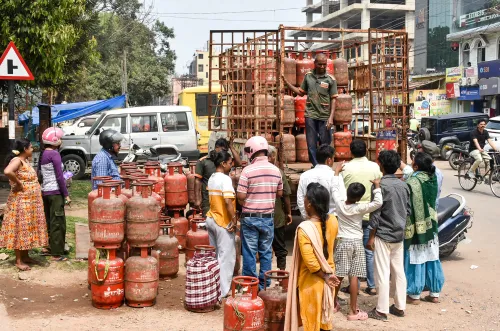
Consumers are encouraged to utilize digital platforms for ordering LPG cylinders and to minimize physical visits to distributors unless absolutely necessary.
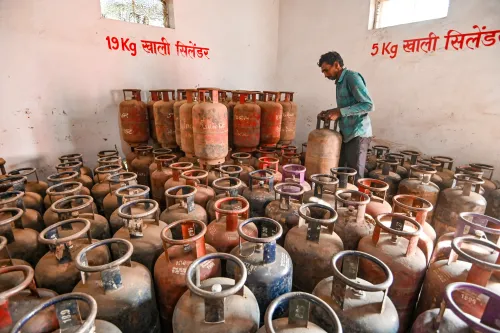
There has also been a notable uptick in the demand for smaller cylinders, with sales of 5 kg LPG cylinders surpassing 90,000 units on Saturday, and approximately 660,000 units sold since March 23. These cylinders are accessible at local distribution centers and can be purchased with valid identification without the need for address verification.
The government confirmed that all refineries are functioning at optimal capacity, maintaining sufficient crude reserves and ensuring adequate petrol and diesel stocks nationwide. Domestic production of LPG has also been increased to meet consumption demands.
Officials reiterated that there is no fuel shortage and urged the public to refrain from panic buying or unnecessary LPG orders.
IOCL further stated its focus on guaranteeing uninterrupted fuel availability, prioritizing essential sectors such as healthcare, pharmaceuticals, and educational institutions.
Point of View
The recovery of commercial LPG supply to 70% is a positive indicator amidst global disruptions. The proactive measures taken by Indian Oil Corporation and the government reflect a commitment to stability and support for essential sectors. This approach prioritizes energy access while addressing consumer needs during challenging times.
NationPress
25 Sept 2026
Frequently Asked Questions
What is the current recovery rate of commercial LPG supply in India?
The commercial LPG supply has recovered to approximately 70% of pre-crisis levels as reported by Indian Oil Corporation.
How has online LPG booking fared during this period?
Online LPG bookings have surged to 95%, with no instances of stock shortages reported at distributorships.
What measures are being taken to ensure efficient LPG distribution?
The use of Delivery Authentication Code (DAC)-based deliveries has increased to 90% to streamline distribution and prevent diversion.
Are there any restrictions on purchasing smaller LPG cylinders?
No, smaller 5 kg LPG cylinders can be purchased with valid ID proof and do not require address verification.
Is there a fuel shortage in India?
Authorities have confirmed that there is no fuel shortage, encouraging citizens to avoid panic buying.