Anand Mahindra backs TDF-funded cooler that broke a US-France-Israel monopoly
Synopsis
Mahindra Group chairman Anand Mahindra highlighted a Mumbai team's DRDO TDF-backed 10-gram cooler that displaced a US-France-Israel monopoly after five years of work, calling on Indian family offices to fund more such patient, purpose-driven deeptech bets in defence.
Key Takeaways
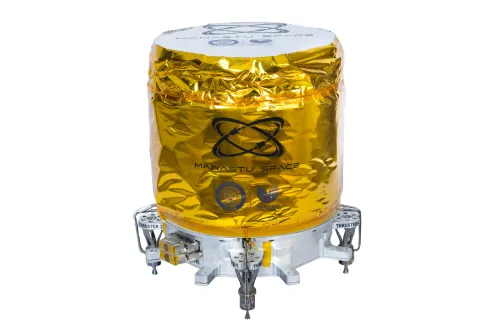
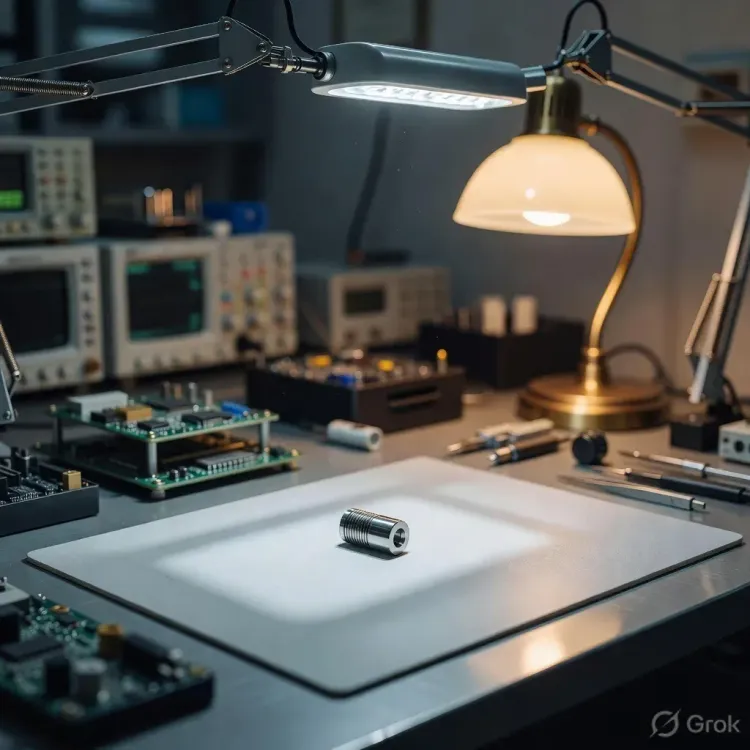
A 10-gram cooling device developed by a small Mumbai team has broken a monopoly held by the US, France, and Israel in a critical defence technology segment.
DRDO's Technology Development Fund (TDF) , created under the Defence Procurement Procedure 2016 , provided the early-stage capital that made the five-year project possible.
Mahindra Group chairman Anand Mahindra publicly called on Indian family offices to fund similar deeptech initiatives, saying he is personally exploring such investments.
Mahindra argued India's defence future requires two tracks: large sovereign procurement bets and small, sharp bets on ingenuity from compact private teams.
India's broader policy push for defence self-reliance targets reduced import dependence on US, European, and Israeli suppliers of sensors and electronics.
A 10-gram cooling device built by a small Mumbai team has quietly shattered a technological monopoly that the United States, France, and Israel held for decades — and Mahindra Group chairman Anand Mahindra wants India's investor class to pay close attention to how it happened.
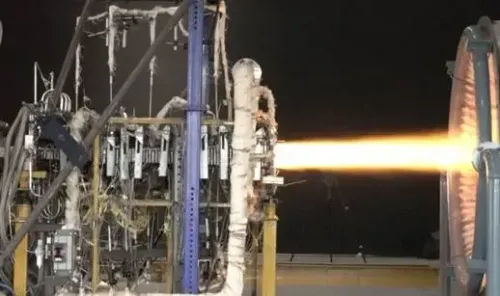
Posting on 13 August 2026, Mahindra framed the achievement not as a defence headline but as a masterclass in what deeptech actually demands. 'It doesn't only need deep pockets,' he wrote. 'It needs capital with Purpose and Patience.' The cooler — a miniaturised component critical to defence sensors and thermal imaging — took five years and an early bet from DRDO's Technology Development Fund (TDF) to cross the finish line.
What the TDF bet and why it mattered
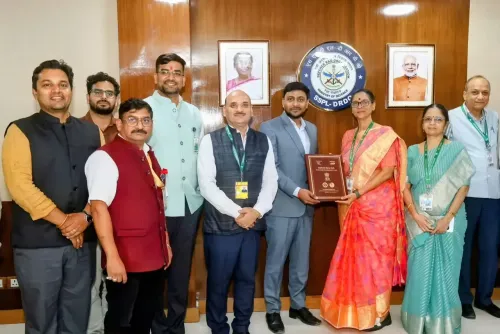
DRDO's Technology Development Fund was created under the Defence Procurement Procedure 2016 to do precisely what large sovereign programmes cannot: write small, early-stage cheques for niche innovations from startups and compact private teams. The TDF's wager on this Mumbai group is now a case study in that model working exactly as designed — a targeted grant enabling a team to stay focused on a hard problem long enough to solve it.
India has spent years trying to reduce its dependence on imported defence electronics, sensors, and cooling systems — components historically sourced from US, European, and Israeli suppliers. Breaking into that supply chain from the outside is one thing. Displacing it from within, with a domestic product, is another order of difficulty entirely. That is what this team appears to have done.
Mahindra's call to family offices
The chairman's post moved quickly from celebration to prescription. Mahindra argued that India's defence future needs two parallel tracks: large sovereign bets on scale — the kind governments and big public-sector programmes provide — and 'small sharp bets on ingenuity' of the kind TDF made here. His pointed addition: family offices can and should play a significant role in funding the second track. 'I'm personally looking at such initiatives,' he wrote, a signal that Mahindra himself may direct capital toward similar early-stage defence deeptech ventures.
India's ultra-high-net-worth family offices manage hundreds of billions of rupees and have historically favoured real estate, listed equities, and conventional private equity. Channelling even a fraction of that into patient, purpose-driven deeptech funding — the kind that waits five years for a 10-gram breakthrough — would represent a structural shift in how Indian innovation gets financed.
The monopoly that just cracked
Miniaturised cryogenic and Stirling-cycle coolers used in infrared sensors and missile seekers have long been a closely guarded domain. The handful of countries that mastered the technology controlled both the supply and the pricing — and rarely licensed the core intellectual property. A domestic Indian alternative, developed on a fraction of a large programme's budget, changes that calculus for future procurement and for the credibility of India's deeptech ecosystem at large.
The real metric to watch now is whether the TDF pipeline produces more such outcomes — and whether the family-office community Mahindra is signalling to actually moves capital into the space before the next breakthrough needs a backer.
Point of View
Which has largely sat out the deeptech funding cycle. By anchoring the argument in a concrete, verifiable outcome — a domestic product displacing entrenched foreign suppliers — he is making the risk-return case in the language capital understands. If even a modest share of family-office assets rotates into patient defence deeptech, it could structurally complement the TDF model and reduce India's dependence on a single public-funding channel for early-stage innovation. The broader pattern here is a chairman using his platform not just to celebrate an outcome but to actively reshape where private capital flows next.
NationPress
27 Sept 2026
Frequently Asked Questions
What is the 10-gram cooler Anand Mahindra posted about?
It is a miniaturised cooling device developed by a small Mumbai-based team that reportedly displaces a technology monopoly previously held by the US, France, and Israel in defence applications such as infrared sensors. Exact technical specifications have not been publicly verified.
What is DRDO's Technology Development Fund (TDF)?
The Technology Development Fund is a DRDO scheme launched under the Defence Procurement Procedure 2016 to provide early-stage grants to Indian startups and small teams developing indigenous defence technologies, reducing dependence on foreign suppliers.
Why is Anand Mahindra calling on family offices to invest in defence deeptech?
Mahindra argues that breakthrough innovations need 'capital with Purpose and Patience' — long-horizon funding that large sovereign programmes or conventional venture capital rarely provide. He believes Indian family offices, which manage large pools of private wealth, are well-placed to fill that gap.
Which countries previously held the monopoly in this defence cooling technology?
According to Mahindra's post, the United States, France, and Israel had guarded this technology segment for decades before the Mumbai team's breakthrough.
What is India's broader policy goal in defence electronics and sensors?
India has pursued greater self-reliance in defence electronics, sensors, and cooling systems to reduce long-standing import dependence on US, European, and Israeli suppliers, combining large public procurement programmes with targeted early-stage funding for niche domestic technologies.