DRDO signs first high-value TDF deal for indigenous 20 mK dilution refrigerator
Synopsis
India just closed a critical gap in its quantum ambitions. DRDO's first high-value TDF deal — with a Rajasthan startup — targets an indigenous 20 mK dilution refrigerator, the ultra-cold workhorse without which quantum computers cannot function. If successful, it ends India's dependence on foreign cryogenic imports and directly advances the National Quantum Mission.
Key Takeaways
DRDO signed its first high-value deep-tech agreement under the Technology Development Fund (TDF) scheme on 27 September 2026 in New Delhi .
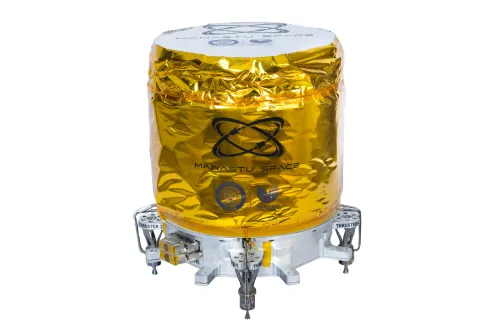
The partner is Zero mK India Private Limited , a startup based in Alwar, Rajasthan , tasked with developing an indigenous 20 millikelvin dilution refrigerator .
The project is the first draw on a ₹500-crore corpus approved by Defence Minister Rajnath Singh for deep-tech development.
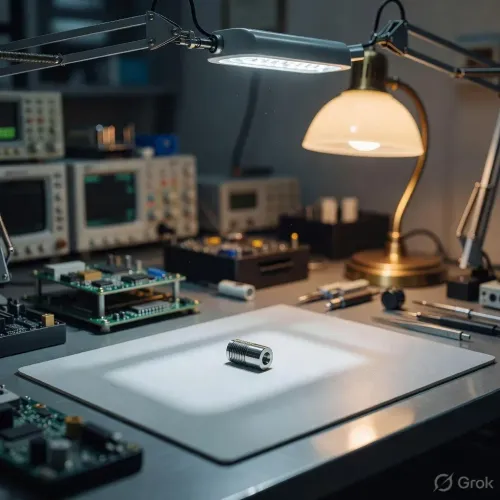
Dilution refrigerators achieve millikelvin temperatures essential for operating and testing quantum computing platforms.
The initiative is aligned with India's National Quantum Mission and aims to end reliance on imported cryogenic infrastructure.
Defence Secretary and DRDO Chairman Rajesh Kumar Singh and Minister Rajnath Singh both congratulated the teams involved.
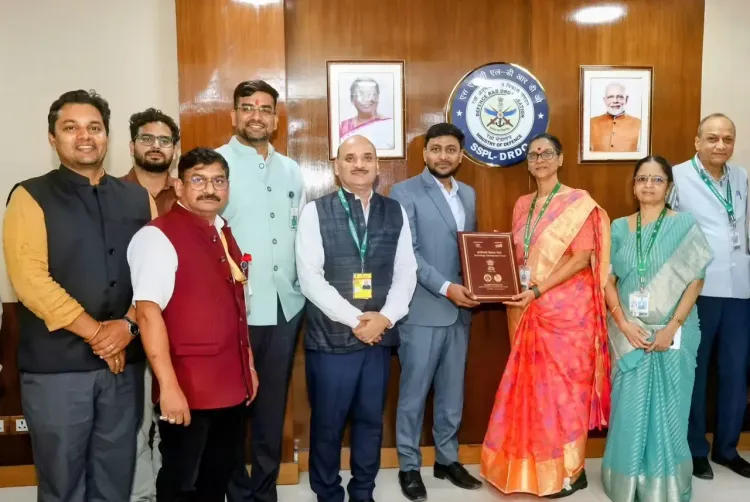
The Defence Research and Development Organisation (DRDO) has signed its first high-value deep-tech project agreement under the Technology Development Fund (TDF) scheme with Zero mK India Private Limited, a startup based in Alwar, Rajasthan, to develop an indigenous 20 millikelvin-class dilution refrigerator for quantum computing and related applications. The agreement was formalised in New Delhi on 27 September 2026, marking a significant step in India's push for self-reliance in advanced quantum technology infrastructure.
What Was Agreed and Why It Matters
The project is the first to be taken up under the ₹500-crore corpus approved by Defence Minister Rajnath Singh to promote deep-tech and cutting-edge technology development. Dilution refrigerators are highly specialised cryogenic systems that can sustain temperatures in the millikelvin range — conditions that are essential for operating, testing, and advancing quantum computing platforms as well as a broad spectrum of quantum technologies.
Until now, India has relied on imported cryogenic infrastructure to meet these requirements. The agreement with Zero mK India is designed to change that, building domestic capability in a domain that has direct applications in both scientific research and strategic defence.
Alignment With the National Quantum Mission
Officials stated that the indigenous development of a 20 mK dilution refrigerator is aligned with the objectives of India's National Quantum Mission. The project is expected to significantly deepen the country's expertise in quantum technology, advanced cryogenics, and other strategic research areas. Notably, the choice of a Rajasthan-based startup reflects the TDF scheme's broader intent of pulling private-sector deep-tech players — including early-stage firms — into the defence innovation pipeline.
This comes amid an accelerating global race to achieve quantum supremacy, with the United States, China, and the European Union each committing billions to quantum research. India's National Quantum Mission, backed by a ₹6,003-crore outlay announced in 2023, had identified indigenous cryogenic capability as a critical gap; the DRDO-Zero mK agreement directly addresses that.
What Senior Officials Said
Defence Minister Rajnath Singh congratulated DRDO, industry partners, and all stakeholders associated with the project. He expressed confidence that the collaboration would serve as a model for future partnerships between DRDO and private industry in emerging technology sectors.
Defence Secretary and DRDO Chairman Rajesh Kumar Singh also extended congratulations to the teams involved and conveyed best wishes for achieving the project's objectives.
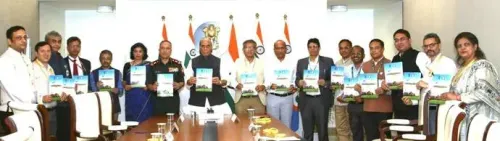
Senior officials present at the signing ceremony included the Director General of Micro Electronic Devices and Computational Systems and Cyber Security (DG MCC), the Director General of Technology Management (DG TM), and the Director of the Solid State Physics Laboratory (SSPL), among other stakeholders.
Reducing Import Dependence in a Critical Domain
By developing this technology domestically, India aims to reduce reliance on cryogenic imports that have long been a bottleneck for quantum research programmes. A domestic dilution refrigerator supply chain would lower costs, shorten procurement timelines, and insulate strategic programmes from export-control restrictions that several supplier nations impose on advanced scientific equipment.
With guidelines under the TDF scheme now translating into concrete agreements, the defence-private sector interface in deep technology is expected to deepen further in the months ahead.
Point of View
But the strategic subtext is more significant: India has long been a quantum-aspiring nation constrained by a missing cold chain. Without domestic dilution refrigerators, every quantum computing advance depends on foreign suppliers who can — and in some cases already do — impose export controls on sensitive scientific equipment. Backing a startup from Alwar rather than an established defence PSU is itself a statement of intent under the TDF framework. The real test, however, is delivery timelines: indigenisation of precision cryogenic hardware is notoriously difficult, and the global bar keeps rising. Whether Zero mK India can produce a verified 20 mK system within a competitive window will determine whether this becomes a template or a cautionary tale.
NationPress
27 Sept 2026
Frequently Asked Questions
What is the DRDO Technology Development Fund agreement signed in September 2026?
It is DRDO's first high-value deep-tech project agreement under the Technology Development Fund (TDF) scheme, signed with Zero mK India Private Limited of Alwar, Rajasthan, to develop an indigenous 20 millikelvin dilution refrigerator for quantum computing applications. The project is funded from a ₹500-crore corpus approved by Defence Minister Rajnath Singh.
What is a dilution refrigerator and why does India need one?
A dilution refrigerator is a highly specialised cryogenic device capable of reaching temperatures in the millikelvin range — far colder than outer space — which are necessary to operate and test quantum computers and related quantum technology platforms. India currently depends on imported systems for this capability, making indigenous development a strategic priority.
How does this project relate to India's National Quantum Mission?
Officials confirmed the project is directly aligned with the National Quantum Mission, a ₹6,003-crore programme announced in 2023 to build India's end-to-end quantum technology ecosystem. Developing indigenous cryogenic infrastructure was identified as a critical gap in that mission, and the DRDO-Zero mK agreement is the first concrete step toward closing it.
Who is Zero mK India Private Limited?
Zero mK India Private Limited is a deep-tech startup headquartered in Alwar, Rajasthan, specialising in advanced cryogenic systems. It has been selected as DRDO's industry partner under the TDF scheme to design and develop a domestic 20 mK dilution refrigerator — the first such initiative in India.
What happens next after the agreement is signed?
The project will now move into the development phase, with the startup working under DRDO's TDF framework to build and validate the indigenous dilution refrigerator. Senior DRDO officials and Defence Minister Rajnath Singh have expressed confidence the collaboration will serve as a model for future defence-private sector partnerships in emerging technologies.