Meta launches Muse Voice Transcribe with support for 5 Indian languages
Synopsis
Meta's first real-time audio-perception model, Muse Voice Transcribe, tops the Artificial Analysis streaming speech-to-text leaderboard at launch and natively supports five Indian languages — no post-processing needed. Its reinforcement-learning-powered adaptive delay is a genuine architectural differentiator in a crowded multilingual AI race.
Key Takeaways
Meta launched Muse Voice Transcribe on 2 September 2026 , its first real-time audio-perception model.
The model offers native support for five major Indian languages and seamless code-switching from a single model.
Trained across more than 70 languages , with 25 validated at launch; available via the Meta Model API .
Ranked first on the Artificial Analysis streaming speech-to-text leaderboard as of 1 September 2026 .
Uses reinforcement learning -based adaptive delay, processing audio in 80 ms chunks to balance speed and accuracy.
Already powering dictation in Meta AI for Mac and Muse Code .
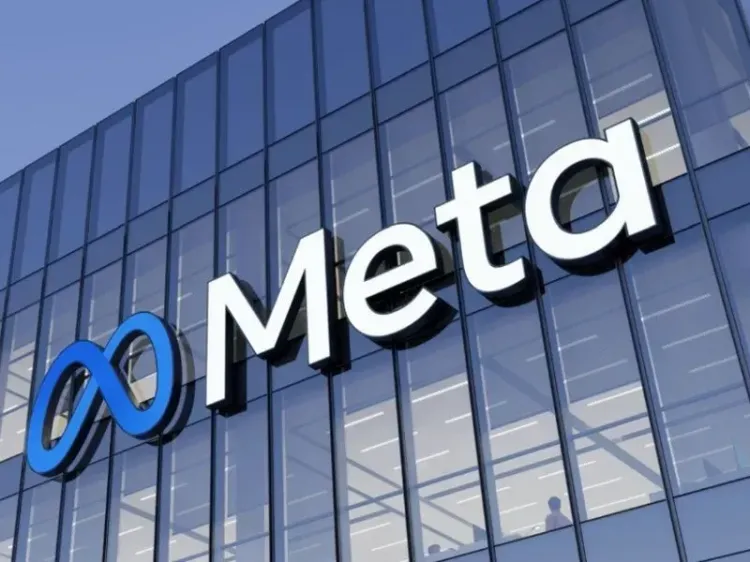
Meta has launched Muse Voice Transcribe, its first real-time audio-perception model, offering native support for five major Indian languages and advanced streaming transcription capabilities. Developed by Meta Superintelligence Labs, the model was announced on 2 September 2026 and is already live within Meta AI for Mac and Muse Code.
What Muse Voice Transcribe Does
The model delivers real-time automatic speech recognition, speaker diarisation across more than 20 voices in recordings exceeding one hour, and native code-switching — all from a single model with no post-processing step required. It also supports endpointing and improves accuracy through language, keyword, and context biasing.
According to the company, Muse Voice Transcribe is trained across more than 70 languages spoken across multiple countries, with 25 languages validated at launch. The model is accessible via the Meta Model API.
How Adaptive Delay Works
'The longer the model waits to predict, the more accurate the transcript, but the higher the latency,' Meta said in a statement. To balance this trade-off, Muse Voice Transcribe uses an 'adaptive delay' mechanism that dynamically adjusts the delay for each word based on its difficulty.
This is made possible through reinforcement learning (RL), where a word error rate (WER) reward and a delay reward are combined multiplicatively. Audio is processed in 80 millisecond chunks at 12.5 Hz, with each chunk transformed into a single soft token. At every chunk, the model decides whether to continue listening or emit a text token.
Architecture and Performance
'Muse Voice Transcribe is an autoregressive multimodal model from the Muse Spark family,' Meta said. The company claims the model achieves the Pareto front on the speed-accuracy trade-off, measured by time to final transcription.
Notably, the model ranked first on the Artificial Analysis streaming speech-to-text leaderboard as of 1 September 2026, according to Meta's statement. This positions it ahead of competing real-time transcription systems at launch.
Why It Matters for India
Native support for five Indian languages — without relying on post-processing pipelines — marks a meaningful step for regional language AI in the country. India's linguistic diversity has historically challenged mainstream speech models, which typically perform well in English but degrade significantly in regional languages. The inclusion of seamless code-switching is particularly relevant for Indian users who routinely mix languages mid-conversation.
This comes amid intensifying competition in the speech AI space, with players including OpenAI, Google, and several Indian startups vying for dominance in multilingual transcription. Meta's move signals a strategic push to deepen its AI footprint in non-English markets, with India a clear priority.
Point of View
Not a feature. The reinforcement learning approach to latency management is technically notable, but the real test will be how the model performs on low-resource Indian languages in real-world, noisy conditions rather than benchmark datasets. India's speech AI market is crowded and the Artificial Analysis leaderboard ranking, while impressive, reflects performance on standardised inputs. Whether Muse Voice Transcribe holds up in the code-switched, accent-varied reality of Indian users is the question that will determine its actual impact.
NationPress
2 Sept 2026
Frequently Asked Questions
What is Meta Muse Voice Transcribe?
Muse Voice Transcribe is Meta's first real-time audio-perception model, developed by Meta Superintelligence Labs and launched on 2 September 2026. It delivers streaming transcription, speaker diarisation for over 20 voices, and native code-switching across more than 70 languages, including five major Indian languages, from a single model with no post-processing required.
Which Indian languages does Muse Voice Transcribe support?
Meta has stated that Muse Voice Transcribe offers native support for five major Indian languages, though the company has not publicly named each of them individually in its launch statement. The model also supports seamless code-switching, which is particularly relevant for Indian users who mix languages in conversation.
How does the adaptive delay feature work in Muse Voice Transcribe?
Adaptive delay dynamically adjusts the transcription delay for each word based on its difficulty, balancing speed against accuracy. It is enabled through reinforcement learning, combining a word error rate reward and a delay reward multiplicatively, with audio processed in 80-millisecond chunks at 12.5 Hz.
Where is Muse Voice Transcribe available?
The model is accessible via the Meta Model API and is already running dictation inside Meta AI for Mac and Muse Code. Meta ranked it first on the Artificial Analysis streaming speech-to-text leaderboard as of 1 September 2026.
Why does Muse Voice Transcribe matter for India?
India's linguistic diversity has historically challenged mainstream speech AI models, which tend to underperform in regional languages. Native support for five Indian languages — combined with code-switching capability — addresses a real gap, positioning Meta more competitively against Google, OpenAI, and Indian speech AI startups in one of the world's largest non-English markets.