PM Modi approves Northern Bullet Train Corridor; fares to be economical, says Vaishnaw
Synopsis
India's bullet train ambitions just got a major northern push. PM Modi has approved a high-speed corridor stretching from Delhi all the way to Guwahati, cutting Delhi-Varanasi travel to under 3.5 hours. Railway Minister Vaishnaw's assurance that fares will undercut flight tickets challenges the 'only for the rich' narrative — but detailed timelines and costs are yet to come.
Key Takeaways
PM Narendra Modi has approved the Northern Corridor of India's bullet train network, announced on 31 October 2026 .
The corridor will run from Delhi through Agra , Kanpur , Lucknow , Ayodhya , Varanasi , Prayagraj , Patna , and Siliguri , extending to Guwahati .
Delhi to Varanasi travel time will be cut to 3 hours 33 minutes ; Delhi to Agra in just 59 minutes .
Railway Minister Ashwini Vaishnaw said fares will be 'very economical and much less than flight tickets.' Construction will be entirely Make-in-India , from pillars to girders, per the minister.
On the existing Mumbai–Ahmedabad corridor, the first Traction Substation at Bilimora, Navsari is nearing completion across the 508-km route.
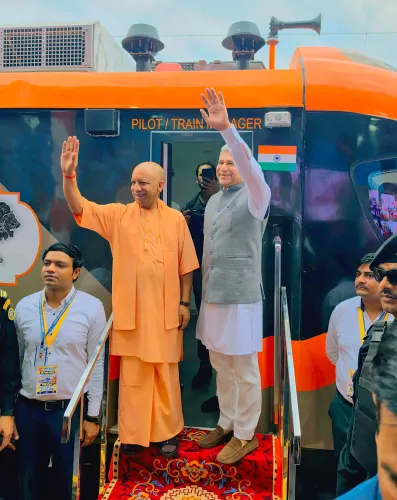
Prime Minister Narendra Modi has approved the Northern Corridor of India's bullet train network, Union Railway Minister Ashwini Vaishnaw announced on Saturday, 31 October 2026. The approval was revealed at the flagging-off ceremony of the new Vande Bharat Sleeper Express between Varanasi and New Delhi, marking a significant expansion of the country's high-speed rail ambitions beyond the already-underway Mumbai–Ahmedabad corridor.
Route and Travel Times
The Northern Corridor will originate in Delhi and pass through Agra, Kanpur, Lucknow, Ayodhya, Varanasi, Prayagraj, and Patna, eventually extending to Siliguri and onward to Guwahati. Once operational, travel times on the corridor will be dramatically compressed: Delhi to Agra in 59 minutes, Delhi to Kanpur in 1 hour 45 minutes, Delhi to Lucknow in 2 hours 12 minutes, Delhi to Varanasi in 3 hours 33 minutes, and Lucknow to Varanasi in 1 hour 21 minutes, according to Vaishnaw.
Fares Will Be Accessible, Not Elitist
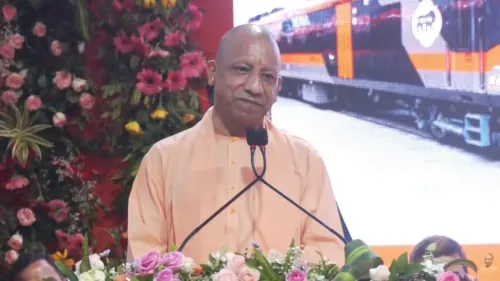
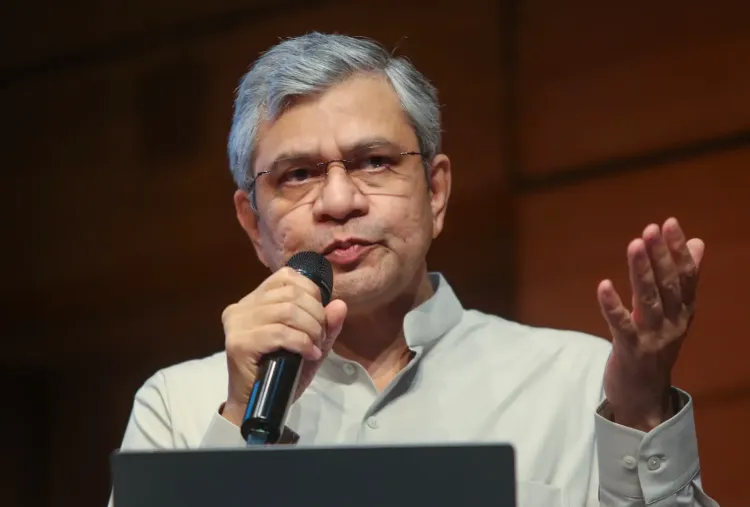
Vaishnaw directly pushed back against criticism that bullet trains cater only to affluent travellers. 'Many people, especially those in the opposition will repeatedly spread the misconception that this bullet train is only for the rich. The fare will be very economical and much less than flight tickets,' he said. The minister framed the project as one that will benefit youth, middle-income groups, and artisans in small-scale industries — a clear attempt to broaden the political constituency for a project that has faced questions about affordability and prioritisation.
Fully Make-in-India Construction
Vaishnaw also underscored the domestic manufacturing angle, stating that every element of the construction — 'from pillar to girder' — will be produced in India. 'It will be fully Make in India, built by the youth and welders of India,' he said, aligning the corridor with the government's broader industrial self-reliance narrative. This comes amid sustained policy focus on domestic infrastructure capability following progress on the Mumbai–Ahmedabad high-speed rail project.
Mumbai–Ahmedabad Corridor Progress
On the existing Mumbai–Ahmedabad Bullet Train project, work is advancing on the 508-km high-speed rail corridor. The first Traction Substation (TSS) is nearing completion at Bilimora in Gujarat's Navsari district, part of a planned network of 14 substations that will power the corridor. The parallel progress on two corridors signals a scaling-up of India's high-speed rail execution capacity.
Significance and What Comes Next
The Northern Corridor, if executed on schedule, would connect the political and cultural heartland of Uttar Pradesh and Bihar — states with some of India's densest rail traffic — to the national capital at bullet-train speeds. Notably, the corridor passes through Ayodhya and Varanasi, constituencies with deep political significance. Detailed project timelines and investment figures have not yet been officially disclosed. All eyes are now on the formal project report and parliamentary updates that are expected to follow the approval.
Point of View
Two states that dominate electoral arithmetic, and includes Ayodhya and Varanasi in its alignment. Vaishnaw's pre-emptive defence on affordability suggests the government is aware that optics around bullet trains remain a liability with lower-income voters. The real test will be in the fine print: project cost, completion timeline, and whether fares are genuinely competitive with sleeper-class rail rather than just cheaper than flights. India's first bullet train, the Mumbai–Ahmedabad corridor, has faced repeated delays and cost revisions — the Northern Corridor must show it has learned from that execution experience before the promise translates into credibility.
NationPress
31 Oct 2026
Frequently Asked Questions
What is the Northern Bullet Train Corridor approved by PM Modi?
It is a high-speed rail corridor approved by Prime Minister Narendra Modi, running from Delhi through Agra, Kanpur, Lucknow, Ayodhya, Varanasi, Prayagraj, Patna, and Siliguri, with an eventual extension to Guwahati. The approval was announced by Railway Minister Ashwini Vaishnaw on 31 October 2026.
How fast will the Northern Bullet Train be — what are the travel times?
Once operational, Delhi to Agra will take 59 minutes, Delhi to Kanpur 1 hour 45 minutes, Delhi to Lucknow 2 hours 12 minutes, Delhi to Varanasi 3 hours 33 minutes, and Lucknow to Varanasi 1 hour 21 minutes, according to Railway Minister Vaishnaw.
Will the bullet train fare be affordable for ordinary passengers?
Railway Minister Ashwini Vaishnaw has said the fares will be 'very economical and much less than flight tickets,' dismissing opposition claims that the bullet train will only serve wealthy travellers. Specific fare structures have not yet been announced.
What is the current status of the Mumbai–Ahmedabad Bullet Train project?
Construction is progressing on the 508-km Mumbai–Ahmedabad corridor, with the first Traction Substation nearing completion at Bilimora in Gujarat's Navsari district. A total of 14 substations are planned to supply power along the route.
Will the bullet train be built using Indian manufacturing?
Yes. Railway Minister Vaishnaw stated that all construction — from pillars to girders — will be carried out under the Make-in-India initiative, with the work done by Indian youth and skilled workers.