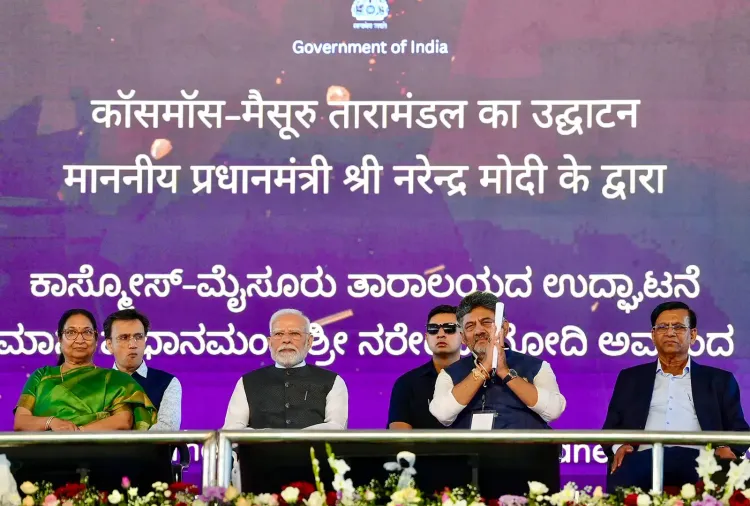
PM Modi inaugurates COSMOS-Mysuru, India's first LED Dome planetarium
Synopsis
PM Modi inaugurated India's first LED Dome planetarium in Mysuru on 13 November, warning that no nation can afford to decelerate its scientific progress. With a ₹1 lakh crore research fund, Chandrayaan-3's historic south polar landing, and Indian students winning four golds at the astronomy Olympiad, the event positioned India's science push as both culturally rooted and globally competitive.
Key Takeaways
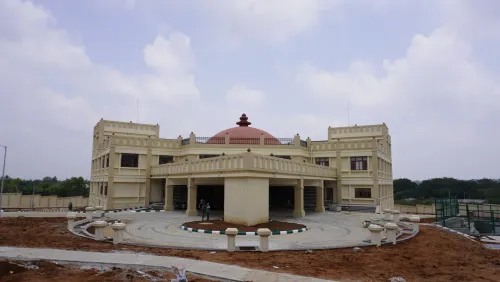
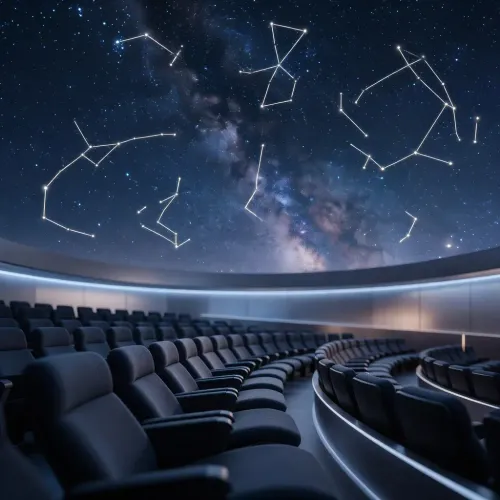
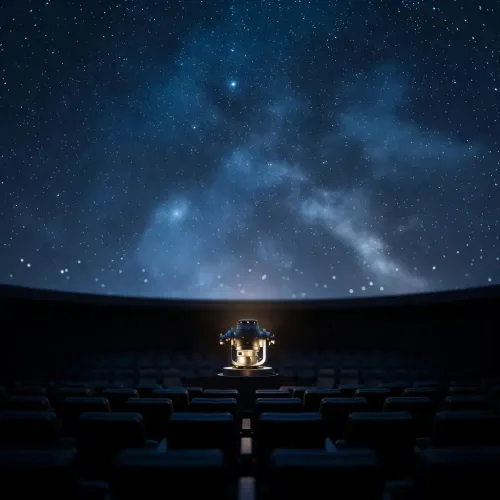
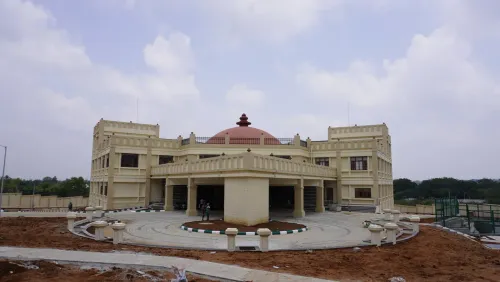
PM Modi inaugurated COSMOS-Mysuru Planetarium on 13 November 2026 — India's first LED Dome planetarium .
Modi warned that no nation can afford to slow its scientific progress amid rapid global technological change.
India became the first country to land near the Moon's south polar region via Chandrayaan-3 , and the fourth country to demonstrate space docking and undocking.
Indian students won four gold medals and one silver medal at the International Olympiad on Astronomy and Astrophysics in Vietnam this year.
The government launched a ₹1 lakh crore research and innovation scheme last year to strengthen India's scientific ecosystem.
The planetarium was developed by the Indian Institute of Astrophysics and the University of Mysore , with Union Minister Nirmala Sitharaman and CM D.K.
Shivakumar among those present.
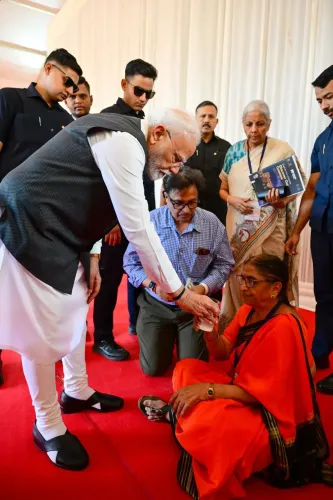
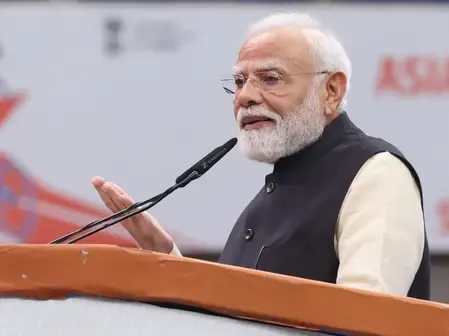
Prime Minister Narendra Modi on 13 November 2026 inaugurated COSMOS-Mysuru Planetarium in Mysuru, Karnataka — India's first LED Dome planetarium — and stressed that no nation could afford to slow its scientific progress amid the accelerating pace of global technological change. Speaking at the event, Modi said India was actively building a robust ecosystem for science and research to stay competitive on the world stage.
Modi's Core Message on Science and Technology
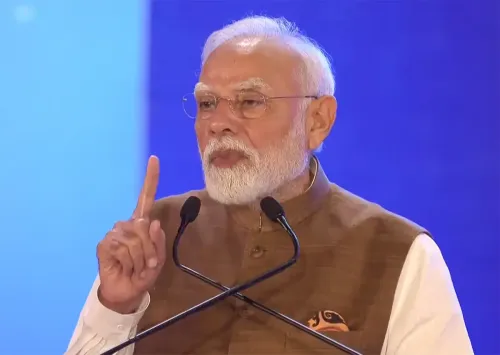
Addressing the gathering after watching a show at the facility, the Prime Minister underlined the urgency of scientific advancement. “Today, technology is changing rapidly. No country can take the risk of undermining or slowing down its progress. A strong ecosystem for science and research is being created in the country,” he said.
Modi framed the inauguration as more than a civic milestone, calling COSMOS-Mysuru a “state-of-the-art institution dedicated to the youth and people of the country.” He also recalled his earlier visit to Mysuru for the inauguration of Viveka Smaraka, drawing a parallel between that occasion's spiritual focus and the new planetarium's scientific one, saying India's traditions of science and spirituality had “always travelled together.”
India's Space Achievements in Focus
The Prime Minister highlighted India's significant strides in astronomy, astrophysics and space exploration over the past decade. He pointed to Chandrayaan-3, which made India the first country to successfully land a spacecraft near the Moon's south polar region, and the Aditya-L1 mission, which established India's first dedicated space-based solar observatory.
He further noted that India had demonstrated space docking and undocking capability last year, becoming the fourth country in the world to achieve the feat. The government has also opened up the space sector to startups and young entrepreneurs, who are now developing and launching rockets independently.
Highlighting practical benefits of space technology, Modi referenced the Indian Space Research Organisation (ISRO)'s systems that alert fishing vessels of danger, the Real-Time Train Tracking System developed with Indian Railways and ISRO, and satellite data used under the Pradhan Mantri Fasal Bima Yojana for crop insurance. “Science for society is our approach,” he said.
Mysuru's Scientific Legacy and Ancient Indian Astronomy
Modi paid tribute to Mysuru's historic role in promoting knowledge and scientific inquiry. During the reign of Maharaja Nalvadi Krishnaraja Wadiyar, the University of Mysore was established, while the Wadiyar family also played a pivotal role in founding the Indian Institute of Science (IISc) in Bengaluru.
The Prime Minister also recalled India's ancient astronomical heritage, citing contributions by scholars such as Aryabhata, Bhaskaracharya, and Nilakantha Somayaji, who made complex calculations about celestial movements without modern instruments. He noted that ancestors had developed calendars and accurately predicted solar and lunar eclipses.
Youth Achievements and the ₹1 Lakh Crore Research Push
Modi celebrated the performance of Indian students at international science competitions. At the International Olympiad on Astronomy and Astrophysics held in Vietnam this year, five Indian students won four gold medals and one silver medal. India had hosted the same competition in Mumbai the previous year, he noted.
He also referenced the government's ₹1 lakh crore research and innovation scheme launched last year to strengthen the country's scientific ecosystem. Updating the national rallying cry, Modi recalled that former Prime Minister Atal Bihari Vajpayee had added 'Jai Vigyan' to the original 'Jai Jawan, Jai Kisan' slogan, while he himself had further added 'Jai Anusandhan' (hail research).
Urging COSMOS-Mysuru's management and educational institutions to bring more students to the facility, the Prime Minister said: “One among them may return one day with an innovation or discovery about the universe.”
Dignitaries Present
The event was attended by Governor Sudha Yadav, Union Minister Nirmala Sitharaman, Chief Minister D.K. Shivakumar, Higher Education Minister Basavaraj Rayareddy, BJP MP Yaduveer Wadiyar, and other senior officials. The planetarium has been developed by the Indian Institute of Astrophysics in collaboration with the University of Mysore and government departments.
With India's space ambitions growing and the ₹1 lakh crore research fund set to scale up activity, COSMOS-Mysuru is likely to serve as both a public engagement hub and a symbol of the Centre's science-first agenda in the years ahead.
Point of View
From IISc to the University of Mysore — as the site for India's first LED Dome planetarium is deliberate optics, fusing heritage with ambition. But the harder question is whether the ₹1 lakh crore research fund announced last year is translating into ground-level infrastructure or remaining a headline figure. India's rank in global R&D spending as a share of GDP has remained stubbornly low, and world-class planetariums, while inspiring, do not substitute for university research funding and faculty pipelines. The student olympiad medals are genuinely impressive; the structural gaps in India's science ecosystem — from PhD enrolments to patent commercialisation — deserve equal attention from the same podium.
NationPress
14 Nov 2026
Frequently Asked Questions
What is COSMOS-Mysuru Planetarium?
COSMOS-Mysuru is India's first LED Dome planetarium, inaugurated by Prime Minister Narendra Modi on 13 November 2026 in Mysuru, Karnataka. It was developed by the Indian Institute of Astrophysics in collaboration with the University of Mysore and state government departments.
What did PM Modi say at the COSMOS-Mysuru inauguration?
Modi stressed that no country could afford to slow its scientific progress amid rapid technological change, and said India was building a strong ecosystem for science and research. He also highlighted India's space achievements, ancient astronomical heritage, and urged schools and colleges to bring more students to the planetarium.
What are India's recent space achievements mentioned by PM Modi?
Modi cited Chandrayaan-3, which made India the first country to land near the Moon's south polar region, and Aditya-L1, India's space-based solar observatory. He also noted that India became the fourth country to demonstrate space docking and undocking capability.
How did Indian students perform at the International Astronomy Olympiad?
Five Indian students competed at the International Olympiad on Astronomy and Astrophysics held in Vietnam this year, winning four gold medals and one silver medal. India had also hosted the same competition in Mumbai the previous year.
What is the ₹1 lakh crore research scheme mentioned by PM Modi?
The government launched a ₹1 lakh crore research and innovation scheme last year aimed at strengthening India's science and research ecosystem. Modi referenced it as part of a broader push to give young scientists and entrepreneurs the tools and financial support they need.