PM Modi at ESTIC 2026: True science success lies in taking innovation from lab to land
Synopsis
At ESTIC 2026, Modi reframed India's entire science policy around one idea: technology earns its worth only when it reaches ordinary citizens. With implicit pushback against the global militarisation of tech, his 'lab to land' doctrine signals both a domestic development compass and a soft-power positioning for India on the world stage.
Key Takeaways
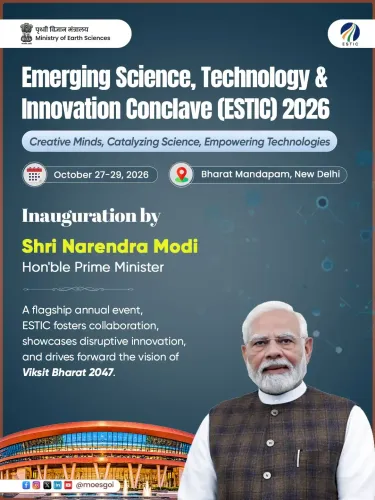
PM Narendra Modi addressed the Emerging Science, Technology and Innovation Conclave (ESTIC) 2026 in New Delhi on 27 October 2026 .
Modi declared the true measure of science is its ability to move 'from the lab to the land' and improve citizens' lives.
He asserted that India views science and technology as instruments for human welfare , not tools of power or conflict.
The Prime Minister cited India's civilisational contributions — including the discovery of zero and advances in astronomy — as the foundation of its scientific identity.
Modi emphasised that research is the cornerstone of technological self-reliance, linking R&D capacity to national problem-solving.
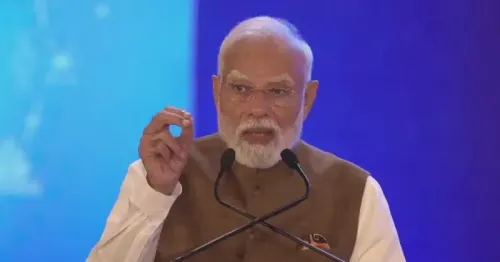
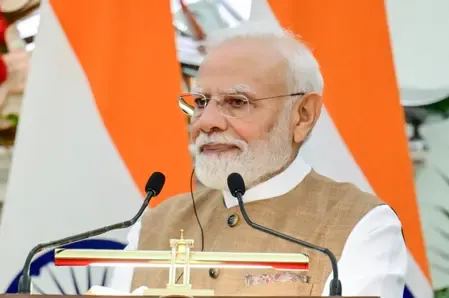
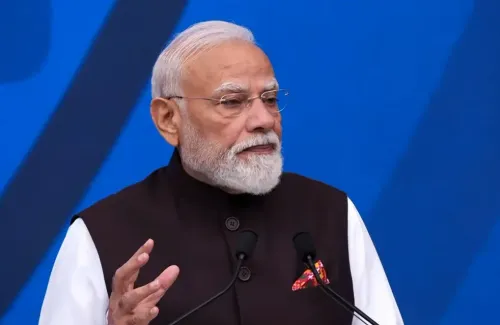
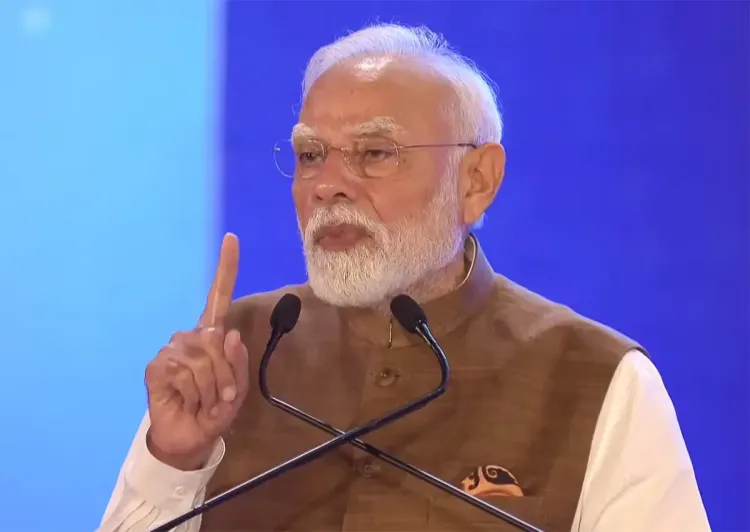
Prime Minister Narendra Modi on Tuesday, 27 October 2026 declared that science and technology must be judged not by their sophistication alone but by their ability to transform ordinary lives, addressing the Emerging Science, Technology and Innovation Conclave (ESTIC) 2026 in New Delhi. Modi asserted that India views science and technology as instruments of human welfare, firmly distancing the country from a global tendency to weaponise technological capability.
Core Message: From Lab to Land
'The true success of science is realised when it moves from the lab to the land, directly improving the lives of ordinary citizens,' Prime Minister Modi stated at the conclave. He argued that the measure of any technology is not how advanced it is, but 'how effectively it solves major problems and how many people's lives it transforms.'
This framing positions India's science policy squarely around inclusive development — a consistent theme of Modi's third term, where flagship programmes in space, semiconductors, and digital public infrastructure have all been anchored to citizen-level outcomes.
India's Civilisational Case for Science
Modi drew on India's historical contributions to underscore the country's deep-rooted scientific culture. He cited the discovery of zero, the development of the number system, and advances in astronomy as evidence that knowledge and discovery have been central to India's civilisational identity.
'India is moving forward by evaluating itself against this very benchmark,' he noted, linking ancient intellectual traditions to the country's contemporary push for self-reliance in critical technologies. This is the second major science-and-innovation address Modi has delivered in 2026, signalling sustained political attention to the sector.
Science as a Humanitarian Tool, Not a Power Instrument
Addressing what he called a 'persistent challenge' in global perceptions, Modi argued that science and technology have too often been viewed through the lens of power and conflict. 'India firmly believes that science and technology are instruments for serving humanity,' he said, in remarks that carry implicit diplomatic weight amid intensifying global competition over artificial intelligence, semiconductors, and space.
The Prime Minister emphasised that while different technology-driven sectors have varying requirements, they all point to a single overarching message: India is rapidly building its technological strength and self-reliance.
Research as the Engine of Self-Reliance
Modi stressed that a country's capacity to create technology rests fundamentally on the quality of its research ecosystem. 'Research is the force that enables a country to find solutions to its problems and become self-reliant in critical technologies,' he said at the conclave. This aligns with the Centre's recent push to increase gross expenditure on R&D, which has historically lagged peer economies.
What Comes Next
ESTIC 2026 brings together scientists, technologists, and policymakers to chart India's innovation roadmap. The Prime Minister's address is expected to set the tone for policy announcements on emerging-technology funding and industry-academia linkages expected later this quarter. How quickly the 'lab to land' philosophy translates into measurable outcomes — in agriculture, healthcare, and manufacturing — will be the real test of the vision outlined on Tuesday.
Point of View
But India's gross expenditure on R&D as a share of GDP has remained well below the global average for years — a structural gap that speeches alone cannot close. The civilisational invocations are a familiar scaffolding; the harder question is whether ESTIC 2026 produces binding commitments on research funding, industry-academia transfer mechanisms, and outcome metrics. Positioning technology as a humanitarian instrument also carries a pointed geopolitical subtext at a moment when the US, China, and the EU are racing to dominate AI and semiconductors — sometimes at the cost of the very humanitarian norms Modi invoked. India's credibility on this front will depend on how it navigates dual-use technology dilemmas in practice, not just in principle.
NationPress
27 Oct 2026
Frequently Asked Questions
What did PM Modi say at ESTIC 2026?
Prime Minister Narendra Modi addressed the Emerging Science, Technology and Innovation Conclave (ESTIC) 2026 in New Delhi on 27 October 2026, stating that the true success of science lies in moving innovations 'from the lab to the land' to directly improve citizens' lives. He also argued that India views science and technology as tools for human welfare rather than instruments of power or conflict.
What is the ESTIC 2026 conclave?
ESTIC 2026, or the Emerging Science, Technology and Innovation Conclave 2026, is a national-level gathering of scientists, technologists, and policymakers held in New Delhi to chart India's innovation and technology roadmap. PM Modi's address is expected to shape upcoming policy announcements on emerging-technology funding and industry-academia collaboration.
Why does PM Modi stress taking innovation from lab to land?
Modi argues that a technology's true value is not determined by how advanced it is, but by how effectively it solves real-world problems and transforms people's lives. This philosophy underpins the government's push to link science funding and incentives to citizen-level outcomes in sectors such as agriculture, healthcare, and manufacturing.
How does India view science differently from other countries, according to Modi?
Modi said there has been a global tendency to view science and technology through the lens of power and conflict, but India firmly believes they should serve humanity. He described this as a foundational national position, framing it against the backdrop of intensifying global competition in AI, semiconductors, and space.
What is India's historical connection to science that Modi referenced?
PM Modi cited India's civilisational contributions including the discovery of zero, the development of the number system, and advances in astronomy as evidence that knowledge and discovery are central to India's identity. He used this historical context to argue that India is benchmarking its modern technological ambitions against a longstanding tradition of inquiry and innovation.