MoES, AcSIR sign MoU for joint PhD programmes in earth sciences
Synopsis
India's Ministry of Earth Sciences and AcSIR have formalised a partnership that turns ten frontier research labs into doctoral training hubs. Students can now pursue AcSIR-awarded PhDs inside MoES institutes — working on everything from deep-sea mining to AI-driven weather forecasting — in what is one of the most ambitious capacity-building moves in Indian earth sciences in recent years.
Key Takeaways
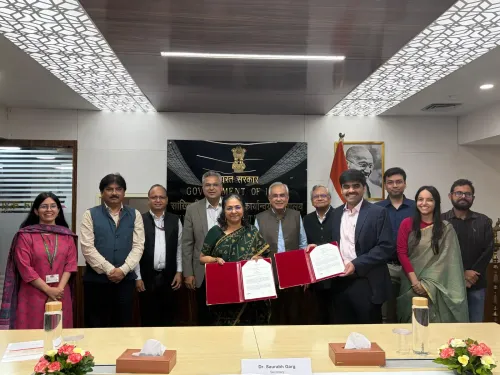
MoES and AcSIR signed an MoU on 19 October 2026 in New Delhi .
All 10 MoES research institutes are recognised as AcSIR Associated Research Institutes .
Joint PhD programmes will cover atmospheric, ocean, polar, and planetary sciences, as well as AI/ML applications in earth sciences.
AcSIR will award doctoral degrees, explicitly naming the host MoES institute on the certificate.
Nodal coordinators appointed at each institute; a Central Coordinator placed at MoES to manage operations.
Jointly generated Intellectual Property Rights (IPR) will be shared mutually, with the student credited as inventor.
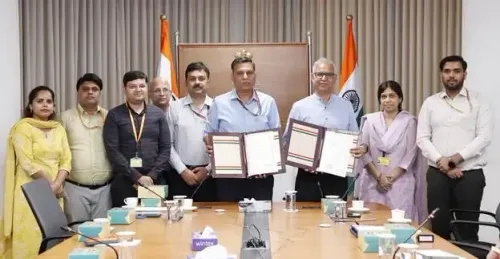
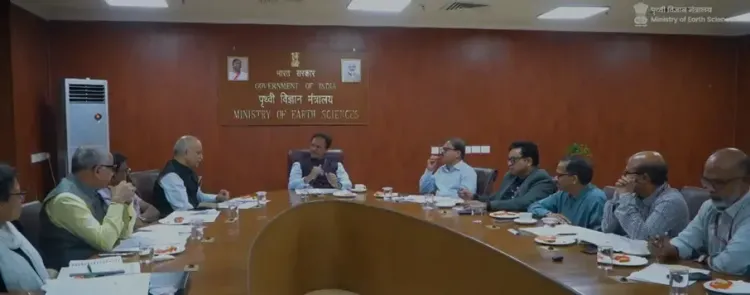
The Ministry of Earth Sciences (MoES) and the Academy of Scientific and Innovative Research (AcSIR) signed a Memorandum of Understanding (MoU) in New Delhi on 19 October 2026, formally recognising all ten MoES research institutes as AcSIR Associated Research Institutes and opening the door to joint doctoral programmes across earth system sciences. The agreement was announced in an official ministry statement on Monday.
What the MoU Establishes
The framework integrates MoES's research infrastructure and scientific expertise with AcSIR's flexible academic structure to offer PhD programmes spanning atmospheric sciences, ocean sciences, polar sciences, hydrology, and planetary systems. Under the arrangement, students enrolled in AcSIR's doctoral programme will conduct their research at MoES institutes, supervised by MoES scientists who will be recognised as AcSIR faculty members. Crucially, AcSIR will confer the doctoral degree, with the host institute explicitly named on the degree certificate.
Scope of Research Areas
The collaboration unlocks doctoral opportunities across a wide range of specialised domains, including weather forecasting and climate services, numerical weather prediction, polar and cryosphere research, ocean observation and marine robotics, deep-sea mining and desalination, seismology and earthquake hazard assessment, coastal processes, marine living resources, and AI/ML applications in earth sciences. The breadth of this list signals an intent to build interdisciplinary capacity rather than strengthen a single niche.
Institutional Architecture
All ten MoES institutes are participating in AcSIR's current PhD enrolment cycle. Nodal AcSIR coordinators have been appointed at each institute, alongside a Central Coordinator at MoES, to streamline academic and administrative operations across the network. Intellectual Property Rights (IPR) arising from research will credit the student as inventor, with jointly generated IP shared mutually between MoES and AcSIR.
What the Government Said
Dr. Srinivasa Kumar Tummala, Secretary of the Ministry of Earth Sciences, said the ministry stands to benefit significantly from the partnership. He expressed confidence that it will 'become a great association going forward for the benefit of the entire earth science faculty, science, and technology researchers.'
Why It Matters
India's earth sciences research has historically been conducted in institutional silos — MoES labs generating frontier data while academic frameworks for training remained fragmented. This MoU attempts to close that gap by creating a unified ecosystem for both advanced research and doctoral education. This comes amid growing global recognition that climate resilience, disaster preparedness, and deep-sea resource mapping require large, well-trained cohorts of earth scientists — an area where India has room to scale. The agreement positions early-career scientists to work with national-level infrastructure from the outset of their doctoral journey.
Point of View
But governance clarity on admissions, stipends, and degree timelines will determine whether this becomes a model or a memorandum. With climate risk, deep-sea policy, and AI-driven forecasting all converging, the demand for earth scientists is real — the question is execution speed.
NationPress
19 Oct 2026
Frequently Asked Questions
What is the MoES-AcSIR MoU about?
The MoU, signed on 19 October 2026, recognises all ten Ministry of Earth Sciences research institutes as AcSIR Associated Research Institutes, enabling joint PhD programmes in fields such as oceanography, atmospheric sciences, seismology, and AI/ML applications in earth sciences. AcSIR will award the doctoral degrees, with the host MoES institute named on the certificate.
Which research areas are covered under the joint doctoral programme?
The programme covers weather forecasting and climate services, numerical weather prediction, polar and cryosphere research, ocean observation and marine robotics, deep-sea mining and desalination, seismology and earthquake hazard assessment, coastal processes, marine living resources, and AI/ML applications in earth sciences.
How will the PhD programme work in practice?
Students selected under AcSIR's PhD programme will conduct research at MoES institutes, supervised by MoES scientists recognised as AcSIR faculty. AcSIR confers the degree and explicitly references the host institute on the certificate. All ten MoES institutes are already participating in AcSIR's current enrolment cycle.
Who will manage academic operations under this framework?
Nodal AcSIR coordinators have been appointed at each of the ten MoES institutes, and a Central Coordinator has been placed at MoES headquarters to streamline academic and administrative operations across the network.
What happens to intellectual property generated from research under this MoU?
Intellectual Property Rights from research will credit the student as inventor, while any jointly generated IP will be shared mutually between MoES and AcSIR, according to the official statement accompanying the signing.