Morgan Stanley projects $800 billion capex surge for India by FY30

Synopsis
Morgan Stanley isn't just bullish on India — it's reframing geopolitical turbulence as India's investment opportunity. An $800 billion capex upgrade, a near-sixfold data centre expansion, and a defence spending ramp signal that global uncertainty may be accelerating India's structural transformation faster than any domestic policy alone could.
Key Takeaways
Morgan Stanley has upgraded India's investment-to-GDP ratio projection to 37.5 per cent by FY30 , up from 36.5 per cent .
The revision translates into an additional $800 billion in cumulative capex over five years.
Nearly 60 per cent of incremental investment is expected in energy , data centres , and defence .
India's data centre capacity is projected to grow from 1.8 GW to 10.5 GW by FY31 .
Defence expenditure is targeted to rise from 2 per cent to 2.5 per cent of GDP by FY31 .
Earnings growth of over 15 per cent CAGR is projected, with markets potentially reaching 10x FY31 earnings .
Morgan Stanley has upgraded its outlook on India's investment cycle, projecting the country's investment-to-GDP ratio to climb to 37.5 per cent by FY30 — up from an earlier estimate of 36.5 per cent — translating into an additional $800 billion in cumulative capital expenditure over the next five years. The global brokerage identified ongoing Middle East conflict and oil price volatility not as headwinds, but as catalysts accelerating India's long-term investment push.
Key Sectors Driving the Capex Surge
According to Morgan Stanley's latest report, nearly 60 per cent of the incremental investment is expected to flow into three sectors: energy, data centres, and defence. These segments are being propelled by a combination of geopolitical risk mitigation, government policy, and structural demand shifts. The brokerage noted that this surge in capital spending will have far-reaching implications for Indian equities, supporting earnings growth of over 15 per cent CAGR through the period and potentially driving the market towards 10 times FY31 earnings.
India's Energy Self-Reliance Push
The vulnerability exposed by the Middle East conflict is particularly acute in the energy sector, where India imports approximately 85 per cent of its crude oil and half of its natural gas requirements. Policymakers are responding with a multi-pronged strategy that includes expanding strategic petroleum reserves, ramping up domestic coal production and gasification, accelerating renewable energy capacity with improved grid infrastructure, and advancing nuclear projects. Coal, notably, continues to play a stabilising role in ensuring power security during the transition period.
In the fertiliser sector, the government is working to reduce dependence on imported inputs such as DAP and MOP, which have historically strained subsidy finances. Efforts include increasing domestic urea production, diversifying import sources, and promoting more efficient nutrient usage to protect both farmers and fiscal health.
Defence Spending Undergoes Structural Shift
India's defence sector is seeing a meaningful reorientation. The government aims to raise defence expenditure from approximately 2 per cent to 2.5 per cent of GDP by FY31, with a strong emphasis on indigenisation and greater participation from the private sector. This transition is already visible in recent procurement trends, with domestic manufacturers gaining a larger share of contracts that were previously awarded to foreign suppliers.
Data Centres Emerge as a Major Growth Engine
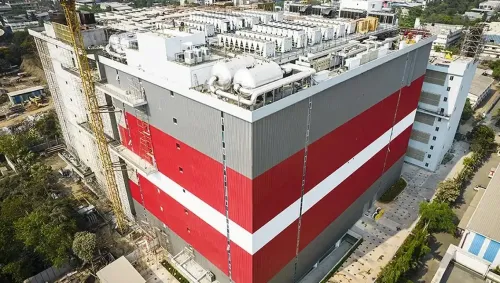
The data centre segment is emerging as one of the most significant growth drivers within this investment cycle. Geopolitical uncertainties, combined with India's data localisation policies, are encouraging global companies to diversify their infrastructure footprint toward Indian shores. Morgan Stanley expects India's data centre capacity to surge from 1.8 GW currently to 10.5 GW by FY31 — a nearly six-fold increase that would represent one of the fastest capacity build-outs in the Asia-Pacific region.
Implications for Indian Equities
A stronger investment cycle is expected to boost the share of corporate profits in GDP, creating a sustained earnings tailwind. Morgan Stanley's projections suggest that if the investment-to-GDP ratio reaches the revised 37.5 per cent target, the resulting profit cycle could drive benchmark indices toward 10 times FY31 earnings. This comes amid a broader global reallocation of capital away from geopolitically exposed markets, with India increasingly positioned as a beneficiary of supply chain diversification and friend-shoring trends. How quickly execution follows ambition — particularly in energy and defence indigenisation — will determine whether these projections hold.
Point of View
Defence procurement reform, and data localisation enforcement — that have historically moved slower than policy intent. India's investment-to-GDP ratio has been stuck well below the 37.5 per cent target for years; the question is whether this cycle is structurally different or another optimistic projection that the implementation machinery will struggle to absorb. The data centre forecast, at least, has hard private capital behind it — the rest remains contingent on government follow-through.
NationPress
5 Oct 2026
Frequently Asked Questions
What is Morgan Stanley's $800 billion capex projection for India?
Morgan Stanley has revised India's investment-to-GDP ratio target upward to 37.5 per cent by FY30, from an earlier estimate of 36.5 per cent. This upward revision translates into an additional $800 billion in cumulative capital expenditure over the next five years, driven primarily by energy, data centres, and defence.
Which sectors will receive the most investment under this projection?
Nearly 60 per cent of the incremental $800 billion is expected to flow into energy, data centres, and defence. Energy investment is driven by India's push to reduce dependence on imported crude oil and gas, while data centres are being fuelled by geopolitical uncertainty and data localisation policies.
How fast is India's data centre capacity expected to grow?
Morgan Stanley expects India's data centre capacity to surge from 1.8 GW currently to 10.5 GW by FY31 — a nearly six-fold increase. This growth is being driven by global companies diversifying infrastructure away from geopolitically exposed regions.
What does this mean for Indian stock markets?
Morgan Stanley projects that a stronger investment cycle will boost corporate profits' share of GDP, supporting earnings growth of over 15 per cent CAGR. The brokerage suggests this momentum could drive markets toward 10 times FY31 earnings.
Why is India's defence spending expected to rise?
India aims to raise defence expenditure from approximately 2 per cent to 2.5 per cent of GDP by FY31, with a focus on indigenisation and private sector participation. The Middle East conflict has reinforced the urgency of reducing dependence on foreign defence imports.