MoSPI releases concept paper on marine fish resource asset accounts, seeks expert feedback
Synopsis
India is moving to put a monetary value on its marine fish stocks — formally, within the national accounts. MoSPI's new concept paper, aligned with the UN's SEEA framework, is the most concrete step yet toward treating fisheries as measurable economic assets, with implications for how the country prices sustainability and manages one of its most critical natural resources.
Key Takeaways
MoSPI released a concept paper on 27 August proposing a methodology for monetary asset accounts of marine fish resources.
The paper is aligned with the UN SEEA Central Framework , an internationally endorsed statistical standard.
India has been compiling environmental accounts under the EnviStats India series since 2018 , covering land, water, forest, pollination, and minerals.
The framework integrates physical stock condition, depletion, regeneration, and monetary valuation into a unified accounting structure.
Expert feedback can be submitted to the Environment Unit, Social Statistics Division, MoSPI at ssd-mospi[at]gov[dot]in.
A finalised methodology could position India as a leader in natural capital accounting among emerging economies.
The Ministry of Statistics and Programme Implementation (MoSPI) has released a concept paper titled 'Methodological Approach for Compilation of Experimental Monetary Asset Accounts of Marine Fish Resources', inviting comments from experts, researchers, government agencies, and international organisations. The paper, released on 27 August, is aligned with the System of Environmental-Economic Accounting (SEEA) Central Framework — an international statistical standard endorsed by the United Nations Statistical Commission.
What the Concept Paper Covers
The paper lays out concepts, terminology, classifications, and institutional arrangements relevant to India's fisheries sector, alongside an assessment of data availability for compiling natural resource accounts. It draws on the methodology proposed in the OECD (2025) guide, Measuring Natural Resources in the National Accounts: A Compilation Guide, and evaluates its applicability within the Indian context. A step-by-step demonstration of marine fishery resource account compilation using existing data is also included, with explicit identification of data gaps, methodological constraints, and areas for improvement.
The monetary asset account framework integrates physical stock condition, asset life, depletion, regeneration, and monetary valuation within the SEEA-based environmental-economic accounting system. This dual treatment — recognising fish resources simultaneously as biological resources and economic assets — is central to the framework's design.
India's Natural Capital Accounting Journey
Since 2018, MoSPI has been compiling environmental accounts under the EnviStats India series, covering land, water, forest, pollination, and minerals, among other subjects. The marine fisheries initiative represents a further step in this progression. According to MoSPI, a standardised methodology for the monetary valuation of fish resources within India's national accounts framework would place the country at the forefront of natural capital accounting among emerging economies.
Accurate monetary valuation of fish resources, the ministry noted, will serve as a foundational input for data-driven policymaking and sustainable development planning.
Why Marine Fish Resources Matter Economically
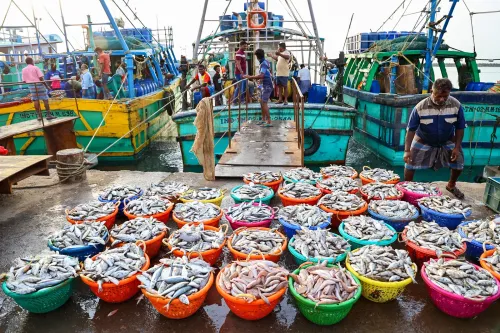
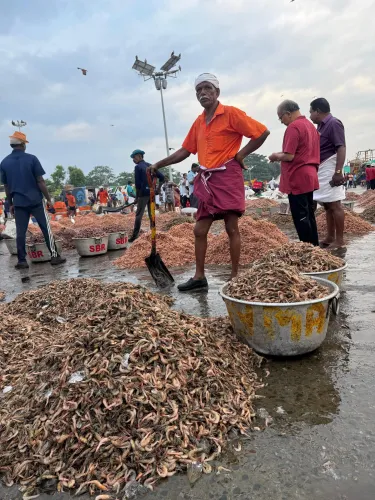
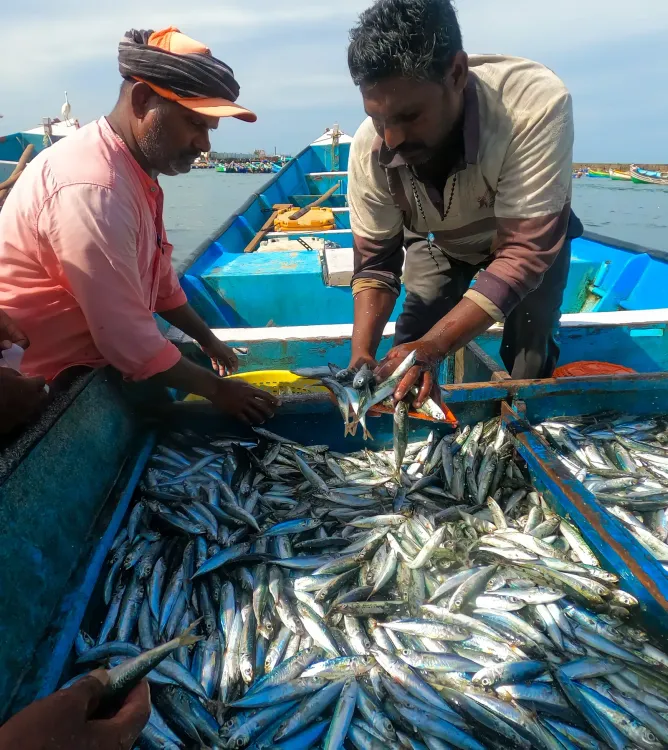
Fish resources constitute a critical component of India's natural resource base. Sustained dependence on fisheries for nutritional security and economic activity has made systematic assessment of stock condition, long-term productive capacity, and resource valuation increasingly important. Economic valuation, according to MoSPI, provides a measurable basis for comparing the benefits of fisheries resources and their ecosystems — and can serve as a practical tool for improving resource management and sustainable use.
The framework developed under the study is expected to strengthen the analytical usefulness of fisheries statistics for sustainability assessment, marine resource planning, and evidence-based fisheries management.
How to Submit Feedback
Responses to the concept paper may be submitted to the Environment Unit, Social Statistics Division, MoSPI at ssd-mospi[at]gov[dot]in. The feedback received will inform the finalisation of a standardised methodology for integrating marine fish resource valuation into India's national accounts.
With the consultation now open, the quality and breadth of expert responses will be critical in shaping how India accounts for one of its most economically and ecologically significant natural assets going forward.
Point of View
Export value, employment — but rarely as a depletable asset with a balance sheet. MoSPI's SEEA-aligned concept paper is an attempt to change that accounting logic. The real test will be data quality: fish stock assessments in India remain patchy, and without reliable physical accounts, the monetary valuation layer risks being precise about imprecise inputs. If the consultation draws substantive technical engagement — from fisheries scientists, state governments, and international bodies — this could become a genuine policy instrument. If it remains a statistical exercise, it joins a long queue of frameworks that never reached the decision-maker's desk.
NationPress
27 Aug 2026
Frequently Asked Questions
What is the MoSPI concept paper on marine fish resource accounts?
It is a methodological framework released by the Ministry of Statistics and Programme Implementation on 27 August, proposing an approach for compiling experimental monetary asset accounts for India's marine fish resources. The paper is aligned with the UN's System of Environmental-Economic Accounting (SEEA) Central Framework and is open for public and expert feedback.
What is the SEEA Central Framework and why does it matter?
The System of Environmental-Economic Accounting (SEEA) Central Framework is an international statistical standard endorsed by the United Nations Statistical Commission. It provides a structured way to integrate environmental data — including natural resource stocks — with conventional economic accounts, enabling countries to measure the true cost of resource depletion.
How does this fit into India's existing environmental accounting work?
MoSPI has been compiling environmental accounts under the EnviStats India series since 2018, covering subjects such as land, water, forest, pollination, and minerals. The marine fisheries concept paper extends this work to monetary valuation of fish stocks, representing a new frontier in India's natural capital accounting.
Who can submit feedback and how?
Experts, researchers, government agencies, and international organisations are invited to submit responses. Feedback should be sent to the Environment Unit, Social Statistics Division, MoSPI at ssd-mospi[at]gov[dot]in. Responses will inform the finalisation of a standardised methodology.
Why is monetary valuation of fish resources important?
Fish resources are critical to India's nutritional security and economic activity. Assigning a monetary value to marine fish stocks — accounting for depletion, regeneration, and long-term productive capacity — enables data-driven fisheries management, sustainability assessment, and more accurate national accounts that reflect natural resource wealth.