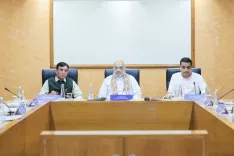
Amit Shah holds Lok Darbar in Ahmedabad, vows 30-inch rain-proof drainage plan
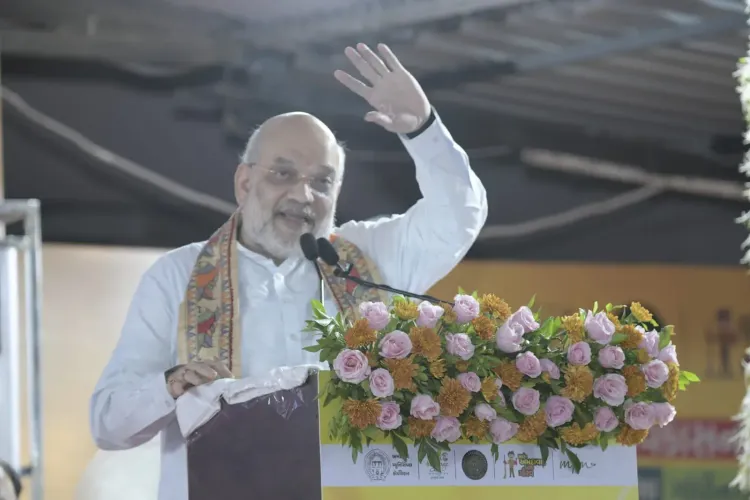
Synopsis
Amit Shah's Lok Darbar in Ahmedabad's flood-hit Bopal wasn't just a grievance session — it was a public accountability moment. With ₹143 crore in repair works already tendered and a pledge to make the area resilient to 30-inch rainfall, the government is under pressure to deliver before the next monsoon tests its promises.
Key Takeaways
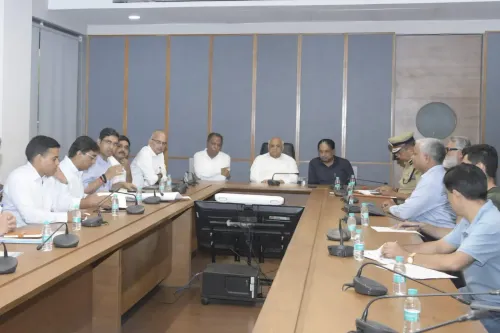
Amit Shah chaired a Lok Darbar in Bopal, Ahmedabad on 27 August for residents of the Ghatlodia Assembly constituency .
Shah pledged a time-bound drainage plan capable of preventing waterlogging even with up to 30 inches of rainfall .
A dedicated drinking water pipeline from Jaspur to Bopal, Ghuma, and Shela was announced to supply treated Narmada water.
The Ahmedabad Municipal Corporation has initiated repair and infrastructure works worth over ₹143 crore through short-notice tenders.
Chief Minister Bhupendra Patel attributed the recent flooding to an unexpected 20-inch rainfall event and cited changing seasonal patterns.
Ground-level planning for permanent rainwater disposal reportedly began the day after floodwaters receded from the area.
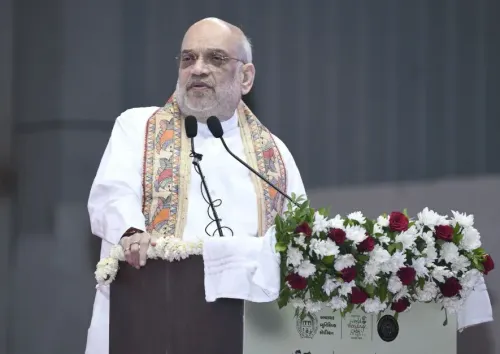
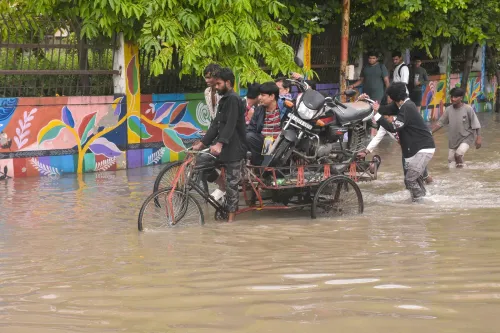
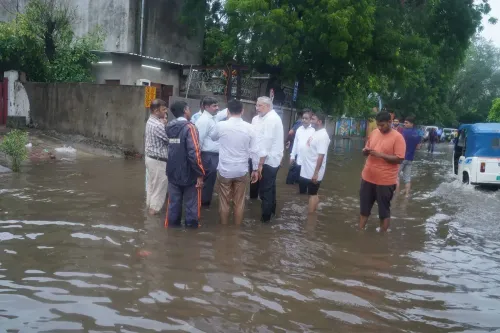
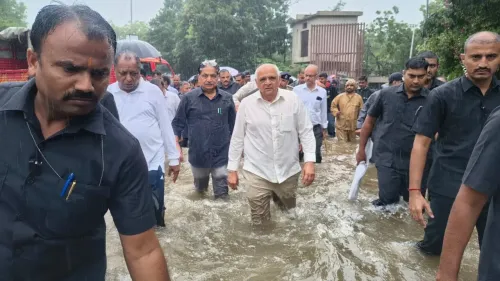
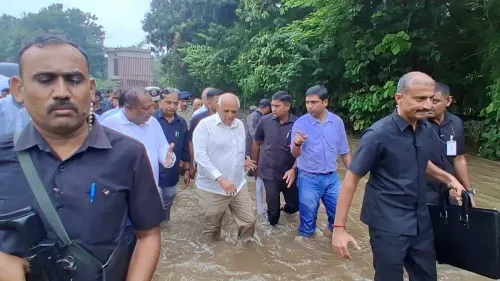
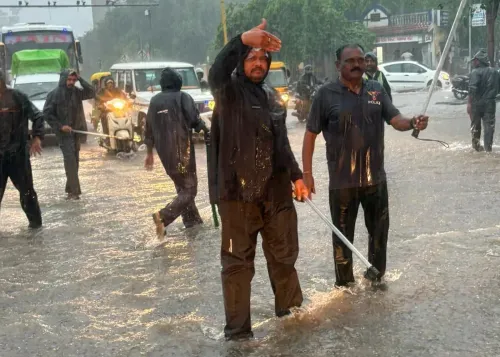
Union Home and Cooperation Minister Amit Shah on Thursday, 27 August convened a Lok Darbar in Bopal, Ahmedabad, pledging a robust and time-bound drainage overhaul for the Bopal-Ghuma, Shela and surrounding areas — one capable of preventing waterlogging even if the region receives up to 30 inches of rainfall in a single episode. The public grievance session, organised by the Ahmedabad Municipal Corporation (AMC) for residents of the Ghatlodia Assembly constituency, followed weeks of prolonged waterlogging triggered by an unexpected 20-21 inch downpour.
What Prompted the Lok Darbar
The Bopal-Ghuma belt bore the brunt of heavy monsoon rainfall in July, when several residential societies reported prolonged inundation. Residents and housing society representatives used Thursday's session to raise concerns spanning stormwater drainage, road and traffic management, drinking water pipelines, drainage lines, and broader zonal infrastructure. Civic officials heard the representations on site and outlined proposed resolutions.
Shah said ground-level planning for a permanent rainwater disposal system began the day after floodwaters receded. 'From the very next day after the water receded from the waterlogged areas, ground-level planning for the permanent disposal of rainwater was started,' he told attendees.
Key Commitments Made at the Meeting
Shah announced a dedicated drinking water pipeline from Jaspur to Bopal, Ghuma, Shela and newly developed surrounding areas, which he said would ensure an adequate supply of treated Narmada water to residents. He assured that all written and oral representations submitted at the Lok Darbar would be addressed promptly, with the Centre, state government, and AMC jointly committed to resolution.
Shah also highlighted broader infrastructure development in the area — including the Metro, AMTS bus network, flyovers, drainage systems, and sports complexes — crediting the leadership of Prime Minister Narendra Modi and Chief Minister Bhupendra Patel.
What the State Government Said
Chief Minister Bhupendra Patel, who attended alongside Minister of State for Urban Development Darshana Vaghela and AMC Mayor Hitesh Barot, acknowledged that shifting seasonal rainfall patterns had contributed to the 20-inch deluge in Bopal and surrounding areas. He said the administration had undertaken water disposal and relief measures during the episode under Shah's guidance, and that stronger drainage and road infrastructure was being planned for future monsoons.
Patel noted that completed works in the area already include percolation wells for rainwater harvesting in private housing societies, RCC roads, and paver blocks. A mini sports complex, an underpass, and rainwater disposal infrastructure had also been provided. He added that the government's water conservation drive — encompassing lake interlinking and recharge borewells — was ongoing.
Patel acknowledged that Bopal-Ghuma was merged into the AMC later than several established parts of the city, but said efforts had been made to bring civic amenities and corporation benefits on par with other areas. 'The state government is committed to bringing prompt solutions to all reasonable problems raised by residents through this Lok Darbar,' he said.
AMC's Response and Repair Outlay
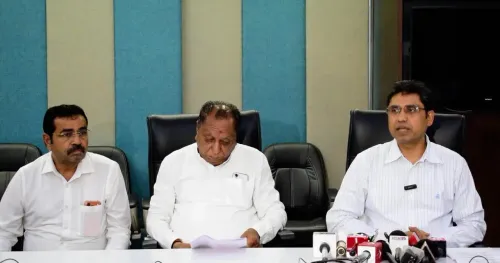
Mayor Hitesh Barot said the Lok Darbar was designed to establish direct communication between the administration and housing society representatives. He stated that, based on a preliminary survey conducted after the recent rains, repair and infrastructure works worth more than ₹143 crore had been initiated through short-notice tenders. The administration, he said, had remained continuously engaged with residents since the flooding episode.
What Comes Next
With the monsoon season still active, the timeline for completing the promised drainage overhaul will be closely watched by residents in the Bopal-Ghuma-Shela corridor. The commitment to a 30-inch rain-resilient system sets a measurable benchmark — one that officials will be held to when the next heavy spell arrives.
Point of View
Not assurances. The ₹143 crore in short-notice tenders is a start, but Bopal-Ghuma's late merger into the AMC means its drainage infrastructure has historically lagged behind older city zones. Promising 30-inch resilience is a concrete, verifiable benchmark — which is precisely why it will be scrutinised when the next heavy monsoon spell arrives. The real question is whether the planning that 'began the day after the water receded' will survive the annual cycle of urgency-then-inertia that has defined urban flood response across Indian metros.
NationPress
28 Aug 2026
Frequently Asked Questions
What is the Lok Darbar held by Amit Shah in Ahmedabad?
It is a public grievance session organised by the Ahmedabad Municipal Corporation on 27 August for residents of the Ghatlodia Assembly constituency in Bopal. Union Home Minister Amit Shah, Chief Minister Bhupendra Patel, and AMC Mayor Hitesh Barot attended to hear concerns about drainage, roads, and drinking water infrastructure after recent heavy flooding.
What drainage plan did Amit Shah announce for Bopal-Ghuma?
Shah promised a robust and time-bound drainage overhaul designed to prevent waterlogging even if the Bopal-Ghuma-Shela area receives up to 30 inches of rainfall. He said ground-level planning for permanent rainwater disposal had already begun the day after floodwaters receded from the area.
How much has the AMC committed to flood repair works in Bopal?
Based on a preliminary survey, the Ahmedabad Municipal Corporation has initiated repair and infrastructure works worth more than ₹143 crore through short-notice tenders. Mayor Hitesh Barot confirmed the outlay at the Lok Darbar.
What caused the waterlogging in Bopal and Ghuma?
An unexpected rainfall of approximately 20-21 inches caused prolonged waterlogging in Bopal, Ghuma, and neighbouring residential societies. Chief Minister Bhupendra Patel attributed the intensity to changes in seasonal rainfall patterns.
What drinking water solution was announced for Bopal and Shela?
Amit Shah announced a dedicated drinking water pipeline from Jaspur to Bopal, Ghuma, Shela, and newly developed surrounding areas. The pipeline is intended to provide residents with a reliable supply of treated Narmada water.