Ahmedabad flood recovery: 133 of 148 waterlogged zones cleared after 625 mm rain
Synopsis
Three days of record rainfall — up to 625 mm in Ahmedabad's South-West Zone — left the city waterlogged, but a round-the-clock AMC mobilisation of 7,580 workers has cleared 133 of 148 flood sites. The weather alert has been stepped down from Red to Orange, and Bopal's stubborn flooding is being tackled with a purpose-built 350-metre trench and a 1,200 mm pipeline — a sign that this recovery is more engineered than accidental.
Key Takeaways
Ahmedabad received up to 625 mm of rainfall in three days; Bopal alone recorded approximately 544 mm (about 22 inches).
133 of 148 waterlogged locations have been fully drained; work continues at the remaining 15 sites .
Dewatering is complete in 107 of 126 affected residential societies.
7,580 AMC personnel across 480 teams removed 664 tonnes of silt and 3,473 metric tonnes of waste.
Health Department distributed over 2.77 lakh chlorine tablets across two days to prevent water-borne disease.
Weather alert downgraded from Red to Orange ; 11 people evacuated from Sabarmati and 12 families relocated from Naranpura.
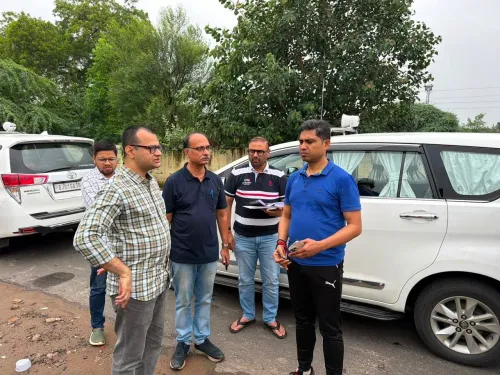
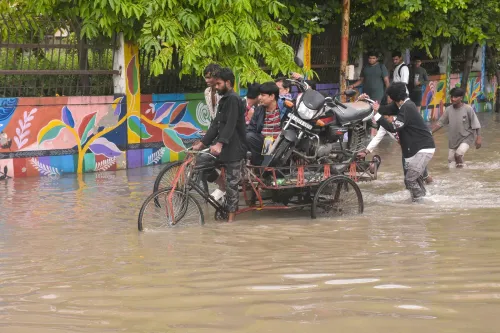
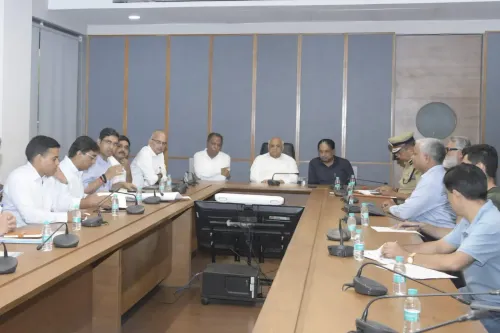
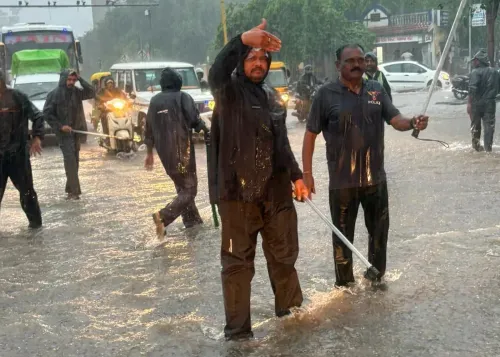
Ahmedabad is steadily returning to normalcy after three days of exceptionally heavy rainfall battered the city, with the Ahmedabad Municipal Corporation (AMC) reporting on Saturday, 25 July that water has been fully drained from 133 of 148 identified waterlogging locations and traffic restored across almost all major roads. Dewatering and restoration work continues at the remaining 15 sites.
Rainfall Scale and Worst-Hit Zones
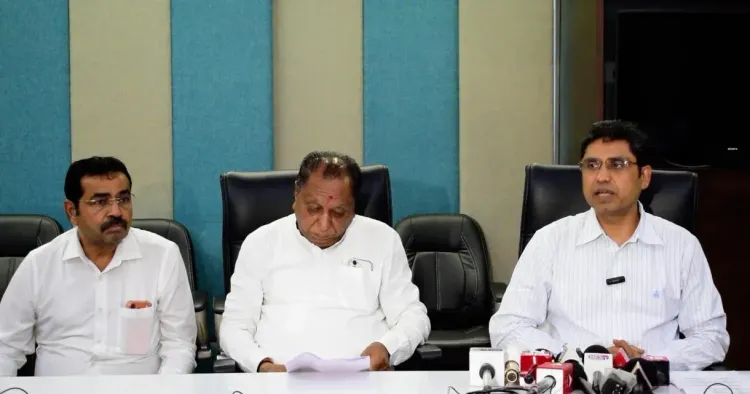
Municipal Commissioner Banchhanidhi Pani, addressing the media alongside Ahmedabad Mayor Hitesh Barot and Standing Committee Chairman Kamlesh Patel, said the city received an extraordinary volume of rain over the three-day period. The South-West Zone recorded the highest rainfall at 625 mm, followed by the North-West Zone at 585 mm, the Central Zone at 498 mm, and the West Zone at 494 mm.
Bopal alone recorded approximately 544 mm — roughly 22 inches — while localities including Bakrol, Sarkhej, and Jodhpur each received more than 16 inches during the same period.
Roads, Underpasses and Residential Societies
All major roads in Ahmedabad have been reopened to traffic. The sole exception is the underpass connecting Ranip and Chandlodia, which remains temporarily closed pending complete dewatering. All other underpasses have resumed normal operations.
Of 126 flood-affected residential societies, dewatering has been completed in 107, with operations ongoing in the remaining 19. AMC is also providing dewatering pumps to clear water from basements of residential and commercial complexes, including the Indraprasth Complex where Fire Department equipment is currently deployed.
Bopal's Persistent Flooding and the Engineering Response
Commissioner Pani explained that Bopal's saucer-shaped topography makes it inherently prone to water accumulation. To address this, AMC excavated an approximately 350-metre trench and deployed dewatering pumps to divert water through a 1,200 mm pipeline into Ghuma Lake, from where it is discharged through the Gota-Godhavi Canal. Three additional dewatering pumps have been positioned in the Kardaj area, while pumping operations continue at Ratan Lake.
Pani also noted that the Western Trunk Line project had 'substantially reduced waterlogging between Science City, Bodakdev and the Appluj area compared with previous years,' crediting the infrastructure investment with measurable improvement. The pumping station serving Makarba, Sarkhej and nearby areas was upgraded overnight, with 'noticeable improvements seen on Saturday,' he said.
Clean-Up, Public Health and Citizen Safety
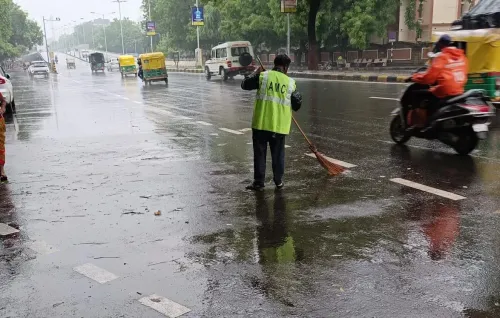
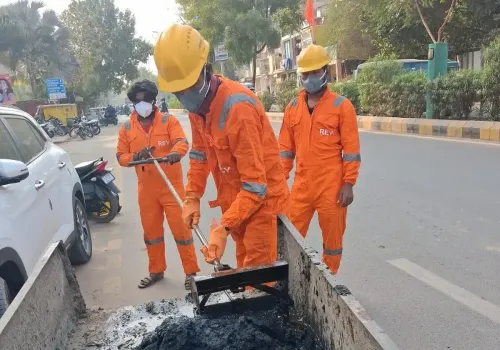
AMC deployed 7,580 personnel across 480 teams from its Solid Waste Management Department once floodwaters began receding. The teams removed 664 tonnes of silt and sludge and cleared 3,473 metric tonnes of waste from roads and residential areas.
To contain the risk of water-borne disease, the Health Department distributed 1.25 lakh chlorine tablets on Saturday, following 1.52 lakh tablets distributed the previous day. High chlorination is being maintained at all water distribution centres to safeguard drinking water quality.
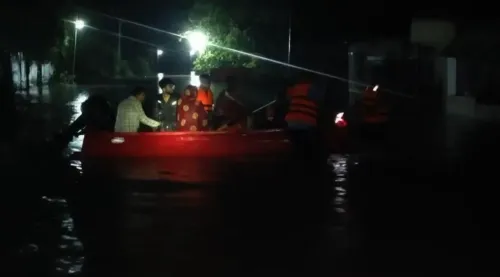
On the safety front, 11 people were shifted to safer locations from the Sabarmati area, and 12 families from a Gujarat Housing Board colony in Naranpura were relocated as a precaution while diaphragm wall strengthening work is carried out. No construction permission will be granted at that site until the diaphragm wall work is fully completed, Pani said.
Alert Status and What Comes Next
The weather warning for Ahmedabad has been downgraded from a Red Alert to an Orange Alert, with the possibility of further easing to Yellow and then Green if conditions continue to improve. The Sabarmati Barrage level is currently being held at around 123.5; Pani said it may be raised to between 125 and 126 if conditions become favourable.
Civic teams remain on round-the-clock duty, and residents can register complaints through the AMC Control Room or other designated channels. Road and Building Department teams have also begun repairing roads damaged by settlement and potholes caused by the rainfall. With the alert level easing and drainage operations accelerating, a full return to normalcy is expected within the coming days.
Point of View
And while the AMC's response this time was faster and better-coordinated, the fact that Bopal required an emergency 350-metre trench and a pipeline workaround points to a deeper infrastructure gap that routine dewatering cannot fix. The Western Trunk Line's success between Science City and Bodakdev shows what planned drainage investment can do — the question is why Bopal, a rapidly urbanised zone, was left with saucer-shaped vulnerability in the first place. Distributing chlorine tablets is necessary, but it is a reactive measure; water-borne disease risk after urban flooding of this scale demands a more systematic public health protocol. The downgrade from Red to Orange is welcome, but the next heavy spell will test whether these emergency fixes hold.
NationPress
24 Oct 2026
Frequently Asked Questions
How much rainfall did Ahmedabad receive in the three-day flood event?
Ahmedabad received exceptionally heavy rainfall over three days, with the South-West Zone recording the highest at 625 mm, followed by the North-West Zone at 585 mm, the Central Zone at 498 mm, and the West Zone at 494 mm. Bopal alone recorded approximately 544 mm, or about 22 inches.
How many waterlogging sites have been cleared in Ahmedabad?
As of Saturday, 25 July, water has been fully drained from 133 of the city's 148 identified waterlogging locations. Dewatering operations are continuing at the remaining 15 sites.
Why did Bopal flood so severely and how is AMC addressing it?
Bopal's saucer-shaped topography makes it prone to water accumulation during heavy rain. AMC has excavated a 350-metre trench and is using dewatering pumps to divert water through a 1,200 mm pipeline into Ghuma Lake, from where it drains through the Gota-Godhavi Canal.
What is the current weather alert status for Ahmedabad?
The weather alert has been downgraded from a Red Alert to an Orange Alert as of 25 July. Municipal Commissioner Banchhanidhi Pani said it could ease further to Yellow and then Green if conditions continue to improve.
What public health measures has AMC taken after the flooding?
The AMC Health Department distributed 1.25 lakh chlorine tablets on Saturday and 1.52 lakh tablets the previous day to reduce the risk of water-borne diseases. High chlorination is also being maintained at all water distribution centres to ensure safe drinking water supply.