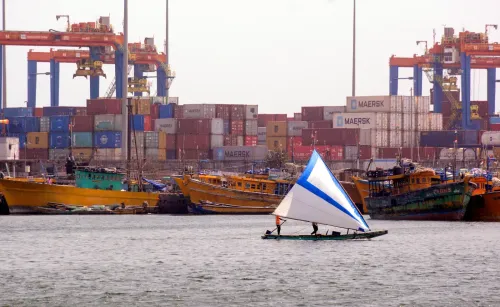
India targets ₹1 lakh crore seafood exports with whole-of-government push
Synopsis
India is making a coordinated national bet on seafood exports, with the Centre rallying states, institutions, and industry around a ₹1 lakh crore target. The Visakhapatnam workshop signals a structural shift — from volume-led shipments to value-added, traceable, globally competitive seafood products, with deep-sea and EEZ resources still largely untapped.
Key Takeaways
The Centre has committed to a whole-of-government approach to help states achieve a ₹1 lakh crore seafood exports target .
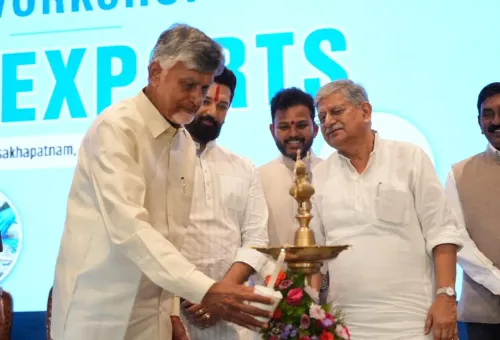
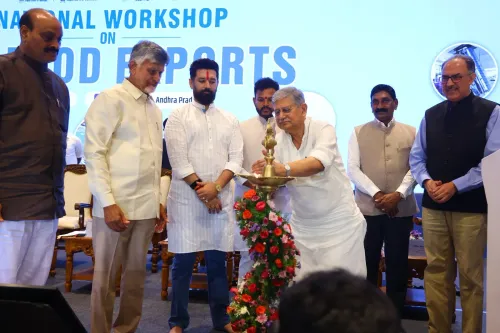
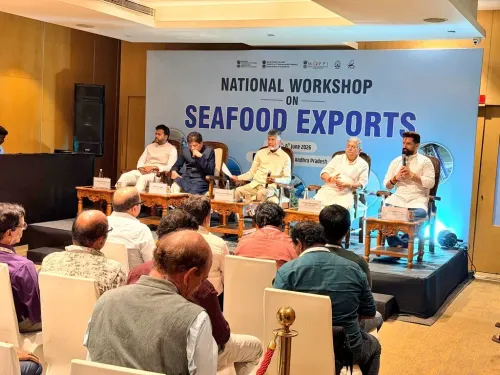
The National Workshop on Seafood Exports concluded in Visakhapatnam on 7 June 2025 , bringing together Central ministries, states, exporters, and institutions including MPEDA , NFDB , and NABARD .
Key priorities include shifting from volume-based exports to value-added, high-quality products and expanding cold chain, air cargo, and quarantine infrastructure .
Officials highlighted untapped potential in inland fisheries , deep-sea resources , EEZ , and emerging segments like ready-to-eat seafood .
Workshop recommendations are set to inform policy formulation and targeted interventions for India's global seafood competitiveness.
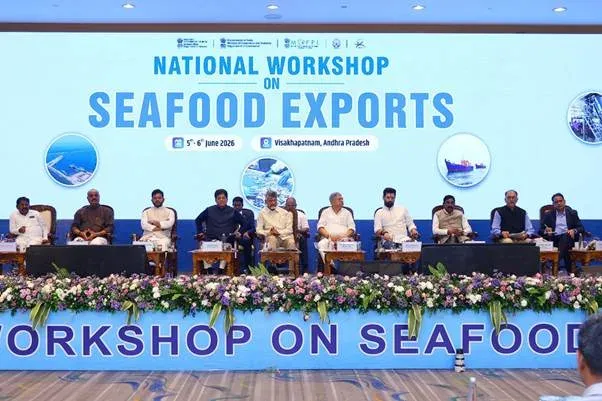
The Centre has pledged full support to state governments in achieving a ₹1 lakh crore seafood exports target, committing to a whole-of-government approach that creates wider opportunities for fishers, farmers, processors, startups, and MSMEs. The assurance came through an official statement issued on Sunday, 7 June, following the conclusion of the National Workshop on Seafood Exports held in Visakhapatnam.
Workshop Brings Stakeholders Together
The two-day national workshop at Visakhapatnam drew senior officials from Central ministries, state and Union Territory representatives, seafood exporters, industry associations, processors, startups, and value-chain stakeholders. Key institutions in attendance included the Marine Products Export Development Authority (MPEDA), the Export Inspection Council (EIC), the National Fisheries Development Board (NFDB), NABARD, NCDC, NCEL, SFAC, and Invest India.
The workshop underscored a shared commitment to strengthening India's seafood export ecosystem through coordinated action across sustainable production, value addition, traceability, certification, infrastructure, innovation, and market diversification.
Key Priorities Identified
Deliberations centred on repositioning India as a globally competitive seafood exporter — shifting from volume-driven shipments to high-quality, value-added products. Officials stressed the need to expand export infrastructure, including cold chain, air cargo, and quarantine facilities, to ensure efficient and compliant trade flows.
The importance of scaling exports from inland fisheries — which contribute significantly to overall production — was highlighted, alongside untapped potential in emerging segments such as ready-to-eat products and high-value species. Sustainability, quality assurance, and regulatory compliance were recurring themes throughout the sessions.
What Officials Said
Sagar Mehra, Joint Secretary, Department of Fisheries, emphasised scaling up production, strengthening traceability and certification frameworks, and harnessing untapped potential in deep-sea and Exclusive Economic Zone (EEZ) resources through ongoing reforms and flagship schemes.
Ajay Bhadoo, Additional Secretary, Department of Commerce, outlined India's current export performance, evolving global market dynamics, and the role of Free Trade Agreements (FTAs), market diversification, and enhanced competitiveness in expanding seafood exports.
D. Praveen, Joint Secretary, Ministry of Food Processing Industries, underscored the need to scale up processing and value addition, highlighting gaps relative to global benchmarks and detailing key schemes supporting cold chain development, processing infrastructure, and value chain integration.
Road Ahead
The recommendations emerging from the workshop are expected to feed directly into policy formulation and targeted interventions aimed at enhancing India's global competitiveness in seafood exports. Officials also stressed a strong thrust on multimodal logistics, private sector participation, and investment in innovation to build a resilient, future-ready export ecosystem. With India's fisheries sector holding considerable untapped depth — both literally and commercially — the workshop signals that the ₹1 lakh crore ambition is now a coordinated national priority, not merely a headline number.
Point of View
Yet its seafood export basket remains narrow and undervalued — dominated by frozen shrimp with limited value addition. The ₹1 lakh crore target is credible only if the shift from volume to value is backed by enforceable traceability standards and cold chain investment that reaches the last-mile fisher, not just large processors. The presence of MPEDA, NFDB, and commerce officials at the same table is a positive structural signal, but past fisheries schemes have struggled with inter-ministerial coordination. The real test will be whether the workshop's recommendations survive the transition from conference room to budget line.
NationPress
24 Oct 2026
Frequently Asked Questions
What is India's ₹1 lakh crore seafood exports target?
It is a national goal for India's seafood export sector to reach ₹1 lakh crore in annual export value, driven by a coordinated push across Central ministries, state governments, and industry. The Centre reaffirmed its commitment to this target at the National Workshop on Seafood Exports held in Visakhapatnam on 7 June 2025.
What was the National Workshop on Seafood Exports about?
The workshop, held in Visakhapatnam, brought together Central and state officials, exporters, processors, startups, and institutions to align on a strategy for strengthening India's seafood export ecosystem. Key themes included value addition, traceability, cold chain infrastructure, market diversification, and sustainable production.
Which institutions participated in the Visakhapatnam seafood workshop?
Participants included the Marine Products Export Development Authority (MPEDA), the Export Inspection Council (EIC), the National Fisheries Development Board (NFDB), NABARD, NCDC, NCEL, SFAC, and Invest India, alongside seafood exporters, industry associations, and processors.
What are the key policy priorities for India's seafood exports?
Officials identified a shift from volume-based to value-added exports, expansion of cold chain and air cargo infrastructure, stronger traceability and certification frameworks, scaling of inland fisheries and deep-sea resources, and greater private sector participation and investment in processing capacity.
How will the workshop recommendations be used?
The recommendations are expected to contribute to policy formulation and targeted government interventions aimed at enhancing India's global competitiveness in seafood exports, with a focus on building a resilient and future-ready export ecosystem.