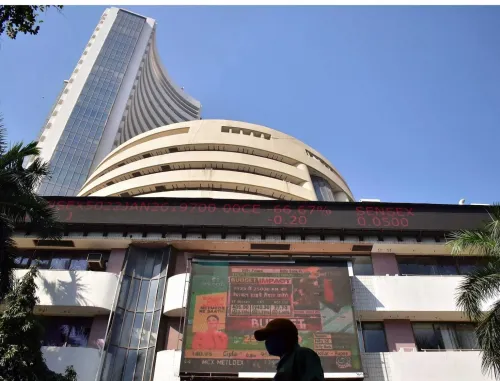
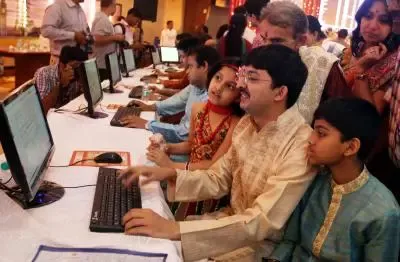
Muhurat Trading 2026: Nifty, Sensex gained in 8 of last 10 Diwali sessions

Synopsis
Muhurat trading history tilts in the bulls' favour: Nifty and Sensex have closed higher in every single Diwali session since 2017, though gains have consistently stayed below 1%. As Samvat 2083 begins on 8 November, the question is whether an eighth consecutive positive close is on the cards — or whether the slimmest gain on record in 2025 is a sign of fading momentum.
Key Takeaways
BSE and NSE will hold the Muhurat trading session from 2:20 pm to 3:30 pm IST on 8 November 2026 , marking the start of Samvat 2083 .
Both Nifty and Sensex have posted gains in 8 of the last 10 Muhurat trading sessions, with losses only in 2016 and 2017 .
Gains have consistently stayed below 1% , with the Nifty's strongest return at 1% in 2022 and the Sensex peaking at 0.87% that same year.
In the 2025 session, the Sensex closed up just 63 points (+0.07%) at 84,426 and the Nifty gained 25 points (+0.1%) to settle at 25,868 .
Both indices briefly hit 52-week highs during the 2025 session before giving back most early gains.
As Samvat 2083 gets underway on 8 November 2026, the BSE and NSE are set to hold their annual Muhurat trading session from 2:20 pm to 3:30 pm IST — a one-hour symbolic window that marks the Hindu financial new year and traditionally invites fresh investments ahead of the Diwali festivities. Historical data show the session has delivered gains in eight of the last ten years, offering cautious optimism for participating investors.
Decade of Data: Gains Outweigh Losses
According to historical market data, both the Nifty and Sensex posted losses only in 2016 and 2017 during the Muhurat session. The Nifty fell 0.14% in 2016 and 0.63% in 2017, while the Sensex declined 0.04% and 0.59% in the same years respectively. From 2018 onwards, both indices have held firmly in positive territory across every single session.
Gains, however, have been characteristically modest — typically below 1% — reflecting the session's symbolic rather than purely speculative character. The strongest year for the Nifty was 2022, when it advanced 1%, while the Sensex posted its best Muhurat return of 0.87% that same year.
What Happened in the Most Recent Session
In the 2025 Muhurat trading session, both indices opened positively and briefly touched their respective 52-week highs at the time. However, early gains faded as the session progressed. The Sensex ultimately closed up 63 points, or approximately 0.07%, at 84,426, while the Nifty added 25 points, or around 0.1%, to settle at 25,868 — the slimmest advance in the eight-year positive run.
Year-by-Year Nifty and Sensex Muhurat Returns
The Nifty's year-by-year Muhurat performance from 2018 reads: +0.7% (2018), +0.37% (2019), +0.47% (2020), +0.5% (2021), +1% (2022), +0.5% (2023), +0.4% (2024), and +0.1% (2025).
The Sensex mirrored this trend closely: +0.7% (2018), +0.49% (2019), +0.45% (2020), +0.5% (2021), +0.87% (2022), +0.54% (2023), +0.42% (2024), and +0.07% (2025).
What Muhurat Trading Means for Investors
The session coincides with Diwali, Hinduism's festival of lights, and is rooted in the belief that investments made on this day carry auspicious significance. For many retail investors, it functions less as a high-stakes trading window and more as a ceremonial entry point into equity markets for the new Samvat year. Notably, the consistent positive bias — eight straight years — has also attracted short-term tactical interest from domestic institutional participants.
With Samvat 2083 beginning amid a broadly uncertain global macro backdrop, all eyes will be on whether the benchmark indices can extend the winning streak when the closing bell rings on Sunday evening.
Point of View
But the trend line tells a subtler story — gains have been shrinking, with 2025 producing the thinnest advance of the entire run at just 0.07% on the Sensex. The session's symbolic weight keeps participation high, but its predictive value for the broader Samvat year is limited. What actually determines market direction in the weeks after Diwali is the global macro environment and domestic earnings momentum — neither of which is settled by a one-hour symbolic window.
NationPress
8 Nov 2026
Frequently Asked Questions
What is Muhurat trading and when does it take place in 2026?
Muhurat trading is a special one-hour stock market session held on Diwali, considered auspicious for beginning new investments and marking the Hindu financial new year. In 2026, the BSE and NSE will conduct the session from 2:20 pm to 3:30 pm IST on 8 November, coinciding with the start of Samvat 2083.
How have Nifty and Sensex performed historically during Muhurat trading?
Both the Nifty and Sensex have posted gains in 8 of the last 10 Muhurat trading sessions. The only losses came in 2016 and 2017; since 2018, both indices have closed higher every single Diwali session, though gains have generally stayed below 1%.
What happened during the 2025 Muhurat trading session?
In the 2025 session, the Sensex gained 63 points (around 0.07%) to close at 84,426, while the Nifty advanced 25 points (around 0.1%) to settle at 25,868. Both indices briefly touched 52-week highs early in the session before surrendering most of their gains.
What is Samvat 2083?
Samvat 2083 is the new Hindu financial year beginning on Diwali 2026. It is traditionally marked by the Muhurat trading session on BSE and NSE, which serves as a ceremonial start to fresh investments and market activity for the year ahead.
Which year saw the strongest Muhurat trading gains?
The year 2022 saw the strongest Muhurat returns for both indices, with the Nifty rising 1% and the Sensex gaining 0.87%. It stands as the peak of the eight-year positive run that began in 2018.