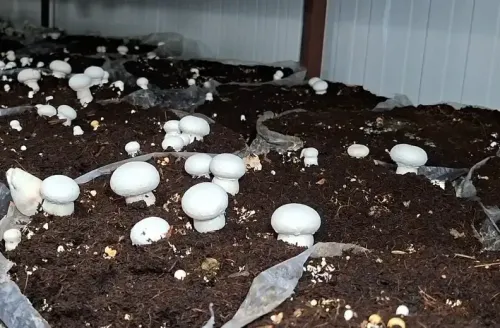
Mushroom cultivation offers livelihood path for farmers, women and rural youth
Synopsis
A government factsheet spotlights two remarkable success stories: a former waste picker in Guntur now earning ₹35,000 a month from milky mushrooms, and a Dehradun IT professional whose ₹2,000 experiment has grown into a 1-tonne-a-day enterprise employing 15 people and training over 2,000 farmers — making mushroom cultivation one of India's most accessible rural entrepreneurship models.
Key Takeaways
A government factsheet released on 10 November 2026 identifies mushroom cultivation as a viable livelihood option for farmers, women, and rural youth across India.
Ruthu of Guntur district, Andhra Pradesh earns approximately ₹35,000 per month producing 8 kg of milky mushrooms daily after STRY training by KVK Guntur.
Hiresha Verma of Dehradun, Uttarakhand scaled a ₹2,000 pilot in 2013 into Han Agrocare , now producing 1 tonne of mushrooms per day and employing 15 people .
Hiresha has trained more than 2,000 women and farmers in hill regions, extending the enterprise's community impact.
Mushrooms require limited land and suit rural, urban, and peri-urban settings, making them accessible to smallholder farmers.
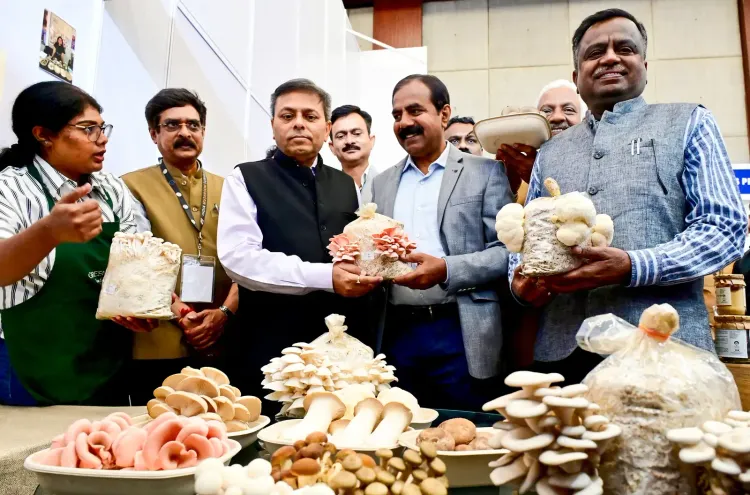
Mushroom cultivation is emerging as a credible pathway for livelihood diversification and entrepreneurship among farmers, women, and rural youth across India, according to a government factsheet released on 10 November 2026. The document highlights how structured training and technical support can help growers make productive use of limited land while generating sustainable additional income.
Why Mushrooms Are Gaining Ground
India's horticulture sector is witnessing growing interest in mushroom farming, driven partly by a wider consumer shift toward healthier diets. Mushrooms are valued for their nutritional profile — generally low in calories, fat, and carbohydrates while delivering protein, dietary fibre, vitamins, and minerals. Crucially, they can be cultivated in rural, urban, and peri-urban settings without large landholdings, making them accessible to growers with limited resources.
From Waste Picker to Mushroom Entrepreneur: Ruthu's Story
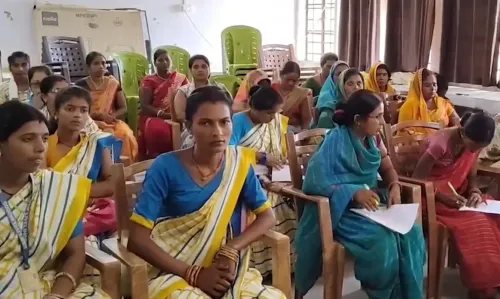
Ruthu, a resident of Ippatam village in Guntur district, Andhra Pradesh, began her journey at the age of 20 while working as a waste picker. Seeking an independent livelihood, she enrolled in a short-term training programme under the Skill Training for Rural Youth (STRY) initiative. The training was conducted by Krishi Vigyan Kendra (KVK), Guntur, and covered key stages including composting, spawning, casing, pinning, cropping, and harvesting.
The programme received support from the State Agricultural Management and Extension Training Institute (SAMETI), Andhra Pradesh, and the National Institute of Agricultural Extension Management (MANAGE), Hyderabad. After completing the training, Ruthu began cultivating milky mushrooms and established a regular supply channel to the local market. Her daily production reached approximately 8 kg, translating into a monthly income of around ₹35,000. She has since emphasised the importance of using clean, disease-free paddy straw, good-quality spawn, and maintaining precise temperature and moisture conditions during cultivation.
IT Professional Builds a 1-Tonne-a-Day Enterprise in Uttarakhand
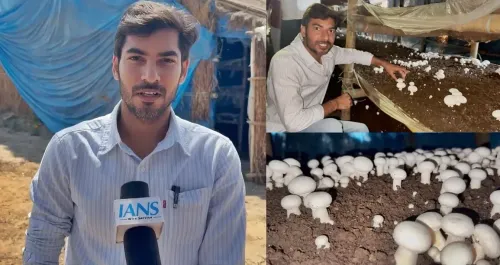
Hiresha Verma, an IT professional from Charba village in Dehradun, Uttarakhand, took a different route. In 2013, she started cultivating oyster mushrooms in a servant quarter using just 25 bags and an initial investment of ₹2,000. That modest outlay generated returns of approximately ₹5,000, prompting her to treat mushroom cultivation as a full entrepreneurial venture.
She subsequently founded 'Han Agrocare', a Dehradun-based mushroom enterprise. As a pilot initiative, she set up three bamboo cultivation huts, each accommodating 500 mushroom bags. Today, Han Agrocare has a production capacity of approximately one tonne of mushrooms per day and employs 15 people. Beyond commercial output, Hiresha has trained more than 2,000 women and farmers in the hill regions, multiplying the economic impact of her enterprise well beyond its own balance sheet.
Broader Implications for India's Rural Economy
These two cases reflect a wider policy push to channel agri-extension infrastructure toward non-conventional crops that suit India's fragmented landholding pattern. With average farm sizes shrinking and rural underemployment persistent, mushroom cultivation — which requires low capital, short gestation periods, and modest space — fits a gap that conventional crop cycles struggle to fill. This comes amid growing government emphasis on doubling farmer incomes and expanding the horticulture sector's share of agricultural GDP.
As training ecosystems mature and market linkages strengthen, mushroom cultivation is poised to move from a supplementary income activity to a primary livelihood for a larger cohort of rural entrepreneurs.
Point of View
Low-capital answer to rural underemployment that conventional crop-support schemes struggle to address. Yet two success stories, however compelling, do not constitute a scalable policy. The real bottleneck is market linkage: Ruthu's local supply chain works in Guntur, but replicating that in regions without KVK density or cold-chain infrastructure is a different challenge altogether. The government would need to move from documenting successes to systematically mapping training coverage gaps and market access constraints before mushroom farming can graduate from an inspiring anecdote to a measurable rural income intervention.
NationPress
10 Nov 2026
Frequently Asked Questions
How much can a farmer earn from mushroom cultivation in India?
Earnings vary based on scale and market access, but according to a government factsheet, a trained grower like Ruthu of Guntur district produces around 8 kg of milky mushrooms daily, generating a monthly income of approximately ₹35,000. At the enterprise level, Han Agrocare in Dehradun produces one tonne per day, employing 15 people.
What training is available for mushroom farming in India?
The Skill Training for Rural Youth (STRY) initiative, implemented through Krishi Vigyan Kendras (KVKs), offers short-term training covering composting, spawning, casing, pinning, cropping, and harvesting. The programme is supported by SAMETI (State Agricultural Management and Extension Training Institute) and MANAGE, Hyderabad.
What is Han Agrocare and who founded it?
Han Agrocare is a mushroom enterprise based in Dehradun, Uttarakhand, founded by Hiresha Verma, an IT professional from Charba village. Starting with 25 bags and ₹2,000 in 2013, the company now has a production capacity of approximately one tonne per day and employs 15 people, while also training over 2,000 women and farmers in the region.
Why is mushroom cultivation suitable for small and marginal farmers?
Mushrooms can be grown with limited land in rural, urban, and peri-urban settings, require relatively low capital investment, and have short production cycles. Their nutritional value aligns with rising consumer demand for healthy food, expanding market opportunities for small producers.
Which government bodies support mushroom farming in India?
Key institutions include Krishi Vigyan Kendras (KVKs) under the Indian Council of Agricultural Research (ICAR), the National Institute of Agricultural Extension Management (MANAGE) in Hyderabad, and State Agricultural Management and Extension Training Institutes (SAMETIs). These bodies provide training, technical guidance, and extension support to farmers and rural entrepreneurs.