Nadda Renews Immunisation Pledge on World Immunization Day
Synopsis
On World Immunization Day, Union Health Minister J. P. Nadda renewed India's commitment to full vaccination coverage, highlighting the UIP, U-WIN digital platform, and Mission Indradhanush, while citing India's polio-free status and elimination of maternal and neonatal tetanus as proof of sustained impact.
Key Takeaways
Union Health Minister J.
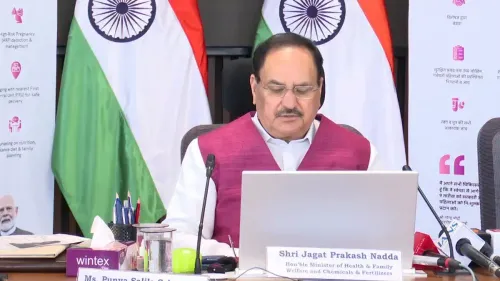
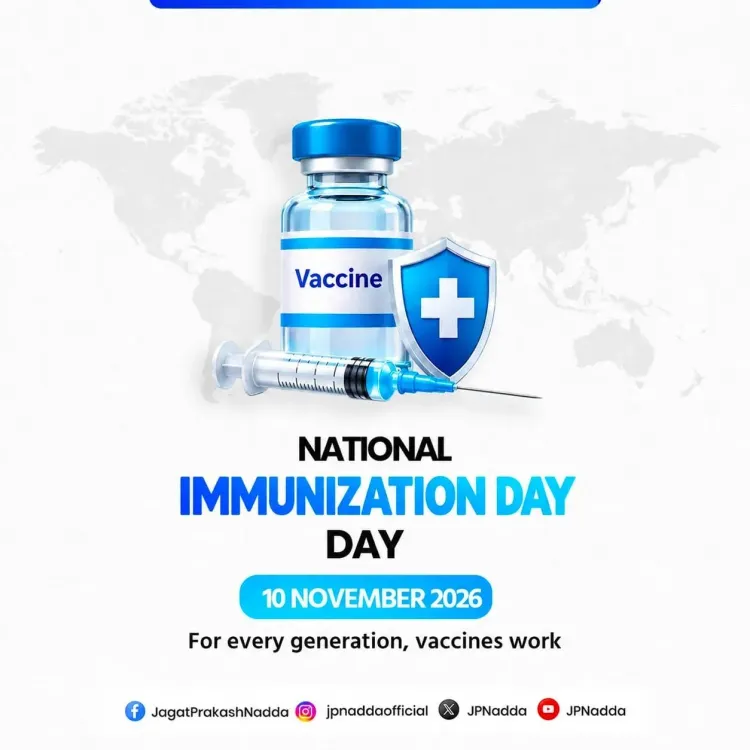
Nadda marked World Immunization Day on 10 November 2026 by calling for renewed commitment to child and maternal immunisation.
Three programmes are central to India's strategy: the Universal Immunization Programme (UIP) , Mission Indradhanush (launched April 2014), and the U-WIN digital tracking platform .
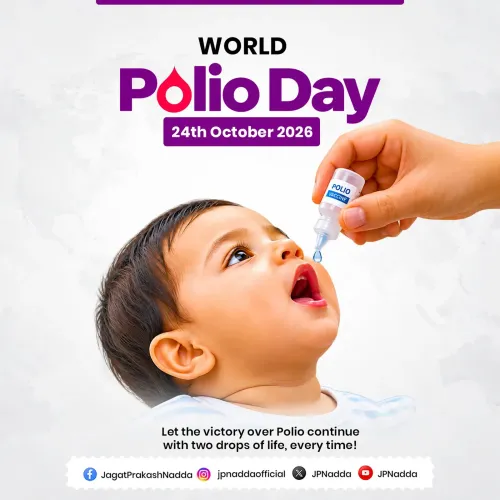
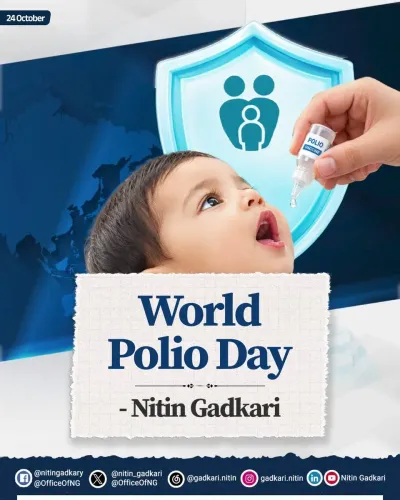
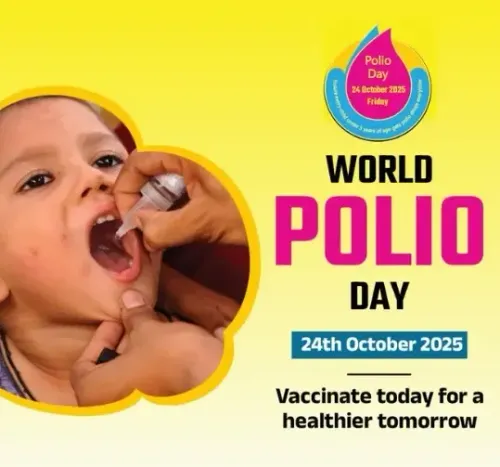
India was certified polio-free by WHO in March 2014 following sustained pulse polio campaigns.
India achieved elimination of maternal and neonatal tetanus in 2015 through targeted immunisation drives.
U-WIN aims to digitise beneficiary registration and dose tracking to reduce 'zero-dose' children across the country.
Nadda's statement frames India's immunisation progress as part of a broader contribution to WHO and UNICEF-coordinated global eradication goals .
On World Immunization Day, 10 November 2026, Union Health Minister J. P. Nadda called on the nation to recommit to protecting every child and pregnant woman through timely, complete vaccination — anchoring the pledge to three signature programmes that have reshaped India's public-health landscape over the past decade.
Three pillars driving India's immunisation push
Nadda spotlighted the Universal Immunization Programme (UIP), the backbone of free vaccine delivery through India's public-health system; the U-WIN digital platform, which registers beneficiaries and tracks doses to prevent drop-outs; and Mission Indradhanush, the intensification campaign launched in April 2014 to close coverage gaps in low-performing districts and urban slums. Together, they represent the government's layered strategy — routine delivery reinforced by periodic drives, now backed by digital accountability.
The minister credited the expansion of these initiatives to the leadership of Prime Minister Narendra Modi, framing them as evidence of a sustained political will rather than episodic public-health gestures.
Polio-free and tetanus-eliminated: milestones that count
Nadda's post also pointed to two landmark achievements: India's WHO-certified polio-free status, conferred in March 2014 after decades of pulse polio campaigns, and the elimination of maternal and neonatal tetanus in 2015 following targeted immunization drives. Both milestones are benchmarks that eluded the country for generations, and their invocation on a global health observance is a deliberate reminder of what sustained political and logistical commitment can deliver.
The minister's closing line — 'Every dose counts. No child or pregnant women should be left unprotected' — was a direct call to health workers, district administrators, and families alike.
What the U-WIN platform means for coverage tracking
The U-WIN digital registry is the newest layer in this architecture, designed to shift immunisation management from paper-based records to real-time dashboards. By digitising beneficiary registration and dose tracking, the platform aims to identify and reach children who miss scheduled vaccines — the so-called 'zero-dose' children who remain the last frontier in achieving universal coverage. Exact operational coverage metrics for U-WIN are still emerging, but health ministry reviews and forthcoming budget cycles are expected to offer clearer data on its reach.
India's immunisation programme has long been integrated into WHO and UNICEF-coordinated global eradication goals. The minister's statement on World Immunization Day positions India not merely as a programme implementer but as a country with proof-of-concept victories to share with the developing world.
The scorecard is real, the gaps are known, and the digital tools are in place — the question now is whether the last unvaccinated child can be reached before the next observance.
Point of View
Tetanus elimination) and three active programmes to PM Modi's tenure, reinforcing the BJP's claim of measurable health governance. The addition of U-WIN to the roster signals a deliberate pivot toward digital accountability as the new proof of delivery, moving beyond campaign optics to data-verifiable outcomes. Within the broader arc of India's health policy, this represents a consolidation phase: the infrastructure is built, the achievements are documented, and the remaining challenge — reaching zero-dose children in the most underserved pockets — is where the programme's credibility will ultimately be tested.
NationPress
10 Nov 2026
Frequently Asked Questions
What is World Immunization Day and when is it observed?
World Immunization Day is an annual observance on 10 November , promoted by the WHO to highlight the importance of vaccination in preventing disease and to encourage governments and communities to close coverage gaps.
What is Mission Indradhanush?
Mission Indradhanush is a government campaign launched in April 2014 to intensify routine immunisation in low-coverage districts and urban slums, targeting children and pregnant women who missed scheduled vaccines under the Universal Immunization Programme.
When was India declared polio-free?
India was certified polio-free by the WHO in March 2014 , following decades of pulse polio campaigns that systematically vaccinated children across the country.
What is the U-WIN platform in India's health system?
U-WIN is a digital platform introduced to register immunisation beneficiaries and track vaccine doses under the Universal Immunization Programme, aiming to reduce drop-outs and identify unvaccinated children in real time.
Has India eliminated maternal and neonatal tetanus?
Yes. India achieved the elimination of maternal and neonatal tetanus in 2015 through targeted immunisation drives, meeting the WHO threshold for elimination as a public-health problem.