Pradhan Backs IIT Madras Push to Merge Medicine and Engineering
Synopsis
Union Education Minister Dharmendra Pradhan lauded IIT Madras for creating a Department of Medical Sciences & Technology that blends engineering, AI, and medicine. He called for scaling indigenous frontier healthcare innovation as a national strategic priority under the broader Atmanirbhar framework.
Key Takeaways
Union Education Minister Dharmendra Pradhan praised IIT Madras on November 10, 2026 for its new Department of Medical Sciences & Technology .
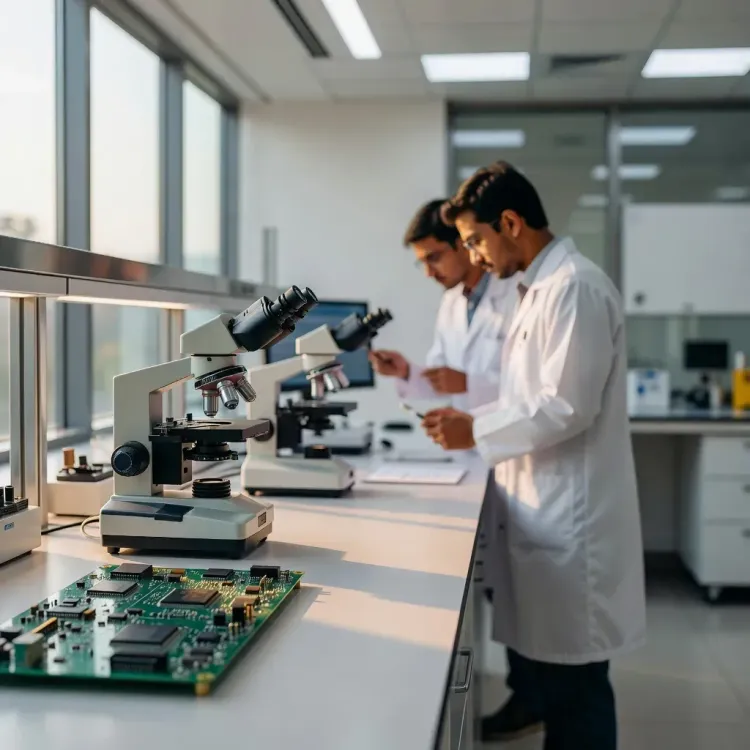
The department integrates engineering, mathematics, AI, and computational sciences with medical research, targeting diagnostics, drug discovery, and precision healthcare.
Pradhan linked the initiative to India's strategic goal of developing 'cutting-edge technologies indigenously' and reducing dependence on foreign medical devices.
The move aligns with the National Education Policy 2020 mandate for multidisciplinary education and removal of rigid disciplinary boundaries at higher education institutions.
The minister's language signals broader expectations that other IITs may follow IIT Madras 's lead in building medical science-engineering convergence departments.
When one of India's premier technical universities builds a bridge between the operating theatre and the engineering lab, the country's top education minister takes notice. Union Education Minister Dharmendra Pradhan on Tuesday, November 10, 2026, praised IIT Madras for establishing its Department of Medical Sciences & Technology, calling it a 'commendable step towards breaking disciplinary boundaries.'
What IIT Madras is Building — and Why It Matters Now
The Chennai-based institute's new department is designed to fuse medicine with engineering, mathematics, artificial intelligence, and computational sciences. That combination, Pradhan argued, 'opens new possibilities in advanced diagnostics, medical devices, drug discovery and precision healthcare.' The minister's framing was deliberate: this is not a niche academic reorganisation. It is, in his reading, a node in a larger national technology strategy.
IIT Madras has long been ranked among India's top research institutions, and its move into medical sciences follows years of pressure — and encouragement — from the National Education Policy 2020, which explicitly called for multidisciplinary higher education and the dismantling of rigid departmental walls. The new department represents one of the most concrete institutional responses to that mandate yet.
The Atmanirbhar Angle: Indigenous Tech, Global Stakes
Pradhan did not stop at congratulations. He attached a clear strategic ambition to the initiative, writing that 'the larger vision must be to develop cutting-edge technologies indigenously, strengthen India's capabilities in frontier technologies and create solutions that address both national priorities and global challenges too.' The language tracks directly with the government's Atmanirbhar Bharat (self-reliant India) framework, which has sought to reduce dependence on foreign medical devices and diagnostics — a vulnerability that India felt acutely during the COVID-19 pandemic.
India's medical device sector remains heavily import-dependent. Marrying the deep engineering talent at institutions like IIT Madras with structured medical research infrastructure could, over time, shift that balance — especially in areas like precision diagnostics and AI-assisted drug discovery where the entry barriers are more about algorithmic sophistication than massive capital investment.
A Template Other IITs Might Follow
The question that naturally follows Pradhan's praise: will this remain a Chennai experiment, or become a system-wide blueprint? The minister's post stops short of announcing a replication policy, but the phrasing — 'fostering a culture of collaborative, high-impact research' and 'creating an ecosystem where scientific excellence can translate into meaningful innovation' — reads less like a one-off compliment and more like a signal to other IITs that this direction has ministerial wind behind it.
Whether the government moves to formally incentivise similar departments at IIT Bombay, IIT Delhi, or other campuses, and whether parliamentary or regulatory frameworks catch up to support indigenous medical device commercialisation, will be the real test of ambition here.
India has the engineers. It has the clinicians. The bet at IIT Madras is that the right institutional architecture can make them speak the same language — and that the conversation ends in products the world actually uses.
Point of View
He effectively turns a university structural decision into a policy signal. This fits a post-NEP 2020 pattern where the Education Ministry uses high-profile IIT moves to push system-wide culture change without formal mandates. The unresolved question is whether regulatory and commercialisation frameworks — procurement preferences for Indian medical devices, clinical trial pathways for domestically developed diagnostics — will materialise to match the ministerial ambition.
NationPress
10 Nov 2026
Frequently Asked Questions
What is the IIT Madras Department of Medical Sciences and Technology?
It is a department at IIT Madras in Chennai established to integrate medical sciences with engineering, artificial intelligence, mathematics, and computational sciences, aiming to advance diagnostics, medical devices, drug discovery, and precision healthcare.
Why did Dharmendra Pradhan praise IIT Madras?
Union Education Minister Dharmendra Pradhan praised IIT Madras for creating an interdisciplinary ecosystem that bridges medicine and engineering, calling it a 'commendable step' aligned with India's goal of developing cutting-edge healthcare technologies indigenously.
How does the IIT Madras medical sciences department relate to NEP 2020?
The National Education Policy 2020 explicitly called for multidisciplinary higher education and removal of rigid departmental boundaries. The new department at IIT Madras is one of the most concrete institutional responses to that mandate.
Will other IITs start medical sciences departments?
No formal policy announcement has been made, but Minister Pradhan's strong endorsement and his emphasis on a 'culture of collaborative research' is widely read as a signal encouraging other IITs to explore similar interdisciplinary structures.
What is India's goal in indigenous medical technology?
Under the Atmanirbhar Bharat framework, India aims to reduce its heavy dependence on imported medical devices and diagnostics by building domestic research and manufacturing capacity, particularly through institutions like IIT Madras .