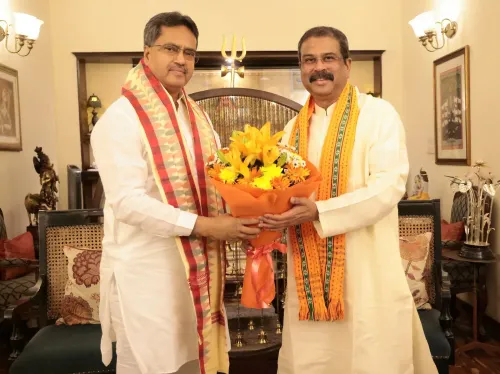
Pradhan Congratulates IIT Madras Director on Padma Shri
Synopsis
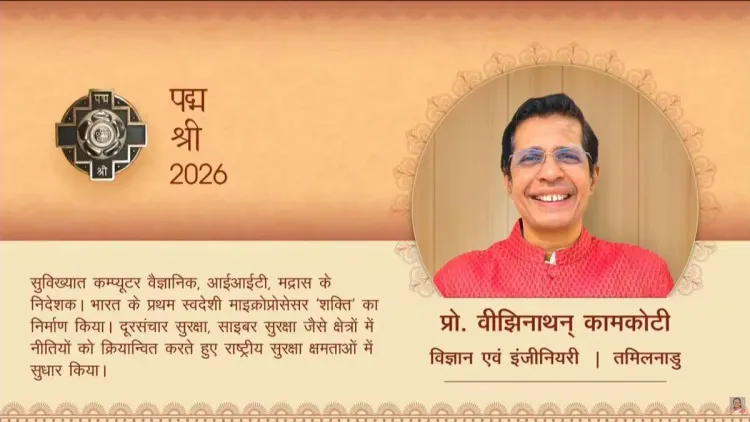
Union Education Minister Dharmendra Pradhan congratulated IIT Madras Director Prof. V. Kamakoti on being awarded the Padma Shri, praising his work on AI-in-education initiatives including BodhanAI and his commitment to the National Education Policy 2020.
Key Takeaways
Union Education Minister Dharmendra Pradhan publicly congratulated Prof.
Kamakoti on receiving the Padma Shri .
Kamakoti is the Director of IIT Madras , established in 1959 and ranked among India's top engineering institutions.
Pradhan cited Kamakoti's stewardship of BodhanAI and the Centre of Excellence in AI for Education as landmark contributions.
The recognition is linked to Kamakoti's 'unwavering commitment' to the National Education Policy 2020 , approved by the Cabinet in July 2020 .
NEP 2020 explicitly mandates Centres of Excellence in AI, with IITs identified as key implementation nodes.
The award underscores the government's broader strategy of using civilian honours to highlight academia-policy alignment in the AI and education space.
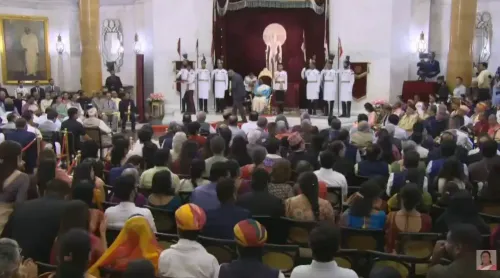
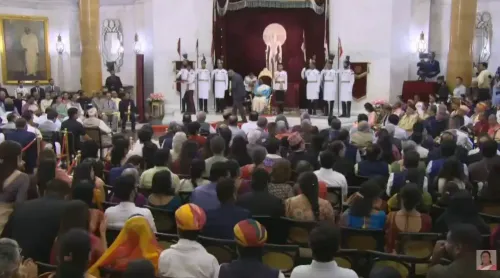
Union Education Minister Dharmendra Pradhan on Tuesday, 23 June 2026 congratulated Prof. V. Kamakoti, Director of IIT Madras, on being conferred the Padma Shri, India's fourth-highest civilian honour, citing his contributions to science, engineering and the implementation of the National Education Policy 2020.
Context
Pradhan's post on X praised Kamakoti's 'distinguished contributions to science and engineering' and his 'unwavering commitment to the vision of #NEP2020.' The minister specifically highlighted two initiatives under Kamakoti's stewardship — BodhanAI and the Centre of Excellence in AI for Education — as examples of innovation-driven work shaping what Pradhan called 'a knowledge-powered Bharat.'
The Padma Shri is conferred annually, typically announced on Republic Day, for distinguished service across fields including science, education and public affairs. Civilian honours in the science and technology category have increasingly spotlighted researchers whose work aligns with national policy priorities.
Policy Backdrop
IIT Madras was established in 1959 and is consistently ranked among India's foremost engineering and research institutions. Prof. Kamakoti is a computer science academic specialising in hardware systems, AI accelerators and embedded computing — areas directly relevant to the government's push for applied AI in education.
The National Education Policy 2020, approved by the Union Cabinet in July 2020, replaced the 1986 education policy and placed significant emphasis on technology integration, multidisciplinary learning and the development of Centres of Excellence in Artificial Intelligence. NEP 2020 explicitly envisions institutions such as IITs as anchors for this transformation, operationalising AI-linked digital public goods through government and industry partnerships.
The National Strategy for AI released by NITI Aayog in 2018 had earlier identified education as a priority sector for AI deployment, laying the groundwork for initiatives of the kind Kamakoti has overseen at IIT Madras.
Stakeholders and Impact
The recognition carries significance for India's higher education ecosystem, particularly for faculty, AI researchers and students at premier technical institutions. Honouring an IIT director for AI-in-education work sends a signal to the broader academic community about the policy directions the Centre intends to reward and replicate.
Successive central governments have positioned IITs as nodes for applied AI research linked to national education reforms. Civilian awards such as the Padma Shri are routinely used to amplify individuals whose contributions support these stated goals — reinforcing institutional alignment between academia and policy.
What's Next
Attention will now turn to the rollout status of AI centres at other IITs and whether the Ministry of Education's annual NEP 2020 implementation report — expected to be tabled before Parliament — details progress on similar Centres of Excellence across the country.
With Pradhan publicly linking Kamakoti's work to the broader NEP vision, the government appears set to continue positioning AI-in-education initiatives at premier institutions as flagship proof-points of the policy's on-ground impact.
Point of View
The minister signals that NEP 2020's technology chapter is producing visible, award-worthy outcomes, a useful political narrative as the policy enters its sixth year of rollout. The move also reinforces the Centre's strategy of positioning IITs as proof-points for AI-in-education, potentially accelerating similar centre launches at other institutions. Civilian awards thus function as soft policy instruments, amplifying institutional behaviour the government wishes to replicate nationally.
NationPress
22 Sept 2026
Frequently Asked Questions
Who is Prof. V. Kamakoti and why did he receive the Padma Shri?
Prof. V. Kamakoti is the Director of IIT Madras and a computer science professor specialising in hardware systems and AI. He received the Padma Shri for his distinguished contributions to science, engineering and AI-in-education initiatives aligned with NEP 2020.
What is BodhanAI at IIT Madras?
BodhanAI is an AI initiative at IIT Madras cited by Union Education Minister Dharmendra Pradhan as one of the pioneering programmes under Prof. Kamakoti's leadership that is helping shape innovation-driven education in India.
What is the Padma Shri award?
The Padma Shri is India's fourth-highest civilian honour, conferred annually by the Government of India for distinguished service in fields such as science, education, arts and public affairs.
How does NEP 2020 relate to AI in education?
The National Education Policy 2020, approved in July 2020, explicitly mandates the establishment of Centres of Excellence in Artificial Intelligence and promotes technology integration across all levels of education, with IITs identified as key nodes for implementation.
What did Dharmendra Pradhan say about IIT Madras?
Pradhan praised Prof. Kamakoti's 'distinguished contributions to science and engineering,' his commitment to NEP 2020, and his stewardship of initiatives like BodhanAI and the Centre of Excellence in AI for Education, calling them central to building a 'knowledge-powered Bharat.'