Pradhan Congratulates Padma Shri Awardee Mahendra Kumar Mishra
Synopsis
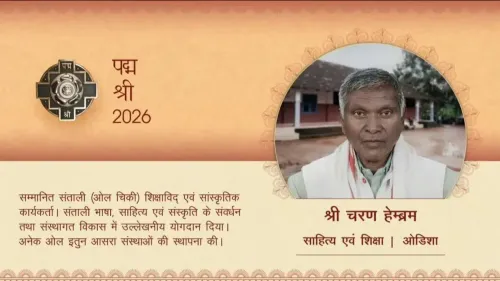
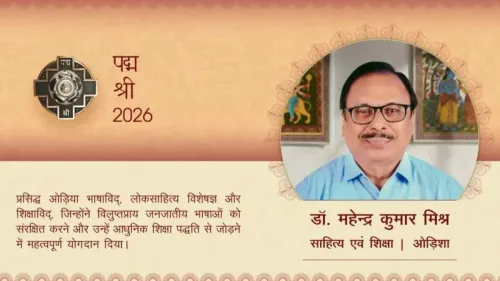
Union Education Minister Dharmendra Pradhan has congratulated Odisha-based educationist and researcher Mahendra Kumar Mishra on being conferred the Padma Shri by President Draupadi Murmu for his unparalleled contributions to literature, education and the preservation of tribal culture.
Key Takeaways
Union Education Minister Dharmendra Pradhan publicly congratulated Mahendra Kumar Mishra of Odisha on 25 May 2026 .
Mahendra Kumar Mishra was conferred the Padma Shri — India's fourth-highest civilian honour — by President Draupadi Murmu .
The award recognises Mishra's contributions to literature, education and tribal culture preservation .
Pradhan described Mishra's journey as one that 'will inspire society' in advancing India's cultural and knowledge traditions.
The recognition aligns with the Union government's emphasis on indigenous knowledge systems under the National Education Policy 2020 .
President Draupadi Murmu , the first tribal woman to hold the office and herself from Odisha , conferring the award adds symbolic weight to the honour.
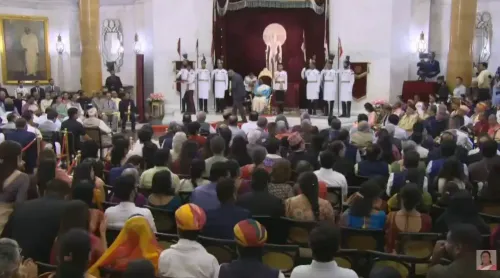
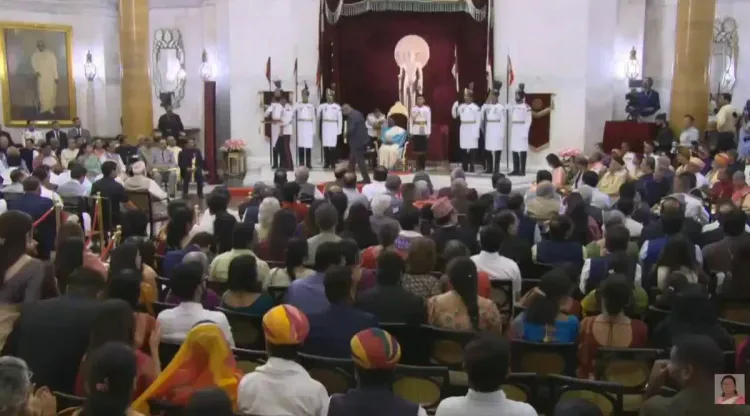
Union Education Minister Dharmendra Pradhan on Monday, 25 May 2026, congratulated Mahendra Kumar Mishra, a distinguished educationist and researcher from Odisha, on being conferred the prestigious Padma Shri award by President Draupadi Murmu for his remarkable contributions to literature and education.
Context
Posting in Odia on X, Minister Pradhan wrote: 'ସାହିତ୍ୟ, ଶିକ୍ଷା ଏବଂ ଜନଜାତି ସଂସ୍କୃତିର ସଂରକ୍ଷଣ କ୍ଷେତ୍ରରେ ତାଙ୍କର ଅବଦାନ ଅତୁଳନୀୟ' — ['His contribution to literature, education and the preservation of tribal culture is unparalleled.']. He added that Mishra's journey in advancing the country's rich cultural and knowledge traditions 'will inspire society.'
The post was tagged #PeoplesPadma and addressed to @rashtrapatibhvn, the official handle of the Rashtrapati Bhavan, underscoring the ceremonial significance of the recognition.
Policy Backdrop
The Padma Shri is the fourth-highest civilian honour of India, instituted in 1954 and conferred annually by the President of India for distinguished service across fields including literature, education, arts, and public service. President Draupadi Murmu, herself the first tribal woman to hold the office of President and a native of Odisha, conferring this award on a scholar of tribal culture carries particular symbolic resonance.
Mahendra Kumar Mishra has been recognised specifically for his work spanning literature, education, and the documentation and preservation of tribal cultural traditions — areas that align closely with the Union government's stated priorities under the National Education Policy 2020, which emphasises mother-tongue instruction and the integration of indigenous knowledge systems into formal education.
Stakeholders and Impact
The recognition is expected to resonate strongly with Odisha's large tribal communities, for whom Mishra's scholarly work has helped document and sustain oral traditions, indigenous literature, and cultural practices that might otherwise face erosion. Odia literary and academic circles have long regarded such grassroots scholarship as foundational to preserving the state's diverse heritage.
Minister Pradhan, himself from Odisha, has consistently used his platform to amplify recognition of Odia scholars and tribal knowledge custodians. His public congratulations reflect a broader pattern in which the Union government leverages civilian honours to spotlight individuals working at the intersection of regional languages, tribal culture, and education — a constituency central to both cultural policy and political outreach in eastern India.
What's Next
Attention will now turn to whether the Ministry of Education follows up with programmatic support — such as curriculum integration or documentation grants — for scholars working on tribal languages and indigenous knowledge systems. The next cycle of Padma Awards nominations and any new initiatives under NEP 2020 for tribal-language education will be closely watched by academic and tribal-rights communities across Odisha and beyond.
Point of View
Written in Odia rather than Hindi or English, is a deliberate signal to a regional and tribal audience — reinforcing the BJP's sustained cultural outreach in eastern India. The choice to tag Rashtrapati Bhavan and use the hashtag #PeoplesPadma frames the award not merely as a state honour but as a people's recognition, consistent with the government's broader narrative around grassroots achievers. Coming from a minister who oversees NEP 2020 — which explicitly champions mother-tongue education and tribal knowledge systems — the tribute carries policy undertones beyond ceremonial courtesy. It keeps the spotlight on the intersection of tribal identity, regional language, and formal education, a space that is both culturally significant and politically consequential in Odisha.
NationPress
9 Oct 2026
Frequently Asked Questions
Who is Mahendra Kumar Mishra and why did he receive the Padma Shri?
Mahendra Kumar Mishra is an Odisha-based educationist and researcher honoured with the Padma Shri for his outstanding contributions to literature, education and the preservation of tribal culture in India.
Who conferred the Padma Shri on Mahendra Kumar Mishra?
The Padma Shri was conferred on Mahendra Kumar Mishra by President of India Draupadi Murmu , who is herself from Odisha and the first tribal woman to hold the office.
What is the Padma Shri award?
The Padma Shri is the fourth-highest civilian honour of India, instituted in 1954 and awarded annually by the President for distinguished contributions in fields such as literature, education, arts, and public service.
Why did Dharmendra Pradhan congratulate Mahendra Kumar Mishra?
Union Education Minister Dharmendra Pradhan posted congratulations on 25 May 2026 , praising Mishra's unparalleled work in literature, education and tribal culture preservation, and noting that his journey will inspire society.
How does this Padma Shri connect to India's education policy?
Mahendra Kumar Mishra's work on tribal languages and indigenous knowledge aligns with the National Education Policy 2020 , which promotes mother-tongue instruction and integration of tribal and indigenous knowledge systems into formal education.