How is Innovation Transforming Farming in Nuh with a 20-variety Mushroom Plant?
Synopsis
Discover how Nuh district is redefining its agricultural landscape through a groundbreaking mushroom cultivation plant that boasts 20 varieties. This innovative project not only empowers local farmers but also showcases the potential of modern farming techniques in transforming backward regions into hubs of economic growth.
Key Takeaways
Innovative farming: Nuh's mushroom plant exemplifies modern agricultural techniques.
Job creation: The project provides employment opportunities for local youth.
Government support: Substantial financial backing facilitates progress.
Nutritional benefits: Mushrooms are a healthy dietary option.
Model for others: This initiative inspires similar projects in the region.
Nuh, Dec 27 (NationPress) The Nuh district, often viewed as one of Haryana’s less developed areas, is carving out a fresh identity through untapped talent and agricultural breakthroughs.
Farmers and locals are stepping away from conventional farming practices, progressively embracing modern agricultural methods that showcase their capabilities.
Many villages in this Haryana district have gained recognition for their traditional wheat farming, which is witnessing an upsurge in demand.
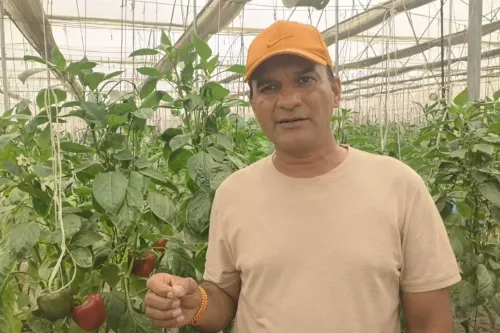
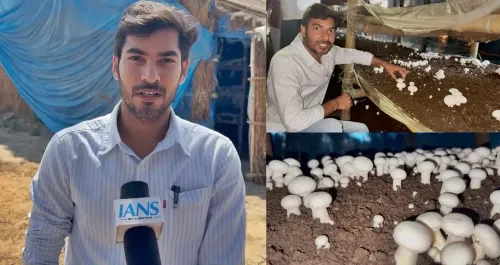
In a bid to further this advancement, visionary farmer Rahul Verma has set a remarkable standard by launching an advanced ‘mushroom cultivation plant’ in Nuh, aiming to promote mushroom farming.
The District Horticulture Department has been instrumental in this venture, offering a grant of Rs 12 lakh under a 40 percent subsidy scheme.
Furthermore, preparations for an additional Rs 12 lakh grant to establish a compost-making unit are also in progress.
District Horticulture Officer Dr Abdul Razak noted in a media briefing that Nuh district includes seven blocks, among them the Taoru block.
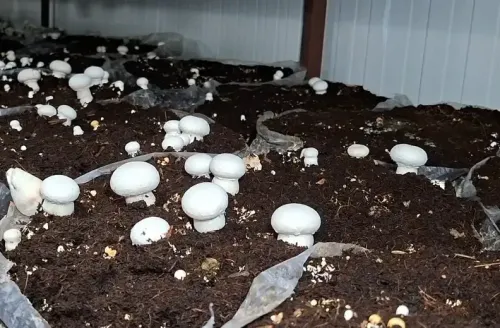
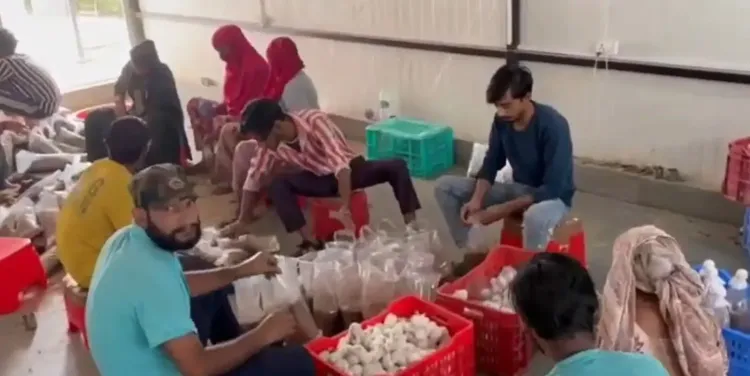
At Rahul Verma’s farm in Taoru, approximately 10 varieties of mushrooms are being cultivated, yielding around 200 to 260 kilograms daily. The harvest is supplied to a private company that distributes mushrooms nationwide.
He mentioned that the mushroom plant has generated new job opportunities in the Mewat region, employing local youth. The department has also equipped the farm with a solar dryer machine, allowing for the drying, packaging, and smooth transportation of mushrooms across the country.
Dr Razak emphasized the nutritional benefits of mushrooms, highlighting their high protein content and their status as an excellent meat alternative for vegetarians. Mushrooms are also advantageous for heart patients and can satisfy most of the body's nutritional needs.
He observed that the success of this initiative has sparked interest among farmers from various villages in the district, with many visiting the farm for insights.
Another mushroom initiative valued at Rs 60 lakh has been proposed in the Taoru subdivision, with an application already submitted.
The District Horticulture officer further stated that this mushroom plant is pioneering, not just in Haryana but possibly across the nation, as it simultaneously conducts production and trials for 20 mushroom varieties.
The facility is fully computerized, regulating temperature and humidity in different sections via computer systems to meet the specific needs of each mushroom type.
He asserted that this is the first project of its kind in Haryana and represents a unique national initiative.
Beneficiary farmer Rahul Verma expressed gratitude for the unwavering support from the District Horticulture Department, which has enabled him to consistently boost production and secure a profitable income.
He acknowledged that he was previously unaware of the uniqueness of his project in Haryana or the country, yet he now takes pride in the recognition it has brought to Nuh district and Haryana.
The mushroom plant exemplifies how economic growth is achievable even in underdeveloped areas through innovation, modern technology, and governmental backing.
This initiative is rapidly becoming an inspiring model for farmers in Nuh, with numerous others applying to establish similar plants, applications that are currently under review by the department.
Point of View
The establishment of a mushroom cultivation plant in Nuh represents a significant leap toward agricultural modernization in traditionally less developed areas. It showcases how targeted government support and innovative thinking can uplift communities, encouraging sustainable practices and economic resilience. This initiative could serve as a model for similar regions across the country.
NationPress
5 Oct 2026
Frequently Asked Questions
What is the significance of the mushroom cultivation plant in Nuh?
The mushroom cultivation plant in Nuh symbolizes a shift towards modern agricultural practices in a historically backward region, providing jobs and promoting nutrition.
How many varieties of mushrooms are cultivated at the facility?
The facility cultivates approximately 10 to 20 varieties of mushrooms, showcasing diverse options for production.
What support did the District Horticulture Department provide?
The Department provided a grant of Rs 12 lakh under a subsidy scheme, facilitating the establishment of the mushroom plant.
How does this project impact local employment?
The project has created numerous job opportunities for local youth in the Mewat region, contributing to economic development.
Is this project unique in India?
Yes, this mushroom plant is considered the first of its kind in Haryana and possibly across the entire country, focusing on multiple varieties simultaneously.