Is the Oilfields Amendment Act 2025 a Significant Reform for Bharat’s Energy Future?

Synopsis
Union Minister Hardeep Singh Puri calls the Oilfields Amendment Act 2025 a transformative reform for Bharat. This landmark legislation aims to modernize energy laws, ensuring India's energy independence and positioning the nation as a global energy leader. Discover how this act could revolutionize India's energy landscape.
Key Takeaways
Oilfields Amendment Act 2025 modernizes outdated laws for energy.
Introduces a uniform petroleum lease system .
Expands regulations to coal bed methane , shale gas , and more.
Supports the use of solar and hybrid systems in oilfields.
Enhances investor confidence and operational efficiency.
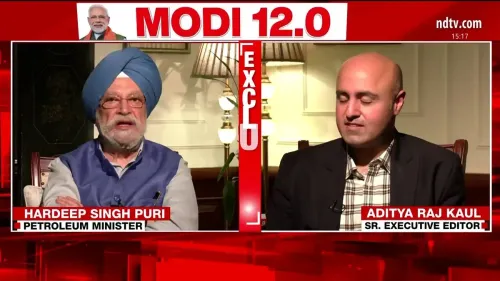
New Delhi, Oct 29 (NationPress) Union Minister for Petroleum and Natural Gas Hardeep Singh Puri on Wednesday commended the Oilfields Regulation & Development Amendment Act, 2025 as a transformative reform for Bharat’s energy future, describing it as a crucial step toward achieving energy independence under the guidance of Prime Minister Narendra Modi.
In a message shared on the social media platform X, Puri remarked that the revised Act modernizes a law established in 1948 to better align with the current energy landscape.
He emphasized that the reform establishes a uniform petroleum lease system, broadens the regulatory framework to encompass coal bed methane (CBM), shale gas, tight oil, and gas hydrates, while also permitting the incorporation of solar and hybrid systems in oilfields.
Puri further noted that these adjustments will facilitate quicker approvals, promote infrastructure sharing, and boost investor confidence, representing a decisive shift toward a more efficient and future-ready energy sector.
The minister’s statements come at a pivotal moment when India’s petroleum and energy sector is experiencing rapid evolution, positioning the country as a global leader in the energy domain.
Earlier this week, during the Energy Technology Meet in Hyderabad, Puri underscored that India’s energy trajectory showcases remarkable advancements, driven by innovative policies, cutting-edge technology, and consistent investments in refining, biofuels, and green energy.
The Ministry of Petroleum & Natural Gas reports that India currently contributes between 30–33 percent of the growth in global energy demand and is anticipated to play a critical role in shaping the future of the world's energy.
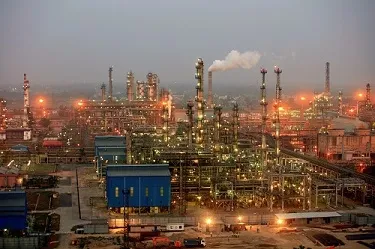
India’s refining capacity, which presently stands at 258 million metric tonnes per annum (MMTPA), is expected to escalate to 310 MMTPA by 2030, with long-term plans aiming for an expansion to 400–450 MMTPA.
Puri also highlighted the nation’s accomplishments in the biofuel sector, indicating that India achieved a 10 percent ethanol blending five months ahead of the 2022 deadline, with the target for 20 percent blending now advanced from 2030 to 2025–26.
He stated that India’s refineries are world-class, globally integrated, and export-ready, positioning the country as the fourth-largest refining nation and among the top seven exporters of petroleum products, with exports exceeding USD 45 billion in FY 2024–25.
Puri characterized the 2025 amendment as a timely and progressive measure that strengthens the government’s commitment to fostering a modern, transparent, and technology-driven energy ecosystem that champions growth, sustainability, and self-reliance.
Point of View
The Oilfields Amendment Act 2025 stands as a testament to India's commitment to modernizing its energy sector. This legislation not only aligns with global energy trends but also reinforces the government's dedication to sustainability and self-reliance, making it a pivotal moment for Bharat's energy future.
NationPress
2 Oct 2026
Frequently Asked Questions
What is the Oilfields Amendment Act 2025?
The Oilfields Amendment Act 2025 is a legislative reform aimed at modernizing India's energy laws established in 1948, enhancing the regulatory framework for the petroleum sector.
What are the key features of the amendment?
Key features include a uniform petroleum lease system, expansion of regulatory scopes to include CBM, shale gas, tight oil, and gas hydrates, and provisions for solar and hybrid systems in oilfields.
How will this act impact India’s energy independence?
By streamlining approvals and improving infrastructure, the act is expected to foster investor confidence and accelerate the transition toward energy independence.
When is India expected to achieve 20% ethanol blending?
India aims to achieve 20% ethanol blending by 2025-26, advancing the previous target of 2030.
What is India’s current refining capacity?
India's refining capacity currently stands at 258 MMTPA, with projections to reach 310 MMTPA by 2030.