Are Recent Reforms Driving a Transformative Shift in India's Upstream Sector?

Synopsis
The recent legislative and regulatory reforms in India's upstream sector, as highlighted by Minister Hardeep Singh Puri, represent a pivotal transformation aimed at attracting significant investments. With strong participation from various stakeholders, these changes promise to enhance the sector's stability and competitiveness on a global scale.
Key Takeaways
Significant reforms in India's upstream sector have been introduced.
The government aims to create a stable and transparent framework for investment.
Increased participation from various stakeholders reflects growing interest.
Capital requirements for exploration are expected to rise sharply.
Effective implementation of policies is crucial for achieving tangible outcomes.
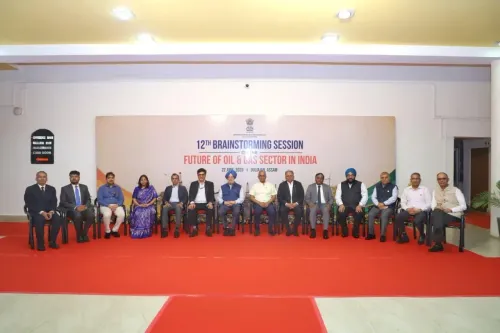
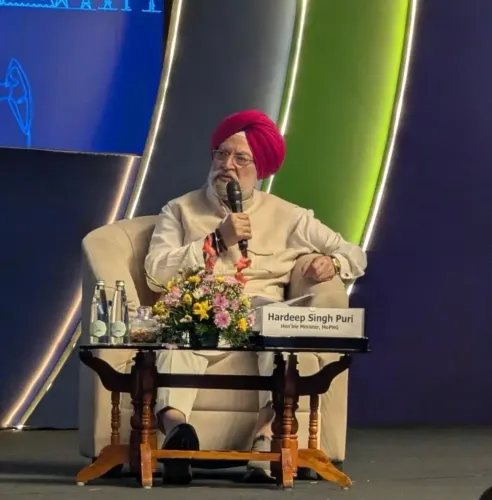
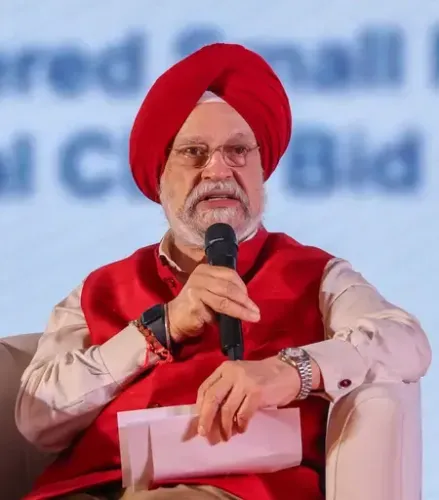
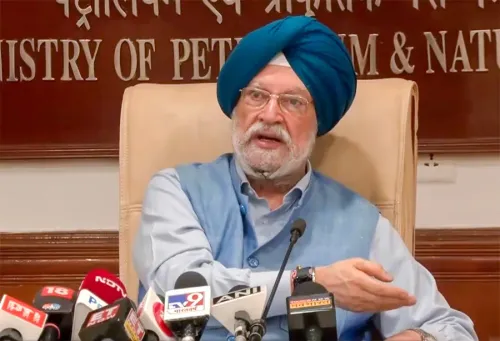
New Delhi, Jan 21 (NationPress) The Minister for Petroleum and Natural Gas, Hardeep Singh Puri, stated on Wednesday that the latest legislative, regulatory, and policy reforms signify a significant and progressive shift in India's upstream sector.
He emphasized that these reforms, combined with data-driven exploration initiatives, have opened up vast investment prospects, especially in India's offshore and frontier regions.
During his virtual address at upstream-focused discussions in Mumbai, the minister reiterated the government's dedication to implementing a stable, transparent, and globally competitive framework to draw sustained domestic and international investments.
The Ministry of Petroleum and Natural Gas noted that the program saw robust and varied participation from domestic and international upstream operators, exploration and production service providers, global consulting firms, leading public and private sector financial institutions, insurers, academia, and industry experts, showcasing the increasing interest in India's upstream reform agenda and investment prospects.
The ministry also highlighted that as exploration and development activities increase, the required capital is anticipated to rise sharply, necessitating financing structures that align with upstream risk profiles and investment cycles.
Neeraj Mittal, Secretary of MoPNG, pointed out that timely and sufficient capital availability will be crucial for upstream execution and urged continuous collaboration among policymakers, operators, and financiers to enhance financing frameworks in alignment with India's upstream goals.
He noted the positive and encouraging feedback from industry stakeholders and stressed that future efforts will focus on effective and consistent large-scale implementation, ensuring that policy certainty leads to real outcomes.
“Financial institutions and lenders, including banks and insurers, shared insights on risk assessment frameworks, exposure norms, and institutional factors, while underscoring the significance of risk-sharing mechanisms and policy clarity to enable deeper capital involvement,” the ministry remarked.
The ministry concluded by stating that these recent reforms finalize a decade-long initiative to create a stable, predictable, and investor-friendly upstream regulatory structure, aimed at eliminating interpretational uncertainties and supporting long-term planning as exploration activities grow.
Point of View
It is essential to recognize the significance of these reforms in driving India's energy sector forward. The government's commitment to creating a transparent and competitive environment is commendable and aligns with national interests. Such progressive changes are critical in attracting both domestic and international investments, ensuring that India secures its position as a key player in the global energy landscape.
NationPress
20 Sept 2026
Frequently Asked Questions
What recent reforms have been introduced in India's upstream sector?
The recent reforms include legislative, regulatory, and policy changes aimed at transforming India's upstream sector and attracting investment.
Who is the Minister for Petroleum and Natural Gas?
The Minister for Petroleum and Natural Gas is Hardeep Singh Puri.
What is the significance of these reforms?
These reforms are significant as they aim to provide a stable, transparent framework to attract both domestic and international investments.
What did Neeraj Mittal emphasize regarding capital availability?
Neeraj Mittal emphasized that timely and adequate capital availability will be crucial for successful upstream operations.
How do these reforms affect exploration activities?
The reforms are expected to support increased exploration activities by providing a clearer regulatory environment and better financing structures.