Why Does Pakistan’s Investment-GDP Ratio Remain the Lowest in Asia?
Synopsis
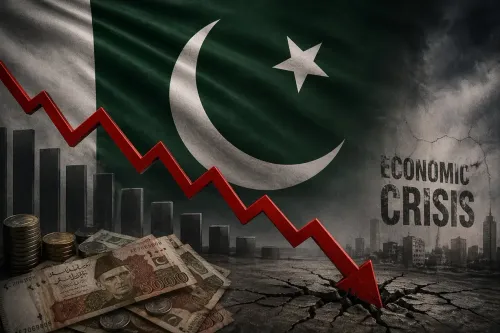
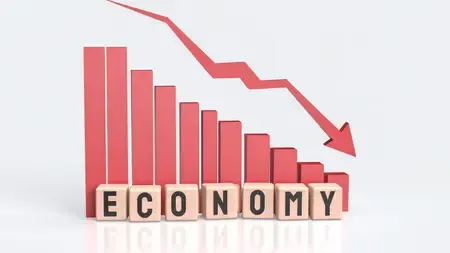
A striking analysis reveals Pakistan’s investment-to-GDP ratio at 13.8 percent, underscoring its position as the lowest among major Asian economies. The report highlights challenges such as lengthy regulatory processes and a lack of innovation in investment strategies that hinder economic progress. Can Pakistan improve its investment landscape to boost growth?
Key Takeaways
Investment-to-GDP ratio at 13.8 percent is the lowest in Asia.
Pakistan lags behind Bangladesh, India, and Vietnam.
Lengthy regulatory processes hinder investment.
Exports fluctuated while imports remain high.
Economists warn low investment caps growth potential.
New Delhi, Feb 21 (NationPress) Pakistan's investment-to-GDP ratio stands at a mere 13.8 percent, significantly trailing behind Bangladesh's22.4 percent in 2025, despite Bangladesh grappling with its own economic challenges. This disparity highlights Pakistan's troubling position as the lowest-investing major economy in Asia, according to a recent report.
In contrast, regional counterparts like India and Vietnam maintain investment levels exceeding 30 percent. Pakistan, during its peak in FY22, only managed to reach 15.6 percent, as detailed in the report from The Express Tribune.
Despite the ongoing macroeconomic stability fostered by the current hybrid and multiparty governance, investor confidence remains low, primarily due to unresolved structural challenges. Executives revealed that launching an industrial project necessitates approximately 25 regulatory approvals, leading to extended timelines and increased uncertainty.
“Corporate leaders express their dissatisfaction with the investment facilitation council, which was intended to streamline processes. While its management is perceived as disciplined and focused on execution, industry representatives argue that this same rigidity has stifled innovation within investment strategies,” the report notes.
The analysis shows Pakistan’s investment ratio has declined from 15.6 percent in FY22 to 13.1 percent in FY24, before slightly recovering to 13.8 percent in FY25. In contrast, India has consistently achieved 32-35 percent and Vietnam 30-33 percent. Economists suggest that sustained levels below 15 percent significantly hinder Pakistan's growth potential compared to its peers.
Moreover, Pakistan's exports plummeted from $2.85 billion in October to $2.32 billion in December, before bouncing back to $3.06 billion in January 2026, while imports have remained persistently high, fluctuating between $5-6 billion, resulting in substantial trade deficits.
“Pakistan's investment ratio is fundamentally misaligned with regional standards,” stated Maryam Ayub, a Research Economist at the Policy Research Institute of Market Economy (PRIME). “Even economies facing significant shocks maintain much higher investment rates than Pakistan, indicating profound domestic constraints rather than mere temporary setbacks,” Ayub emphasized.
aar/na
Point of View
I believe it's crucial for Pakistan to recognize its low investment levels as a significant barrier to economic growth. The country must take decisive actions to streamline regulations and foster an environment conducive to innovation and investor confidence. Only then can we hope to catch up with regional competitors.
NationPress
3 Oct 2026
Frequently Asked Questions
What is Pakistan's current investment-to-GDP ratio?
Pakistan's investment-to-GDP ratio is currently at 13.8 percent .
How does Pakistan's investment ratio compare with its regional peers?
Pakistan's investment ratio is the lowest in Asia, significantly trailing behind Bangladesh at 22.4 percent , India at 32-35 percent , and Vietnam at 30-33 percent .
What are the main challenges affecting investment in Pakistan?
Key challenges include lengthy regulatory processes requiring around 25 approvals and a lack of innovation in investment strategies.
How do exports and imports affect Pakistan's economy?
Pakistan's exports showed fluctuations, falling from $2.85 billion to $2.32 billion before bouncing back, while imports consistently remain high, contributing to large trade deficits.
What do economists say about Pakistan's investment levels?
Economists indicate that sustained investment levels below 15 percent severely limit Pakistan's growth potential compared to its regional peers.