How Do India and Pakistan's Economies Compare in Growth and Poverty?
Synopsis
Explore the stark contrast between the economic trajectories of India and Pakistan. As Pakistan struggles with soaring inflation and rising poverty, India continues to thrive and grow. Discover the alarming statistics that highlight this disparity and what it means for the future of both nations.
Key Takeaways
Pakistan is experiencing a severe economic crisis with high inflation and rising poverty levels.
India continues to grow robustly, becoming the fastest-growing major economy.
Inflation in Pakistan has reached its highest level in 30 years.
The poverty rate in Pakistan has increased significantly in recent years.
India has successfully reduced the extreme poverty rate markedly.
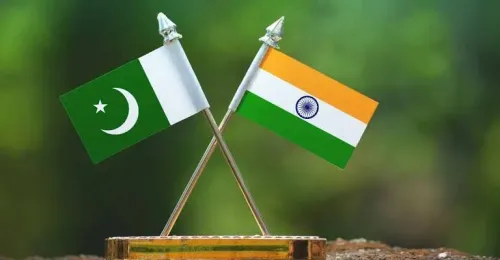
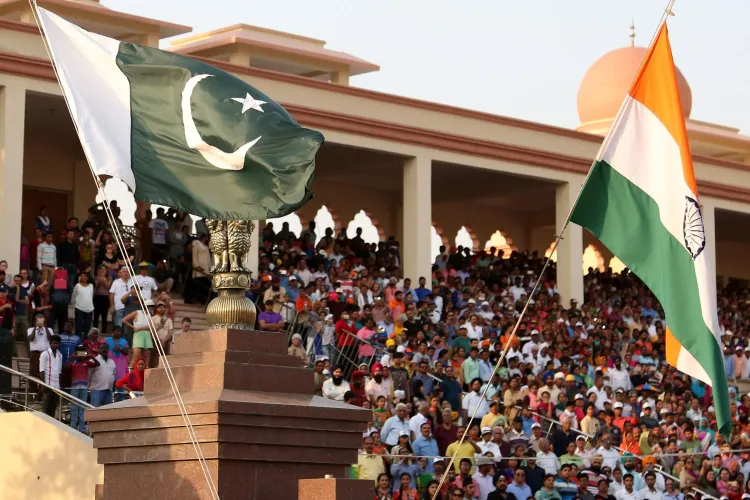
New Delhi, Feb 5 (NationPress) The economy of Pakistan has been embroiled in crisis for several years, while India, frequently referenced in discussions within Pakistan, has notably advanced to become the world's fastest-growing major economy, as detailed in a recent report.
An article from media outlet Amu.TV indicates that post-Covid, the two neighboring economies have diverged significantly. In 2022, Pakistan experienced a temporary rebound with around 6 percent GDP growth, but this recovery was short-lived.
By 2023, the nation's economy had nearly stagnated, with the IMF predicting a mere 0.5 percent growth. Conversely, India maintained a solid growth trajectory of over 6 percent, distinguishing itself as the “bright spot” in the global economy.
The article also underscores that Pakistan’s economic difficulties are being recognized even within its own leadership. During a business event in Islamabad, Lt-Gen Sarfraz Ahmed, the national coordinator of the Special Investment Facilitation Council (SIFC), candidly remarked that Pakistan lacked a coherent growth strategy and that its fiscal management had been severely inadequate.
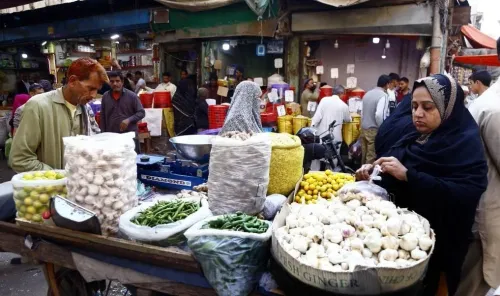
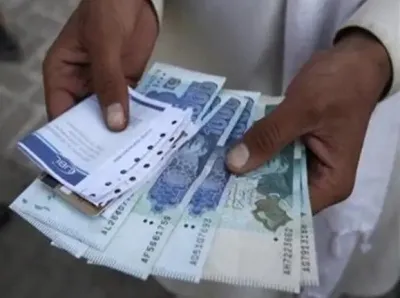
A prominent indicator of Pakistan’s economic turmoil has been inflation, which soared to 37.97 percent between 2022 and 2023—the highest rate in three decades—resulting in a severe cost of living crisis for many. This rampant inflation has significantly impacted ordinary citizens, as their wages have failed to keep pace with soaring prices, as the article highlights.
The World Bank reports that the price surge has pushed an additional 13 million individuals in Pakistan into poverty. Coupled with a high unemployment rate, the poverty level in Pakistan has increased from 21.9 percent to 25.3 percent by 2023-2024, meaning approximately one in four citizens now lives below the poverty line. Under a higher global poverty standard, nearly 45 percent of Pakistan's population may be classified as poor, as further noted in the article.
While India also contended with inflation during this period, it was at a significantly lower rate, primarily influenced by global oil and supply chain issues, yet far from Pakistan’s inflation levels.
By 2023, India’s inflation rate had decreased to around 5-6 percent and fell further in 2024. By late 2023, India’s retail inflation dipped below 5 percent following effective management of food prices. In stark contrast, the average consumer in Pakistan faces price hikes five times greater than those encountered by an average consumer in India, the article states.
Regarding poverty, the World Bank has found that the percentage of individuals in India living on less than 4 US dollars daily—an international extreme poverty benchmark—has plummeted from 16 percent to just 2.3 percent by 2023, as the article concludes.
Point of View
It is crucial to recognize the alarming economic disparities between India and Pakistan. While India continues to showcase robust growth, Pakistan's struggles with inflation and poverty demand attention and action. Acknowledging these issues is essential for fostering informed discussions and potential solutions.
NationPress
20 Sept 2026
Frequently Asked Questions
What are the current economic growth rates of India and Pakistan?
As of 2023, India is experiencing over 6 percent GDP growth, while Pakistan 's growth has stalled at 0.5 percent.
How has inflation affected Pakistan's economy?
Inflation in Pakistan reached 37.97 percent between 2022 and 2023, leading to a significant cost of living crisis and pushing millions into poverty.
What is the poverty rate in Pakistan?
The poverty rate in Pakistan has increased from 21.9 percent to 25.3 percent as of 2023-2024.
How does India's inflation rate compare to Pakistan's?
India 's inflation rate is around 5-6 percent, significantly lower than Pakistan 's soaring rates.
What has been the impact of inflation on Indian poverty levels?
The proportion of people in India living on less than 4 US dollars a day has dramatically decreased from 16 percent to 2.3 percent by 2023.