POSCO wage talks collapse, union sets indefinite strike from November 2
Synopsis
POSCO's already-strained labour relations have hit a new low — wage talks have collapsed entirely, and the union is now threatening an indefinite strike from 2 November. With management offering a 2% pay rise and workers demanding 7.1%, the gap is vast. Throw in unresolved safety and staffing grievances, and a prolonged shutdown at one of the world's biggest steelmakers looks increasingly likely.
Key Takeaways
POSCO union announced the collapse of wage negotiations on 24 October 2026 , declaring an indefinite strike from 7 pm, 2 November .
The union demands a 7.1 percent basic pay increase, a 600 percent performance bonus, 50 company shares per worker, and a 200 percent holiday bonus.
POSCO has offered only a 2 percent base pay rise, leaving both sides far apart.
The company has approximately 17,000 employees, including around 10,100 union members.
Two rounds of partial strikes have already taken place in September 2026 , with the second drawing roughly twice as many participants as the first.
The union has also cited staffing shortages and ageing facilities as safety risks beyond the wage dispute.
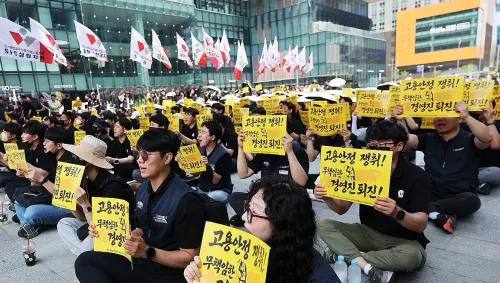
Wage negotiations between South Korean steelmaker POSCO and its unionised workers have broken down, the union announced on Saturday, 24 October 2026, setting the stage for an indefinite strike beginning at 7 pm on 2 November. The collapse marks the latest flashpoint in a prolonged labour dispute that has already seen two rounds of partial industrial action.
Where Talks Fell Apart
The union had demanded a 7.1 percent increase in basic salary, a performance bonus equivalent to 600 percent of basic pay, 50 company shares per worker, and a holiday bonus worth 200 percent of basic pay. POSCO, however, proposed only a 2 percent increase in base pay — a figure far short of union expectations. In an earlier offer, management had also tabled a one-off payment of five million won (approximately US$3,770) alongside a 2.5 percent basic pay rise, which the union rejected.
History of Partial Strikes
This is not the first time workers at POSCO have walked off the job this year. Last month, unionised employees staged two rounds of partial strikes after failing to narrow differences with management. The union noted that the second partial strike drew roughly twice as many participants as the first, signalling mounting worker frustration. The company employs approximately 17,000 people, of whom around 10,100 are union members.
Beyond Wages: Safety and Staffing Concerns
The union has cited grievances that go beyond pay packets. Workers have flagged chronic staffing shortages and ageing equipment at facilities as risks that could lead to safety incidents. These structural concerns, left unaddressed, have added urgency to the union's position and widened the gap with management's largely wage-centric counter-proposals.
POSCO's Stance on Operations
POSCO maintained that the indefinite strike would not cause major disruptions to plant operations, estimating that around 60 workers each from its Pohang and Gwangyang plants would join the walkout. The union, however, warned of 'inevitable disruptions,' given the scale of anticipated participation compared with previous stoppages.
What Comes Next
With both sides entrenched and the 2 November deadline approaching, the possibility of a last-minute resumption of talks remains open but uncertain. An extended shutdown at one of the world's largest steelmakers could ripple through downstream industries, including automotive, shipbuilding, and construction, that depend on POSCO's output.
Point of View
Which is likely why partial strikes escalated rather than eased pressure. The union's safety and staffing grievances are the more telling signal: when workers frame a wage dispute in terms of accident risk, it usually means underlying operational stress has gone unaddressed for years. For global steel supply chains still recovering from post-pandemic volatility, a prolonged POSCO shutdown would be poorly timed.
NationPress
24 Oct 2026
Frequently Asked Questions
Why did POSCO wage talks break down?
POSCO wage talks collapsed because the two sides were too far apart on key demands. The union sought a 7.1 percent basic pay rise and bonuses worth 600 percent of base pay, while POSCO offered just 2 percent, leaving no common ground after months of negotiations.
When will the POSCO indefinite strike begin?
The union has announced the indefinite strike will begin at 7 pm on 2 November 2026. This follows two rounds of partial strikes held in September 2026 that failed to break the deadlock.
How many workers are involved in the POSCO strike?
POSCO has approximately 17,000 employees in total, of whom around 10,100 are union members. The company has said it expects roughly 60 workers each from its Pohang and Gwangyang plants to participate, though the union has warned of far greater disruption.
What are the union's full demands beyond the wage increase?
Beyond the 7.1 percent basic salary rise, the union has demanded a performance bonus equivalent to 600 percent of base pay, 50 company shares per worker, and a holiday bonus worth 200 percent of base pay. Workers have also raised concerns about staffing shortages and ageing facilities that they say pose safety risks.
Will the POSCO strike disrupt steel supplies?
POSCO has said it does not expect major disruptions to plant operations. However, the union has warned of inevitable disruptions, given that participation is expected to exceed previous partial stoppages significantly. A prolonged strike at one of the world's largest steelmakers could affect downstream industries such as automotive and shipbuilding.