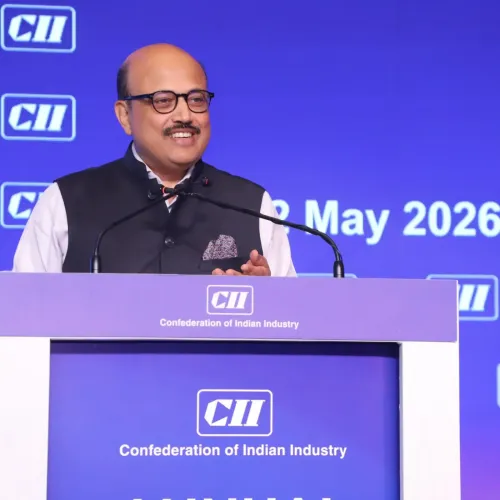
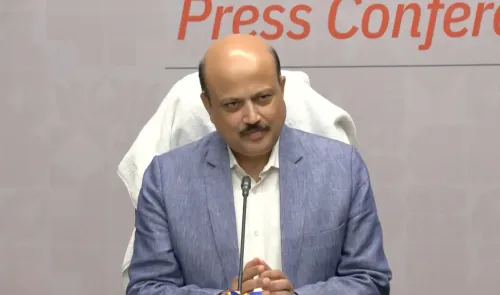
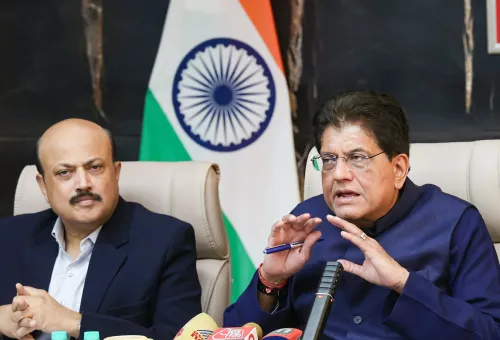
Commerce Secretary Rajesh Agrawal calls for integrated trade and sustainability policy
Synopsis
Commerce Secretary Rajesh Agrawal's call for an integrated trade-sustainability policy is more than a workshop talking point — it signals that New Delhi is waking up to the regulatory storm ahead. With the EU's carbon border levy already targeting Indian exports, the Centre's push to align domestic carbon frameworks with global trade disciplines could define India's FTA leverage for the next decade.
Key Takeaways
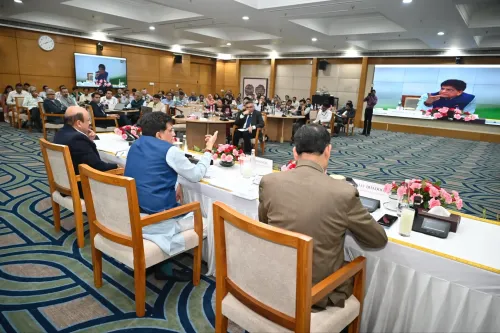
Commerce Secretary Rajesh Agrawal called for an integrated, cross-sectoral approach to trade and sustainable development at a workshop in New Delhi on 1 August .
The Department of Commerce organised the event, the first in a proposed series of TSD consultations linked to ongoing FTA negotiations.
Four thematic sessions covered India's domestic carbon framework, global FTA TSD trends, the global carbon regulatory landscape, and strategic options for India .
Key domestic frameworks discussed: Carbon Credit Trading Scheme (CCTS) , Indian Carbon Market , and the Extended Producer Responsibility (EPR) framework.
Agrawal stressed that early adaptation to sustainability trade disciplines would strengthen India's global competitiveness.
Commerce Secretary Rajesh Agrawal on 1 August called for an integrated, cross-sectoral policy approach to trade and sustainable development, stressing that sustainability regulations and unilateral environmental measures have become permanent fixtures of the global trading system. Speaking at a day-long workshop in New Delhi, Agrawal underlined the urgency of building an enabling ecosystem that supports Indian industry in adopting sustainable practices.
Key Developments at the Workshop
The workshop, organised by the Department of Commerce, Ministry of Commerce and Industry, brought together senior government officials, trade negotiators, and representatives from industry, academia, think tanks, and the legal community. The event was the first in a proposed series of consultations aimed at strengthening India's strategic approach to Trade and Sustainable Development (TSD) in the context of evolving global trade disciplines and ongoing Free Trade Agreement (FTA) negotiations.
Four thematic sessions were held, covering India's domestic carbon framework, global trends in TSD provisions within FTAs, the evolving global carbon regulatory framework, and strategic options for shaping India's future TSD approach.
What the Commerce Secretary Said
Agrawal argued that early adaptation to sustainability-related trade disciplines would strengthen India's global competitiveness and better position the country to navigate the shifting international trade landscape. He emphasised that the issue cuts across trade, industry, sustainability, and competitiveness — making siloed policy responses inadequate.
Domestic Sustainability Architecture in Focus
The workshop concluded with deliberations on India's evolving domestic sustainability architecture. Key frameworks discussed included the Carbon Credit Trading Scheme (CCTS), the Indian Carbon Market, the Extended Producer Responsibility (EPR) framework, and the country's accreditation and conformity assessment ecosystem. Participants stressed the importance of leveraging these domestic initiatives to strengthen India's preparedness for emerging sustainability-related trade disciplines.
Why It Matters for Indian Trade
The discussions focused on the growing significance of carbon markets, carbon pricing mechanisms, carbon border adjustment measures, sustainability standards, and regulatory cooperation — and their direct implications for India's trade and industrial competitiveness. Notably, measures such as the European Union's Carbon Border Adjustment Mechanism (CBAM) are already reshaping export economics for Indian steel, aluminium, and cement sectors. This workshop signals that the Centre is moving toward a more coordinated national response rather than sector-by-sector firefighting.
Further consultations in the series are expected to refine India's negotiating positions on TSD chapters in upcoming FTA talks.
Point of View
But the gap between consultation and codified policy remains wide. With the EU's CBAM live and more carbon border measures likely from other trading partners, the cost of delay is rising for Indian exporters in steel, cement, and chemicals. The real test will be whether this series of workshops produces binding negotiating positions or remains another layer of well-attended deliberation without policy output.
NationPress
1 Aug 2026
Frequently Asked Questions
What did Commerce Secretary Rajesh Agrawal say about trade and sustainable development?
Agrawal stated that trade and sustainable development is a cross-sectoral policy issue requiring an integrated approach encompassing trade, industry, sustainability, and competitiveness. He stressed the need to build an enabling ecosystem to help Indian industry adopt sustainable practices and said early adaptation would strengthen India's global competitiveness.
What was the purpose of the New Delhi workshop on trade and sustainability?
The workshop, organised by the Department of Commerce, aimed to deliberate on the evolving interface between international trade and sustainable development. It was the first in a proposed series of consultations designed to strengthen India's strategic approach to TSD in the context of global trade disciplines and ongoing FTA negotiations.
Which domestic sustainability frameworks were discussed at the workshop?
Discussions covered India's Carbon Credit Trading Scheme (CCTS), the Indian Carbon Market, the Extended Producer Responsibility (EPR) framework, and the country's accreditation and conformity assessment ecosystem. These were examined for their role in preparing India for emerging sustainability-related trade disciplines.
How do carbon border adjustment measures affect India's trade?
Carbon border adjustment measures — such as the EU's Carbon Border Adjustment Mechanism — impose levies on imports from countries without equivalent carbon pricing, directly affecting Indian exports in sectors like steel, aluminium, and cement. The workshop highlighted these mechanisms as a key challenge for India's trade and industrial competitiveness.
What are TSD provisions in Free Trade Agreements?
Trade and Sustainable Development (TSD) provisions are chapters within FTAs that set commitments on environmental standards, labour rights, and carbon-related measures. Global trends show these provisions are becoming more enforceable, making India's domestic sustainability architecture increasingly relevant to its FTA negotiating positions.