How is RBI Collaborating with the Centre to Enhance the Financial Stability of Cooperative Banks?
Synopsis
In an effort to reinforce the financial health of cooperative banks, the RBI and the government are collaborating on several initiatives. This includes enhancing digital inclusion and ensuring deposit security, which could significantly transform the banking landscape for cooperative institutions.
Key Takeaways
Collaboration between RBI and the government aims to strengthen cooperative banks.
Loans to NCDC are now classified under priority sector lending .
Increased housing loan limits for Urban Cooperative Banks .
Establishment of Sahakar Sarthi to support Rural Cooperative Banks .
Deposit insurance up to Rs 5,00,000 per depositor.
New Delhi, Feb 10 (NationPress) The government, alongside the Reserve Bank of India (RBI), is undertaking numerous initiatives to bolster the financial stability, governance, and digital integration of cooperative banks. This includes enhancements in deposit security, availability of credit, and regulatory measures, as disclosed in Parliament on Tuesday.
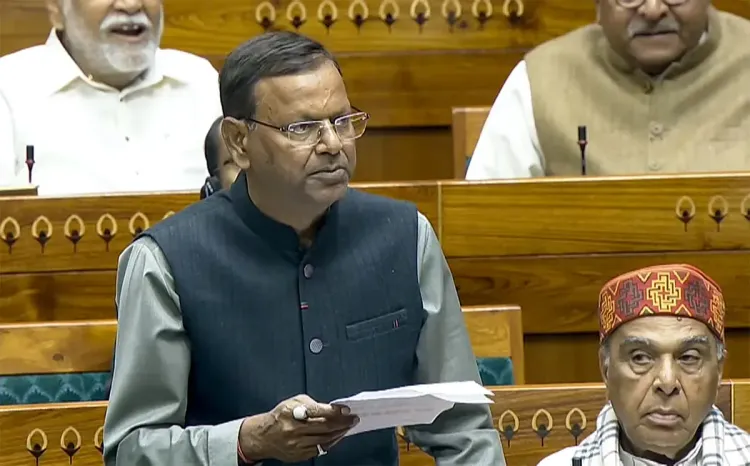
The Central Bank, in coordination with the Centre, has declared that loans granted to the National Cooperative Development Corporation (NCDC) from January 19, 2026, for redistributing to cooperative societies will qualify as priority sector lending under specific categories, stated Pankaj Chaudhary, the Minister of State for Finance, in the Rajya Sabha.
“These provisions apply to banks excluding Regional Rural Banks, Urban Cooperative Banks, Small Finance Banks, and Local Area Banks. The loans serve purposes as outlined in the Master Direction on Priority Sector Lending, 2025,” the minister elaborated.
Additionally, Urban Cooperative Banks (UCBs) have been granted the ability to establish new branches, and the limits for housing loans have been raised from 10 percent to 25 percent of their total loans and advances, according to Chaudhary.
Moreover, the Banking Regulation Act has been revised to extend the term of directors of Cooperative Banks from 8 to 10 years, and the licensing fee for the onboarding of cooperative banks to the Aadhar-enabled Payment System (AePS) has been reduced.
“The National Urban Co-operative Finance and Development Corporation Limited (NUCFDC), a non-deposit-taking Non-Banking Financial Company (NBFC), has been established as an Umbrella Organization for Urban Cooperative Banks to deliver Information Technology (IT) infrastructure and operational assistance,” the minister stated.
Significantly, the initiative ‘Sahakar Sarthi’ has been introduced to offer technological services to Rural Cooperative Banks, and these banks have been incorporated by RBI into the Integrated Ombudsman Scheme.
Furthermore, the Deposit Insurance and Credit Guarantee Corporation (DICGC) guarantees various types of deposits up to Rs 5,00,000 per depositor per bank (including principal and interest) for all cooperative banks, as mentioned by the minister.
Point of View
It's essential to recognize the proactive measures being taken by the RBI and the government to enhance cooperative banks' operational frameworks. This collaboration signifies a strategic approach to not only stabilize but also modernize these institutions for a better banking experience across the nation.
NationPress
15 Oct 2026
Frequently Asked Questions
What measures is the RBI taking to improve cooperative banks?
The RBI is collaborating with the government to enhance financial health, governance, and digital inclusion of cooperative banks, while also improving deposit security and credit availability.
What are the new loan classifications introduced for cooperative banks?
Loans sanctioned to the National Cooperative Development Corporation from January 19, 2026, are classified as priority sector lending, applicable to various categories of banks.
How are Urban Cooperative Banks benefiting from recent changes?
Urban Cooperative Banks can now open new branches and have had their housing loan limits increased from 10% to 25% of total loans.
What is the significance of the Sahakar Sarthi initiative?
Sahakar Sarthi aims to provide technological services to Rural Cooperative Banks, enhancing their operational capabilities.
What does DICGC provide for cooperative banks?
The DICGC ensures deposit insurance coverage up to Rs 5,00,000 per depositor per bank, which includes both principal and interest.