RBI policy meet, US-Iran tensions: 5 factors to watch in markets next week

Synopsis
A last-hour selloff sent the Sensex down 1,092 points on 31 May, setting up a high-stakes week dominated by the RBI's rate decision, unresolved US-Iran tensions, and a sharp drop in crude oil prices — a rare convergence of domestic and global triggers that could move Indian markets decisively in either direction.
Key Takeaways
Sensex plunged 1,092 points (1.44%) to 74,775.74 and Nifty50 fell 359 points (1.50%) to 23,547.75 on 31 May 2026 .
The RBI MPC meeting is scheduled from 3 to 5 June 2026 , chaired by Governor Sanjay Malhotra , with a rate decision expected.
Iranian state media claimed a proposed US-Iran MoU includes release of $12 billion in frozen assets; the White House called a similar earlier claim a 'fabrication.' Crude oil futures fell more than 2% to six-week lows on ceasefire hopes involving the US, Israel, and Iran.
FII activity and global risk sentiment remain key variables for the week ahead.
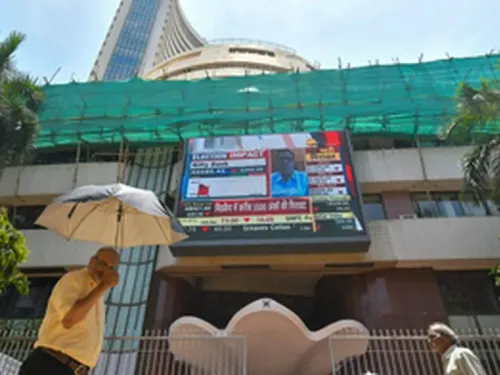
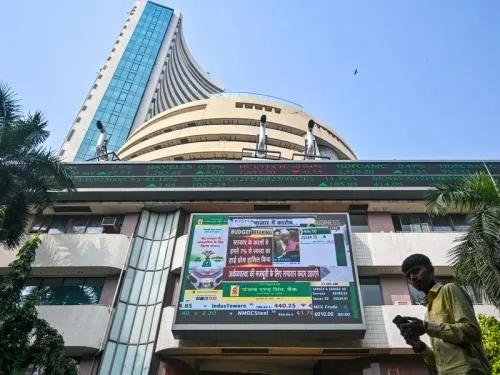
India's benchmark equity indices closed sharply lower on Friday, 31 May 2026, after a steep late-session selloff, as investors turned cautious ahead of a clutch of domestic and global events poised to shape market direction in the coming week. The BSE Sensex plunged 1,092 points, or 1.44%, to settle at 74,775.74, while the Nifty50 declined 359 points, or 1.50%, to close at 23,547.75.
RBI Monetary Policy: The Week's Biggest Domestic Trigger
The most closely watched domestic event will be the Reserve Bank of India (RBI) Monetary Policy Committee (MPC) meeting, scheduled from 3 to 5 June 2026. The six-member panel, chaired by RBI Governor Sanjay Malhotra, is expected to deliberate on interest rates, inflation trends, liquidity conditions, and the broader economic growth outlook. Any surprise on the rate decision — or in the accompanying commentary — could set the tone for equities, bonds, and the rupee through the month.
US-Iran Tensions Keep Geopolitical Risk Elevated
Global geopolitical developments are set to remain a significant overhang. According to reports, Iranian state media claimed that a proposed memorandum of understanding with the United States includes the release of $12 billion in frozen Iranian assets. The report cited an 'unofficial' draft of the agreement; however, the White House dismissed similar claims earlier in the week as a 'fabrication.' The conflicting signals have kept risk sentiment fragile, with traders reluctant to take large directional bets ahead of any formal announcement.
Crude Oil Slide: Relief or Warning Sign?
Crude oil prices fell sharply on Friday, with oil futures dropping more than 2% to hit six-week lows, driven by hopes of a ceasefire involving the US, Israel, and Iran. For India — a major crude importer — sustained lower oil prices ease the current account deficit and moderate inflation. However, a rapid reversal in the event of a geopolitical flare-up remains a key tail risk that markets are pricing in cautiously.
What Drove Friday's Selloff
For most of Friday's session, indices traded in a narrow band as investors sat on the sidelines amid uncertainty over the US-Iran talks. The sharp profit-booking in the final hour triggered a broad-based decline across sectors, with the Nifty touching an intra-day low of 23,485 before recovering marginally at close. This is consistent with a pattern of end-of-month positioning and risk reduction seen in recent sessions ahead of high-impact events.
Foreign Investor Activity and What to Watch Next
Foreign institutional investor (FII) flows will be another variable under scrutiny. Sustained FII selling has amplified recent volatility, and any shift in posture — particularly in response to the RBI's rate stance or a resolution in US-Iran talks — could trigger a sharp directional move. Analysts note that the combination of a domestic policy decision and unresolved geopolitical risk makes the coming week unusually event-heavy for Indian equities. Markets will be watching each development closely for directional clarity.
Point of View
092-point drop on the last trading day of May looks less like a fundamental re-rating and more like a classic pre-event risk flush — but the convergence of the RBI meeting, US-Iran uncertainty, and oil volatility in a single week is unusually concentrated. The RBI's tone on liquidity and growth will matter as much as the rate number itself; markets have already priced in a cut, meaning any hawkish hold could amplify the selloff. Meanwhile, the US-Iran narrative is binary and fast-moving — a formal deal collapses the geopolitical premium in crude, a breakdown spikes it. Indian equities are caught between two potentially contradictory tailwinds, and FII positioning will be the swing factor that determines which story dominates.
NationPress
23 Sept 2026
Frequently Asked Questions
Why did the Sensex fall sharply on 31 May 2026?
The Sensex fell 1,092 points to 74,775.74 on 31 May 2026 due to a steep late-session selloff driven by investor caution ahead of the RBI policy decision and unresolved US-Iran geopolitical tensions. Broad-based profit-booking across sectors intensified in the final hour of trade.
When is the RBI MPC meeting in June 2026?
The Reserve Bank of India's Monetary Policy Committee meeting is scheduled from 3 to 5 June 2026, with Governor Sanjay Malhotra chairing the six-member panel. The decision on interest rates is expected on 5 June 2026.
How are US-Iran tensions affecting Indian stock markets?
Uncertainty over a potential US-Iran agreement has kept risk sentiment fragile, discouraging large directional bets. Iranian state media claimed a proposed MoU includes $12 billion in frozen asset releases, but the White House dismissed a similar claim as a 'fabrication,' leaving traders on edge.
What is the impact of falling crude oil prices on Indian markets?
Crude oil futures fell over 2% to six-week lows on 31 May, which is broadly positive for India as a major importer — easing the current account deficit and inflation pressure. However, a sharp reversal due to geopolitical escalation remains a key downside risk.
What should investors watch in the coming week?
Key variables include the RBI MPC rate decision (5 June), any formal update on US-Iran negotiations, crude oil price direction, and foreign institutional investor flows. A combination of these factors is expected to drive significant market volatility in both directions.