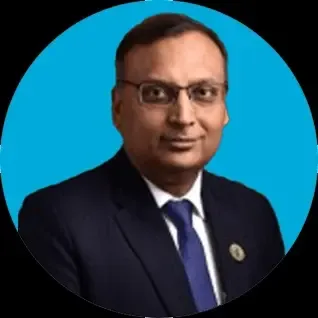
RBI appoints Ravi Shankar as Executive Director from 1 July 2026
Synopsis
The RBI has elevated Ravi Shankar — a statistician with over 30 years at the central bank — to Executive Director from 1 July 2026. He retains charge of the Department of Statistics and Information Management, a function that sits at the heart of India's macroeconomic data architecture.
Key Takeaways
Ravi Shankar has been appointed Executive Director of the Reserve Bank of India with effect from 1 July 2026 .
He previously served as Adviser-In-Charge of the RBI's Department of Statistics and Information Management , which he will continue to oversee.
Shankar brings over three decades of RBI experience across banking statistics, government securities, debt management, and survey functions.
He holds a Master's in Statistics from Banaras Hindu University and a Diploma in Development Policy and Planning from the Institute of Economic Growth, Delhi .
He is also a Certified Associate of the Indian Institute of Banking and Finance (CAIIB) .
The Reserve Bank of India (RBI) has appointed Ravi Shankar as Executive Director (ED) with effect from 1 July 2026, the central bank announced on Wednesday. Shankar, a career central banker and statistician with over three decades of RBI experience, steps into the role from his previous position as Adviser-In-Charge of the Department of Statistics and Information Management.
New Role and Responsibilities
In his capacity as Executive Director, Shankar will continue to oversee the Department of Statistics and Information Management — the same division he led as Adviser-In-Charge. The continuity signals the RBI's intent to maintain stability in its data and analytics function, which underpins monetary policy decisions and macroeconomic reporting.
Career Spanning Three Decades
Shankar's tenure at the RBI has spanned a broad range of functional areas, including corporate and banking statistics, the government securities market, settlement systems, debt management, and survey-related functions. He has also served as a member of several committees and working groups on macroeconomic statistics and policy issues, according to the central bank.
This depth of institutional exposure positions him to lead one of the RBI's most data-intensive departments at a time when the quality and timeliness of macroeconomic statistics are under increasing scrutiny from global investors and domestic policymakers alike.
Academic and Professional Credentials
Shankar holds a Master's degree in Statistics from Banaras Hindu University. He has additionally earned a Diploma in Development Policy and Planning from the Institute of Economic Growth, Delhi, and is a Certified Associate of the Indian Institute of Banking and Finance (CAIIB) — a professional qualification that reflects grounding in banking operations and regulation.
Broader Leadership Context
The appointment is part of the RBI's ongoing effort to consolidate senior leadership across key functional verticals. Notably, the statistics and information management function is central to the central bank's credibility — it produces data on credit growth, inflation components, and balance of payments that inform both domestic policy and international assessments of India's economy. With Shankar's elevation, the RBI reinforces specialist leadership in this critical area.
Point of View
Not a routine reshuffle. The statistics and information management function is the backbone of the central bank's credibility — its output shapes inflation narratives, credit policy, and India's standing with multilateral lenders. Choosing a 30-year insider with deep statistical expertise, rather than a generalist administrator, suggests the RBI is prioritising data rigour at a moment when the quality of India's macroeconomic statistics faces heightened external scrutiny. The real question is whether the department's institutional capacity will be expanded to match the growing complexity of the data it is expected to produce.
NationPress
30 Sept 2026
Frequently Asked Questions
Who is Ravi Shankar, the new RBI Executive Director?
Ravi Shankar is a career central banker and statistician who has worked at the Reserve Bank of India for over three decades. He was previously Adviser-In-Charge of the RBI's Department of Statistics and Information Management before being elevated to Executive Director from 1 July 2026.
What will Ravi Shankar oversee as RBI Executive Director?
Shankar will continue to head the Department of Statistics and Information Management in his new role. The department is responsible for producing key macroeconomic data including credit statistics, inflation components, and balance of payments figures.
What are Ravi Shankar's qualifications?
Shankar holds a Master's degree in Statistics from Banaras Hindu University, a Diploma in Development Policy and Planning from the Institute of Economic Growth in Delhi, and is a Certified Associate of the Indian Institute of Banking and Finance (CAIIB).
Why is the RBI's statistics department significant?
The Department of Statistics and Information Management produces data that directly informs RBI monetary policy decisions and India's macroeconomic reporting to international bodies. Its outputs — on credit growth, inflation, and external accounts — are closely tracked by domestic policymakers and global investors.
Is this part of a broader RBI leadership reshuffle?
The RBI has described the appointment as part of its ongoing effort to strengthen leadership across key functional areas. No wider reshuffle was announced alongside Shankar's elevation.