RBI Governor Malhotra: No rupee target, focus on curbing forex volatility
Synopsis
RBI Governor Sanjay Malhotra has made clear the central bank has no rupee target — only a mandate to prevent speculative chaos. With the rupee having nearly hit ₹97 per dollar before rebounding to ₹94.83, and the currency 42% weaker than a decade ago, his words carry weight: the RBI will intervene, but it will not draw a line in the sand.
Key Takeaways
RBI Governor Sanjay Malhotra confirmed on 23 October 2026 that the central bank does not target any specific rupee-dollar level.
The rupee recently approached a record low near ₹97 per dollar before recovering to ₹94.83 after eight consecutive sessions of gains.
The rupee has depreciated nearly 42% against the dollar since October 2016 , when it traded at around ₹66.83 .
India's GDP growth stands at 7.8% , with average inflation over the past decade at 4.7% , down from 7.4% in the prior four years.
Malhotra described current inflation as elevated but within the RBI's tolerance band.
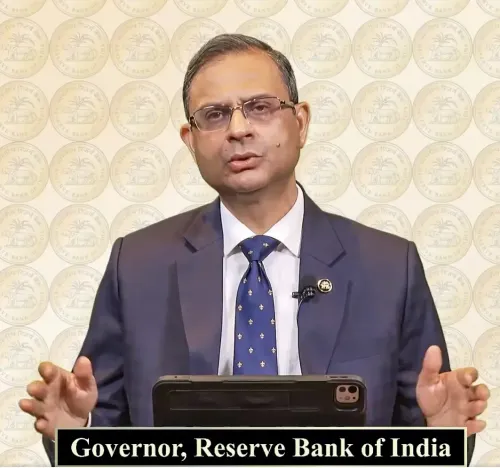
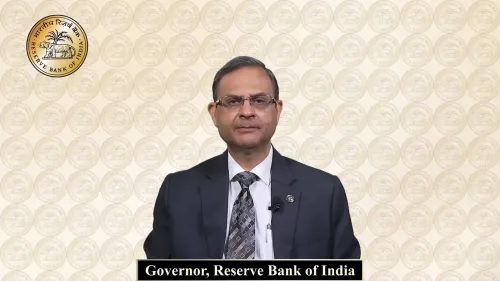
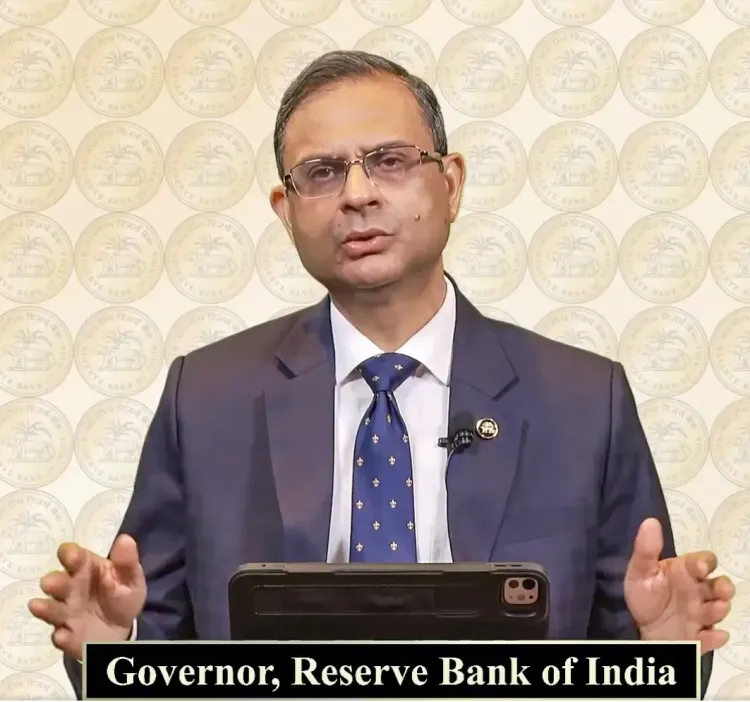
Reserve Bank of India (RBI) Governor Sanjay Malhotra on Friday, 23 October 2026, clarified that the central bank does not target any specific exchange rate level for the rupee against the US dollar, reaffirming that its core mandate is to maintain orderly conditions in the foreign exchange market and check excessive volatility. He was speaking at the NDTV World Summit 2026 in New Delhi.
What the RBI Governor Said
Malhotra drew a clear line between intervention and targeting, stressing that the RBI acts only when speculative forces or sharp swings threaten market stability. 'We do not target any price or level for the rupee, but, at the same time, it has been our endeavour that we ensure orderly market conditions in the forex markets,' he said.
He added: 'We have not hesitated, as you have seen in the past, to take measures as may be necessary to curb what we may feel is speculative behaviour or if there is excessive volatility.'
Rupee's Recent Trajectory
The Governor's remarks come against the backdrop of notable currency turbulence. In recent weeks, the rupee had approached its weakest-ever level, nearing ₹97 per dollar, before staging a recovery. The currency subsequently strengthened for eight consecutive sessions, touching its highest level in four months, before easing slightly to ₹94.83 per dollar on Thursday.
The longer-term picture underscores the scale of depreciation: a decade ago, in October 2016, the rupee traded at around ₹66.83 per dollar — implying a rise of nearly 42% in the cost of the US currency over that period. Opposition parties have cited this sustained weakening as evidence of economic stress, making the rupee's movement an increasingly contested political issue.
Macro Fundamentals and Inflation Outlook
Malhotra pushed back against pessimistic readings of India's economic health. He pointed to the country's recent GDP growth rate of 7.8% as evidence that key economic indicators continue to reflect underlying strength. On inflation, he described current price pressures as elevated but still within the RBI's tolerance band.
Notably, he cited a structural improvement in price stability: India's average inflation over the past decade stood at 4.7%, significantly lower than the 7.4% average recorded in the four years preceding that period. This, he argued, reflects the durability of the central bank's inflation-targeting framework.
Why This Matters
The RBI's currency stance has implications well beyond the trading screen. A weaker rupee raises import costs — particularly for crude oil, which India buys almost entirely in dollars — feeding through to fuel prices, freight costs, and ultimately consumer inflation. At the same time, a managed or artificially supported rupee depletes foreign exchange reserves, which the RBI has built up carefully over the past decade. Malhotra's remarks signal that the central bank will resist speculative attacks but will not defend any arbitrary line in the sand — a posture that prioritises macro credibility over short-term stability optics.
With global dollar strength remaining a persistent headwind for emerging-market currencies, all eyes will now be on the RBI's next monetary policy meeting and whether its interventions in the spot and forward markets have been sufficient to anchor sentiment.
Point of View
But it sidesteps the harder question: at what point does 'preventing excessive volatility' shade into de facto defence of a floor? The rupee's near-breach of ₹97 required visible RBI action, which the Governor himself acknowledged. More importantly, the 42% depreciation over a decade is not a market aberration — it is a structural story about India's current account deficit, the dollar's structural strength, and inflation differentials. Citing a 7.8% GDP growth rate as a counterpoint to currency weakness is a category error; growth and currency value are not the same signal. The real accountability question is whether the RBI's reserve drawdowns to smooth the rupee have been proportionate and transparent — a debate that Malhotra's comments at a media summit do not fully resolve.
NationPress
23 Oct 2026
Frequently Asked Questions
Does the RBI target a specific rupee-dollar exchange rate?
No. RBI Governor Sanjay Malhotra stated on 23 October 2026 that the central bank does not target any specific price or level for the rupee. Its focus is on ensuring orderly forex market conditions and curbing speculative behaviour or excessive volatility.
How far has the rupee fallen against the dollar in recent years?
The rupee has depreciated nearly 42% against the US dollar over the past decade. In October 2016, it traded at around ₹66.83 per dollar; it recently approached a record low near ₹97 before recovering to ₹94.83 as of Thursday.
Why did the RBI intervene in the forex market recently?
The RBI intervenes when it detects speculative activity or sharp, disorderly fluctuations in the currency — not to defend a specific level. Governor Malhotra confirmed the bank has 'not hesitated' to act against what it considers speculative behaviour or excessive volatility.
What is India's current inflation and GDP situation according to the RBI Governor?
Governor Malhotra described current inflation as elevated but within the RBI's tolerance band. He cited a GDP growth rate of 7.8% and noted that India's average inflation over the past decade was 4.7%, significantly lower than the 7.4% average in the four years before that.
What is the political context around the rupee's depreciation?
Opposition parties have cited the rupee's sustained weakness — a near-42% fall against the dollar over ten years — as a sign of economic stress, making the currency's movement a recurring political talking point ahead of upcoming electoral cycles.