Record-Breaking Railroad Passenger Numbers in South Korea: Over 42 Million in Q1
Synopsis
South Korea's railroad services hit a historic milestone in Q1, with passenger numbers soaring over 42 million. Factors include expanded services and rising oil prices, leading to a significant shift from private vehicle usage to public transport. This trend reflects changing travel dynamics in the country.
Key Takeaways
Passenger numbers reached over 42 million in Q1 2023.
Increase of 2.1 percent from last year.
Enhanced services like the KTX-Eum train contributed to growth.
March saw 14.62 million rail passengers alone.
Foreign passenger numbers nearly doubled compared to two years ago.
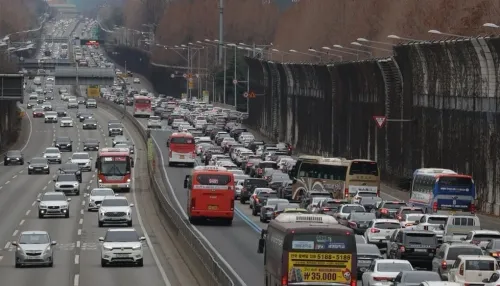
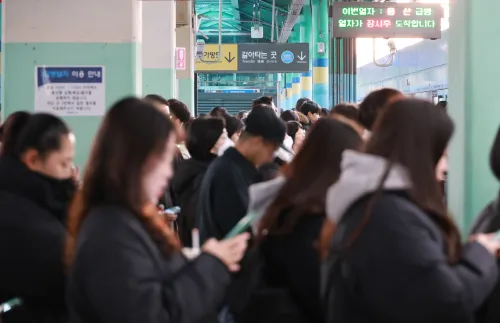
Seoul, April 12 (NationPress) In the first quarter of the year, South Korea's railroad services saw a remarkable surge, with passenger numbers exceeding 42 million. This increase is attributed to enhanced train operations and escalating oil prices, which have led to a decline in the use of private vehicles.
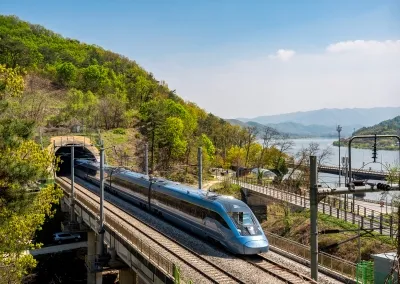
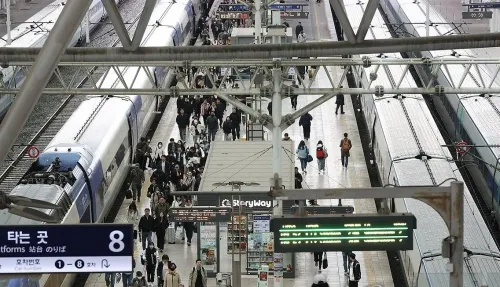
During the January-March timeframe, a total of 42.11 million passengers utilized various railroad lines, including the high-speed KTX. This marks a 2.1 percent increase from the 41.25 million passengers recorded in the same period last year, according to data released by Korea Railroad Corp. (KORAIL) and SR Corp., as reported by Yonhap news agency.
KORAIL noted that the rise in passenger numbers can be partly credited to expanded services, such as the introduction of the KTX-Eum train on the Donghae Line, which operates between Gangneung and Busan six times daily since late last year.
Moreover, the frequency of trains on the Jungang Line has increased significantly, from six to 18 daily trips.
Industry analysts suggest that the escalation in oil prices due to the Middle East conflict that began in late February has contributed to reduced private car usage, thereby increasing demand for public transportation.
In March alone, rail passenger numbers reached 14.62 million, rising 2.4 percent year-on-year and 7.3 percent from the previous month, as indicated by the data.
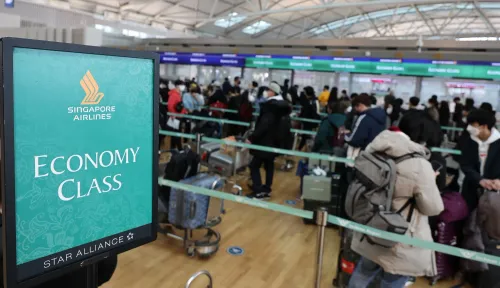
Additionally, the number of international travelers using South Korea's rail services approached 3 million in the first half of last year, nearly doubling compared to two years ago, according to local railway operators.
From January to June, the total number of railway passengers was 85.09 million, with foreign passengers accounting for 2.84 million, or 3.3 percent of the total, as reported by SR, the operator of the SRT high-speed train service, and KORAIL, which manages the KTX high-speed trains and other regular trains.
The number of foreign passengers in the first half surged 13 percent from 2.5 million during the same timeframe in 2024 and skyrocketed 99 percent from 1.43 million in the first half of 2023.
Point of View
It's essential to highlight the significance of this record-breaking number of railroad passengers in South Korea. The data reflects broader trends in transportation and energy consumption, underscoring how external factors like oil prices can influence public behavior and preferences. This phenomenon not only showcases the resilience of public transport systems but also emphasizes the need for sustainable travel options.
NationPress
19 Sept 2026
Frequently Asked Questions
What contributed to the rise in railroad passengers in South Korea?
The increase in railroad passengers can be attributed to expanded train services and rising oil prices, which have made public transportation more appealing compared to private vehicle use.
How many passengers used South Korea's railroad services in Q1?
In the first quarter of the year, over 42 million passengers utilized South Korea's railroad services.
What was the percentage increase in passengers compared to last year?
Passenger numbers increased by 2.1 percent compared to the same period last year.
How many foreign passengers used the rail services in the first half of last year?
Nearly 3 million foreign passengers used South Korea's railway services in the first half of last year.
What was the impact of the Middle East conflict on public transportation?
The Middle East conflict led to higher oil prices, which reduced private car usage and increased demand for public transportation.