How is the Money Supply Responding to Rising Corporate and Household Deposits?

Synopsis
In December, South Korea's money supply saw a notable increase fueled by an uptick in corporate and household deposits. Central bank data reveals significant trends in M2, indicating economic shifts that could impact financial markets.
Key Takeaways
South Korea's M2 rose to 4,080.7 trillion won .
0.6% increase from the previous month .
Growth fueled by corporate and household foreign currency deposits .
Net issuance of 4.76 trillion won for Lunar New Year .
6.2% decrease in issuance compared to last year .
Seoul, February 13 (NationPress) The money supply in South Korea experienced an uptick in December compared to the previous month, primarily propelled by a surge in corporate and household deposits in both foreign and domestic currencies, as revealed by central bank statistics released on Friday.
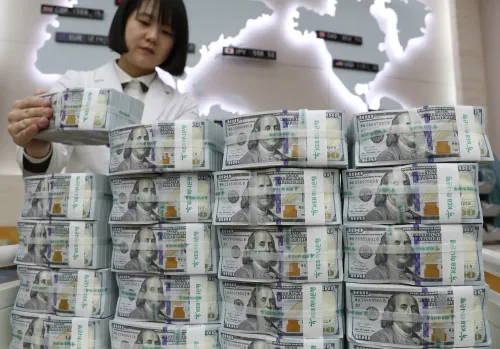
The M2 measure, a crucial indicator of the money supply, averaged 4,080.7 trillion won (approximately US$2.83 trillion) in December, reflecting a 0.6 percent increase from the prior month, according to preliminary data from the Bank of Korea (BOK), as reported by Yonhap news agency.
After a consistent rise since April, the M2 figure recorded its first monthly decline in November. M2 encompasses cash, demand deposits, and other financial assets that can be readily converted.
A BOK official stated, “This growth was largely spurred by foreign currency deposits from both corporations and households, particularly banks' U.S. dollar deposits. Export and import companies notably boosted their trade-related funds.”
The official further noted, “Demand deposits also increased as firms adjusted their year-end financial ratios, while households saw an influx of surplus funds, including bonuses.”
The liquidity rise amounted to 12.9 trillion won among companies, 10.4 trillion won among households and nonprofit entities, and 2.3 trillion won among other financial institutions, according to the data.
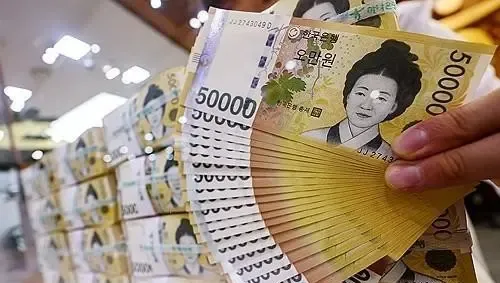
In a related development, the central bank reported that it has issued a net amount of 4.76 trillion won (around US$3.29 billion) in new banknotes for the upcoming Lunar New Year celebrations.
The BOK noted that during the 10 business days leading up to Friday, it supplied 5.03 trillion won in currency to banks and financial institutions while withdrawing 273.5 billion won, resulting in a net supply of 4.76 trillion won.
This net issuance represents a 6.2 percent decrease compared to the same period prior to last year's holiday.
A BOK official explained, “The decrease is due to a shorter Lunar New Year holiday, which has condensed from six days last year to five days this year, separating year-end currency demands from holiday-related cash needs.”
This year’s Lunar New Year is set to be observed on Tuesday, with the holiday extending through Wednesday.
Traditionally, there is an increased demand for fresh bills during the holiday season in South Korea, where it is customary for elders to give cash gifts to younger family members after receiving traditional New Year bows.
Point of View
The Bank of Korea's recent report highlights a significant rebound in the money supply, suggesting a positive economic outlook. The increase in corporate and household deposits reflects an adaptive financial environment, critical for stability in South Korea's economy.
NationPress
14 Oct 2026
Frequently Asked Questions
What is the M2 measure of money supply?
The M2 measure includes cash, demand deposits, and other financial instruments that can be quickly converted to cash.
What factors contributed to the increase in money supply?
The increase was driven by a rise in corporate and household deposits, especially in foreign currencies like the U.S. dollar.
How does the Lunar New Year affect cash demand?
During the Lunar New Year, there is traditionally a higher demand for fresh cash due to customs of giving monetary gifts.
What is the significance of net banknote issuance?
Net banknote issuance reflects the central bank's response to currency demand, influencing liquidity in the economy.
Why did the net issuance decrease compared to last year?
The net issuance decreased due to a shorter holiday period, which separated year-end financial needs from holiday cash demands.