How Did Money Supply Increase in July Amid Gains?
Synopsis
In July, South Korea experienced a noteworthy increase in its money supply for the fourth consecutive month, driven by rising deposits and stock fund inflows. This trend, along with stable interest rates, presents a complex picture of the nation’s financial landscape.
Key Takeaways
Money supply in South Korea increased for the fourth consecutive month.
The M2 measure rose to 4,344.3 trillion won .
Stable interest rates are crucial for financial stability.
Import prices increased despite falling global oil prices.
The local currency depreciated against the U.S. dollar.
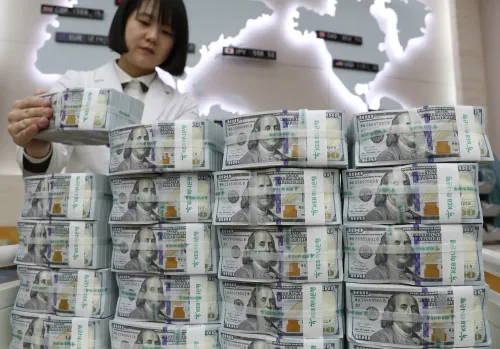
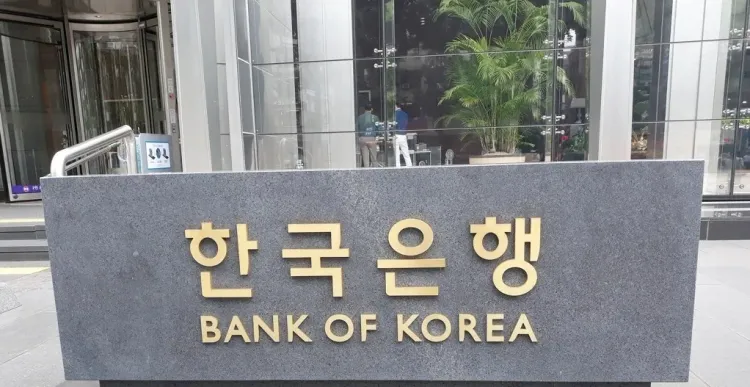
Seoul, Sep 16 (NationPress) The money supply in South Korea saw an increase for the fourth month in a row in July, driven by an uptick in funds and deposits, as indicated by data from the central bank released on Tuesday.
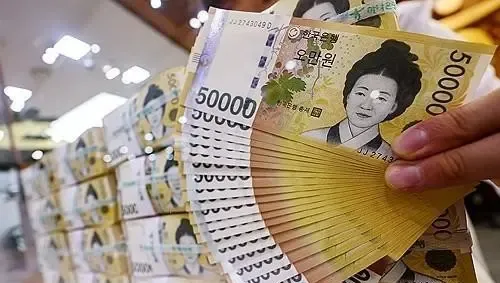
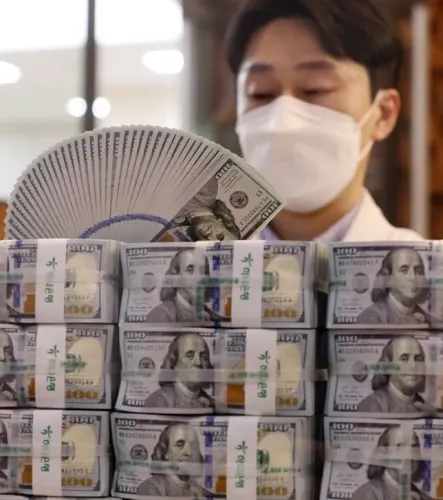
The M2 metric, a significant indicator of the money supply, reached 4,344.3 trillion won (approximately $3.13 trillion) in July, marking a growth of 0.8 percent from the previous month, according to preliminary figures from the Bank of Korea (BOK).
This trend of growth has persisted since April. The M2 measure includes cash, demand deposits, and other easily convertible financial instruments, as reported by the Yonhap news agency.
This monthly increase was attributed to rising deposits and inflows into stock funds. The BOK maintained the benchmark interest rate at 2.5 percent for the second month in a row, aiming to foster financial stability amid ongoing concerns regarding escalating housing prices and household debt.
In May, the BOK had reduced the base rate by a quarter percentage point.
In addition, import prices experienced a rise for the second consecutive month in August, despite a decline in global oil prices, primarily due to a depreciating Korean won, as indicated by central bank data.
The import price index saw a 0.3 percent increase last month compared to the prior month, following a 0.8 percent rise, based on preliminary data from the BOK.
This increase coincided with the local currency depreciating to 1,389.66 won against the U.S. dollar in August, compared to an average of 1,375.22 won per dollar in July, according to the BOK.
Import prices play a crucial role in inflation as they influence production costs and consumer prices throughout the supply chain.
The average price of Dubai crude, South Korea’s benchmark, was recorded at US$69.39 per barrel in August, experiencing a 2.1 percent decrease from the previous month.
Moreover, the export price index also rose for the second month in August, increasing 0.7 percent from the prior month, according to the data.
“In September, the volatility in the won-dollar exchange rate and global oil prices is expected to be minimal, although we need to remain vigilant given the domestic and global uncertainties,” stated BOK official Lee Moon-hee during a press briefing.
Point of View
The recent trends in South Korea’s money supply and import prices highlight a critical period of economic adjustment. As the central bank strives to maintain stability in the face of rising housing prices and household debt, it is essential to monitor these indicators closely. The approach taken by the Bank of Korea will be pivotal in shaping the financial landscape ahead.
NationPress
9 Oct 2026
Frequently Asked Questions
What was the money supply in South Korea in July?
In July, South Korea's M2 money supply reached 4,344.3 trillion won, which is approximately $3.13 trillion.
What factors contributed to the rise in money supply?
The increase in money supply was primarily fueled by rising deposits and inflows into stock funds.
What is the current interest rate in South Korea?
The Bank of Korea has maintained the benchmark interest rate at 2.5 percent for the second consecutive month.
How do import prices affect inflation?
Import prices are crucial as they influence production costs and consumer prices throughout the supply chain.
What was the average price of Dubai crude in August?
In August, the average price of Dubai crude stood at US$69.39 per barrel.