Airline fare rules finalised, to be published in 2 weeks: Centre tells SC
Synopsis
India's Supreme Court has been told that rules to rein in airline fare spikes and hidden charges are finalised and ready to publish — a direct response to a PIL that accused carriers of 'opaque, algorithm-driven' pricing. The two-week publication deadline puts the government on a firm court-monitored clock, with a November 16 review date already set.
Key Takeaways
The Centre told the Supreme Court on 16 October 2026 that airline fare regulation rules have been finalised and granted administrative approval.
The rules will be published within two weeks , placing the deadline around late October 2026 .
A bench of Justices Vikram Nath, R.
Mahadevan and Aparesh Kumar Singh directed that the published rules be placed before it at the next hearing on 16 November 2026 .
The case stems from a PIL by activist S.
Laxminarayanan challenging surge pricing and the reduction of baggage allowance from 25 kg to 15 kg .
Rules are being framed under the Bharatiya Vayuyan Adhiniyam, 2024 , India's new civil aviation law.
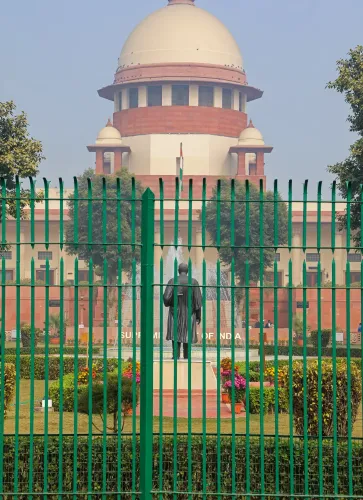
The Supreme Court was informed on Friday, 16 October 2026, that rules to regulate airfares and additional charges levied by airlines have been finalised and granted administrative approval, with the Centre assuring the bench they would be published within two weeks. The development marks a significant step in a long-running legal battle over what petitioners have called 'opaque, exploitative and algorithm-driven' pricing in India's civil aviation sector.
What the Supreme Court Said
A bench comprising Justice Vikram Nath, Justice R. Mahadevan, and Justice Aparesh Kumar Singh took note of the submission made by Solicitor General Tushar Mehta, appearing on behalf of the Centre. The bench directed that once published, the rules be placed before it at the next hearing. The matter has been listed for further consideration on 16 November 2026.
In an earlier session, the Justice Vikram Nath-led bench had orally observed that there needed to be 'rationalisation' in airfares charged by private airlines. 'Try to give some relief to people. On the same day, flights to the same destination — one airline charges Rs 8,000 while another charges Rs 18,000 in economy class. There has to be some rationalisation,' the court had remarked.
Background: The PIL and Its Core Concerns
The proceedings stem from a public interest litigation (PIL) filed by social activist S. Laxminarayanan, challenging allegedly arbitrary and exploitative pricing practices in the civil aviation sector. The petition specifically flags unpredictable fare spikes during festive seasons, holidays, and other peak travel periods, arguing these cause hardship to passengers travelling for medical, educational, or employment-related reasons.
The plea also challenges the reduction in complimentary check-in baggage allowance from 25 kg to 15 kg, contending that passengers are now billed separately for services that were previously bundled into ticket prices. The petitioner has sought either a comprehensive regulatory framework or the establishment of an independent aviation tariff regulator to oversee fare structures, monitor airline compliance, and address passenger grievances.
The Regulatory Framework Being Built
The Centre had previously informed the court that rules under the Bharatiya Vayuyan Adhiniyam, 2024 were being framed to specifically address airline pricing and additional charges. The Union government assured the apex court that concerns raised in the PIL — including surge pricing, excess baggage charges, and opaque fare structures — were being examined 'at the highest level.'
Notably, the Bharatiya Vayuyan Adhiniyam, 2024 replaced the older Aircraft Act and is intended to modernise India's civil aviation regulatory architecture. Framing fare-related rules under this new law signals a more structured approach compared to the ad hoc advisories that characterised earlier government responses to airline pricing controversies.
What Happens Next
With the Centre's two-week deadline placing the publication around late October 2026, all eyes will be on the scope and enforceability of these rules. Whether they merely mandate transparency in fare display or impose actual pricing guardrails — such as caps on surge pricing — will determine the real-world relief available to passengers. The next Supreme Court hearing on 16 November 2026 is expected to review the published rules and assess whether they address the PIL's core demands.
Point of View
And the Bharatiya Vayuyan Adhiniyam 2024 is untested on enforcement. The Supreme Court's decision to schedule a November 16 review, rather than simply accepting the government's assurance, signals that the bench is monitoring compliance, not just recording it. The deeper question — whether India needs an independent aviation tariff regulator, as the PIL demands — is one the published rules will likely sidestep, kicking that structural debate further down the road.
NationPress
16 Oct 2026
Frequently Asked Questions
What are the new airline fare rules being finalised by the Centre?
The Centre has finalised rules under the Bharatiya Vayuyan Adhiniyam, 2024 to regulate airfares and additional charges levied by airlines. They address surge pricing during peak travel periods, opaque fare structures, and ancillary charges, and are expected to be published within two weeks of 16 October 2026.
Why has the Supreme Court been hearing this case on airline fares?
The Supreme Court is hearing a PIL filed by social activist S. Laxminarayanan, which challenges allegedly exploitative and algorithm-driven airline pricing, sharp fare spikes during festivals and emergencies, and the reduction of complimentary baggage allowance from 25 kg to 15 kg. The court has repeatedly urged the Centre to offer relief to passengers.
When is the next Supreme Court hearing on airline fare regulation?
The Supreme Court has listed the matter for further hearing on 16 November 2026, by which time the Centre is expected to have published the finalised rules and placed them before the bench.
What is the Bharatiya Vayuyan Adhiniyam, 2024?
It is India's new civil aviation law that replaced the older Aircraft Act, modernising the country's regulatory framework for the aviation sector. The Centre is framing airline fare and additional-charge rules specifically under this legislation.
What relief has the petitioner sought in the PIL?
The petitioner has sought a comprehensive regulatory framework for airline pricing or the establishment of an independent aviation tariff regulator to oversee fare structures, monitor compliance, and address passenger grievances — particularly around surge pricing and baggage charge increases.