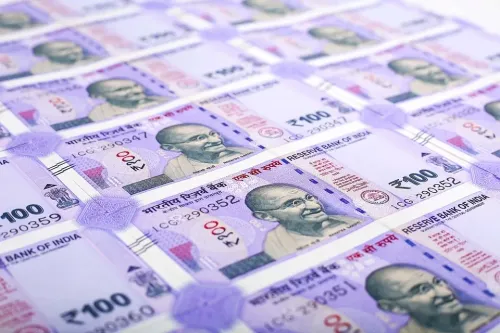
Indian Rupee Hits Record Low, Surpassing Rs 92 Amid Middle East Tensions

Synopsis
As geopolitical tensions escalate in the Middle East, the Indian rupee has plummeted to a record low of Rs 92 per dollar. Oil prices have surged, triggering concerns about supply disruptions and inflation. Experts advise caution for importers as the currency market reacts to these developments.
Key Takeaways
The Indian rupee has reached a historic low of Rs 92.38 against the dollar.
Oil prices have surged due to geopolitical tensions in the Middle East.
Disruptions in the Strait of Hormuz could significantly impact India's energy imports.
Experts advise caution for importers and recommend monitoring the market closely.
The economic landscape remains uncertain amid rising inflation concerns.
New Delhi, March 4 (NationPress) The Indian rupee fell to an unprecedented low on Wednesday, surpassing Rs 92 per dollar as oil prices skyrocketed due to rising geopolitical tensions in the Middle East.
The national currency was trading at Rs 92.38 for each dollar, marking an increase of 35 paise or 0.38 percent compared to the previous session.
Reports indicate that Brent crude prices surged to as high as $85 per barrel recently, driven by escalating military tensions involving the United States, Israel, and Iran.
On the same day, WTI crude rose above $75 a barrel, extending a two-day gain of around 11 percent. Meanwhile, Brent was trading close to $81 a barrel amid shipping disruptions in the Strait of Hormuz, raising concerns about the supply chain.
The closure of this strategic waterway could potentially impact nearly 40 percent of India’s energy imports.
The currency and fixed income markets were closed on March 3 due to a public holiday for Holi.
Experts advised importers to wait for favorable dips to purchase dollars and to keep a close eye on the RBI's actions regarding the rupee.
The overall sentiment remains positive as long as the exchange rate stays above the 90.8–91 support zone, analysts noted.
A sustained position above 92.20 could lead to further gains toward 92.50–92.80, potentially resulting in new highs if risk-averse flows and oil-driven dollar strength continue, according to market participants.
A recent report from Bajaj Finserv AMC highlighted that markets faced challenges from steep US tariffs, rising geopolitical tensions, and persistent foreign portfolio investment (FPI) outflows, which led to the rupee reaching an all-time low despite a favorable domestic environment characterized by steady growth and moderate inflation.
This report further noted an improvement in sentiment following announcements regarding the India–US trade deal.
Iran's retaliatory strikes on oil and gas facilities have intensified fears of supply disruptions, causing oil prices to rise and igniting inflation concerns. Tehran reportedly targeted oil and gas infrastructure in Saudi Arabia and threatened shipping in the crucial Strait of Hormuz.
Point of View
Reaching an all-time low against the dollar, signals significant concerns regarding rising oil prices and geopolitical tensions in the Middle East. While analysts suggest strategies for importers, the broader economic landscape remains influenced by external factors, raising questions about stability and growth in the coming months.
NationPress
29 Sept 2026
Frequently Asked Questions
What caused the Indian rupee to fall?
The Indian rupee has fallen due to a surge in oil prices linked to escalating geopolitical tensions in the Middle East, particularly involving the US, Israel, and Iran.
What is the current exchange rate of the Indian rupee?
As of March 4, the Indian rupee is trading at Rs 92.38 per dollar.
How does the Strait of Hormuz affect India?
The Strait of Hormuz is crucial for India's energy imports, with reports suggesting that disruptions could impact nearly 40 percent of these imports.
What should importers do in this situation?
Analysts recommend that importers wait for favorable dips to buy dollars and closely monitor actions from the Reserve Bank of India regarding the rupee.
What are the broader implications of the rupee's decline?
The rupee's decline could lead to inflationary pressures and affect economic stability. It reflects the interconnectedness of global events and local markets.