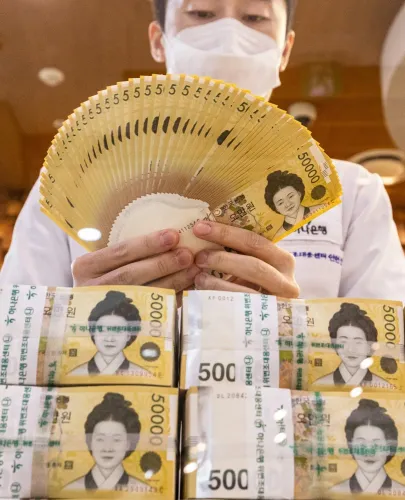
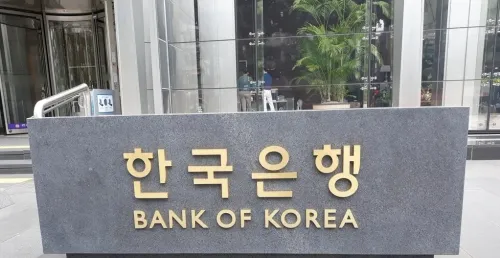
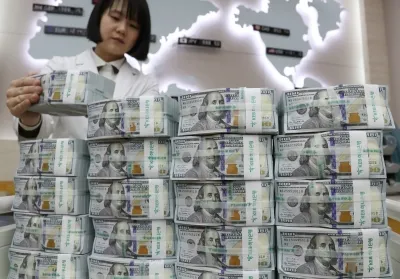
South Korea uncovers $1.61 billion in forex crimes through May 2026
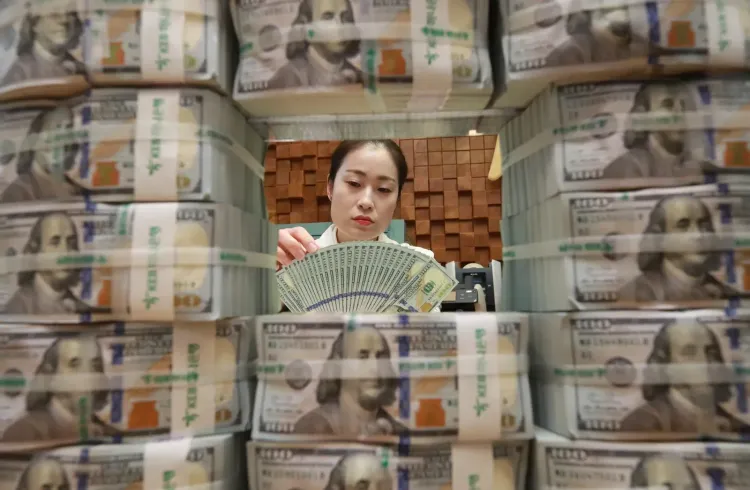
Synopsis
South Korea has uncovered $1.61 billion in illegal foreign exchange transactions in just five months — and the crackdown is no coincidence. With the Korean won under pressure and a new administration staking its economic credibility on a 3% growth target that outpaces IMF and OECD projections, Seoul is simultaneously tightening enforcement and projecting confidence. The record $138.3 billion trade surplus is the real card up its sleeve.
Key Takeaways
South Korea detected 2.4 trillion won ($1.61 billion) in illegal foreign exchange transactions through May 2026 .
The Korea Customs Service referred 84 cases to prosecutors as part of the enforcement sweep.
The finance ministry, customs service, and tax agency pledged stronger coordination to combat offshore tax evasion and illicit currency flows.
South Korea posted a record trade surplus of $138.3 billion in the first half of 2026 , supporting the won's outlook.
The government revised its 2026 GDP growth forecast to 3% , up 1 percentage point , exceeding IMF , OECD , and ADB estimates of 2.6% .
First Vice Finance Minister Lee Hyoung-il framed the outlook as the Lee Jae Myung administration's first full year of economic stewardship.
South Korea detected illegal foreign exchange transactions worth 2.4 trillion won ($1.61 billion) through May 2026, the Ministry of Finance and Economy announced on Tuesday, 14 July, as authorities intensified surveillance amid sharp volatility in the Korean won. The disclosure came during an inter-agency meeting convened specifically to address mounting concerns over illicit currency flows following the won's recent slide against the US dollar.
Scale of Illegal Transactions
The Korea Customs Service revealed it had referred a total of 84 cases involving illegal foreign exchange transactions to prosecutors through May. The finance ministry, the customs service, and the national tax agency collectively pledged to deepen coordination in order to root out offshore tax evasion and track illicit foreign currency movements. The sweep reflects a broader tightening of regulatory oversight as the won's depreciation created conditions that historically incentivise capital flight and under-reporting.
Currency Market Outlook
Lee Hyung-ryul, Director General for International Finance at the ministry, said the supply-demand balance in the foreign exchange market is 'gradually improving', supported by foreign currency inflows from exporters. He added that South Korea is expected to undergo a structural shift in foreign currency supply in the second half of 2026, underpinned by strong economic fundamentals — most notably a record trade surplus of $138.3 billion in the first half of the year. Notably, this surplus figure provides a significant natural buffer against sustained currency weakness.
Growth Forecast Revised Upward
In a separate but related development on the same day, the South Korean government revised its 2026 economic growth projection upward to 3% — an increase of 1 percentage point from its previous outlook. The revised figure surpasses the 2.6% estimates issued by the International Monetary Fund (IMF), the Organisation for Economic Co-operation and Development (OECD), and the Asian Development Bank (ADB). The ministry attributed the upgrade to a semiconductor supercycle and easing uncertainties surrounding the Middle East.
New Administration Takes the Wheel
First Vice Finance Minister Lee Hyoung-il addressed a press conference in the central city of Sejong, stating: 'This is the first year in which the Lee Jae Myung administration is taking full responsibility for the country's economic management.' The remark signals that the new government is staking its credibility on delivering the upgraded growth target, even as global headwinds — including US monetary policy uncertainty — remain unresolved.
What Comes Next
The Ministry of Finance and Economy's second-half economic policy plan sets the direction for fiscal and regulatory action through December. Analysts will watch whether the coordinated enforcement push translates into sustained deterrence or remains a one-off sweep. With the won's trajectory and a record trade surplus both in focus, South Korea's foreign exchange policy will remain under close scrutiny in the months ahead.
Point of View
But the more revealing detail is the timing: South Korea launched this crackdown precisely as the won weakened, suggesting the sweep is as much about signalling currency-market discipline as it is about prosecution. The simultaneous upward revision of the growth forecast — above every major multilateral institution's estimate — carries political weight for the new Lee Jae Myung administration, which needs an early economic win. The record trade surplus gives Seoul genuine ammunition, but a 3% growth call that outpaces the IMF by 40 basis points will face intense scrutiny if global semiconductor demand softens in the second half.
NationPress
12 Oct 2026
Frequently Asked Questions
How much in illegal forex transactions did South Korea uncover?
South Korea's authorities detected illegal foreign exchange transactions worth 2.4 trillion won, equivalent to approximately $1.61 billion, covering the period through May 2026. The findings were disclosed by the Ministry of Finance and Economy on 14 July 2026.
How many forex crime cases were referred to prosecutors?
The Korea Customs Service referred a total of 84 cases involving illegal foreign exchange transactions to prosecutors through May 2026. The crackdown was part of a coordinated inter-agency effort involving the finance ministry and the national tax agency.
Why is South Korea cracking down on forex crimes now?
The enforcement push comes amid volatility in the currency market following the Korean won's recent slide against the US dollar, which authorities say has heightened the risk of illegal capital outflows and offshore tax evasion.
What is South Korea's revised economic growth forecast for 2026?
The South Korean government revised its 2026 GDP growth forecast upward to 3%, an increase of 1 percentage point from its earlier projection. This exceeds the 2.6% estimates issued by the IMF, OECD, and ADB, with the government citing a semiconductor supercycle and reduced Middle East uncertainty.
What role does the trade surplus play in South Korea's currency outlook?
South Korea recorded a record trade surplus of $138.3 billion in the first half of 2026, which officials say is supporting foreign currency inflows and gradually improving the supply-demand balance in the forex market. The surplus is expected to underpin a structural shift in foreign currency supply in the second half of the year.