South Korea to ease diesel export cap in November amid stable crude supply
Synopsis
South Korea is cautiously loosening its grip on diesel exports — raising the cap from 100% to 110% of year-earlier volumes from November — while keeping a trigger clause to snap the restrictions back if supply falters. The move coincides with business confidence hitting its highest point since mid-2022, driven by semiconductor, auto and shipbuilding momentum.
Key Takeaways
South Korea will raise its diesel export cap to 110 percent of the same-month year-earlier volume from November 2026 , up from the current 100 percent limit.
The higher cap applies only when refiners fulfil domestic supply obligations and maintain adequate inventories.
The government will immediately reinstate the 100 percent cap if supply concerns re-emerge, citing lingering Middle East tensions.
The Composite Business Sentiment Index (CBSI) rose to 104.2 in October — the highest since August 2022 .
The manufacturing sub-index climbed 6.1 points to 105.6 , also a four-year high, driven by semiconductors, automobiles and shipbuilding.
A strengthening Korean won has helped firms reduce raw material import costs, the Bank of Korea noted.
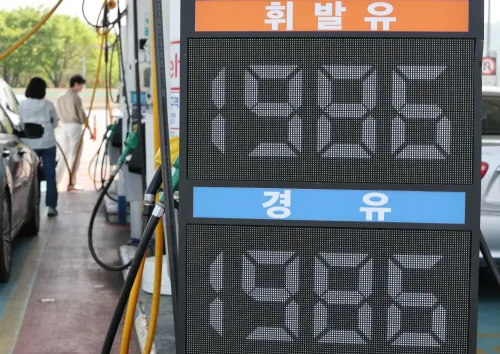
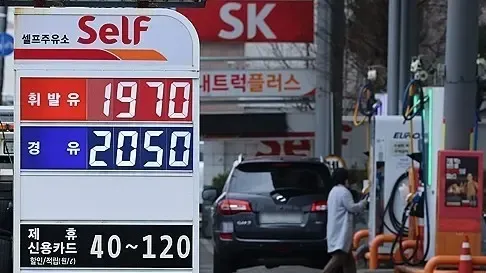
South Korea will partially relax its diesel export restrictions beginning November 2026, the Ministry of Trade, Industry and Resources announced on Thursday, 29 October, conditional on domestic supply remaining stable. The move raises the export ceiling from the current 100 percent of year-earlier volumes to 110 percent, giving refiners slightly more room to ship product abroad.
How the New Cap Works
The higher limit will activate only when oil refiners fulfil their domestic supply obligations and maintain adequate inventories, the ministry said. Crude import volumes for October and November are running at least at 100 percent of last year's monthly average, which the ministry cited as the basis for the relaxation. Should supply conditions deteriorate, the government has made clear it will revert immediately to the stricter 100 percent cap.
Background: Why Restrictions Were Imposed
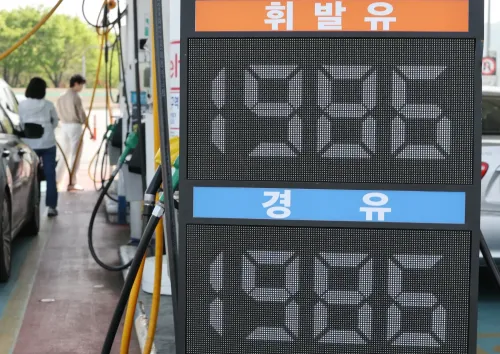
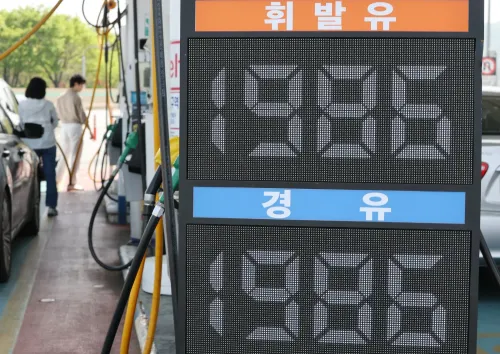
South Korea introduced fuel export controls when it rolled out an oil price cap system in March, aiming to insulate domestic consumers from global price volatility. Local refiners have since lobbied for an easing, arguing that the cap constrains their commercial flexibility without meaningfully affecting domestic availability. The government's conditional approach — tying the higher ceiling to inventory checks — reflects an attempt to balance industry demand with energy security concerns.
Middle East Risk Remains on the Radar
'With tensions in the Middle East lingering, the government will closely monitor the supply of petroleum products and immediately reinstate the previous cap should further supply concerns arise,' a ministry official said. The caveat underscores that the relaxation is not unconditional: geopolitical shocks could trigger a swift reversal with little notice to exporters.
Business Confidence Climbs to Four-Year High
Separately, South Korea's Composite Business Sentiment Index (CBSI) climbed to 104.2 in October, up 5.1 points from the prior month, according to data from the Bank of Korea (BOK). The reading is the highest since August 2022, when the index reached 105.5 in the immediate post-COVID recovery period. Among manufacturers, the CBSI rose 6.1 points month-on-month to 105.6 — the strongest reading in more than four years, since June 2022. A reading above 100 indicates that optimists outnumber pessimists.
'Increased investment and production in major sectors, including semiconductors, automobiles and shipbuilding, boosted related upstream industries,' a BOK official said. 'A strengthening Korean won also helped local firms ease the financial burden of purchasing imported raw materials.'
The manufacturing index had remained above the 100 threshold for four consecutive months before dipping to 99.5 in September; October's rebound marks a return to expansion territory. The confluence of easing export controls and improving business confidence suggests South Korea's industrial sector is moving into a more optimistic phase heading into the year-end.
Point of View
Seoul signals that energy security still trumps refiner profitability. The Middle East caveat is not boilerplate: a single supply disruption event could render the liberalisation moot overnight. Meanwhile, the four-year high in business sentiment, while encouraging, is heavily concentrated in a few export-driven sectors — semiconductors, autos, shipbuilding — making it vulnerable to any demand softening in key markets like the US and China. The structural question is whether this cycle of incremental export relaxations leads to a more durable policy framework, or whether South Korea remains in a perpetual state of conditional openness, never quite committing to either free trade or managed supply.
NationPress
29 Oct 2026
Frequently Asked Questions
What change is South Korea making to its diesel export rules?
South Korea is raising its diesel export cap from 100 percent to 110 percent of the volume shipped in the same month a year earlier, effective from November 2026. The higher limit applies only when domestic supply obligations are met and adequate inventories are maintained.
Why did South Korea originally impose diesel export restrictions?
The restrictions were introduced in March 2026 when the government launched an oil price cap system aimed at maintaining stable domestic fuel supplies. Local refiners subsequently called for the rules to be eased, arguing the caps limited their commercial flexibility.
What happens if supply conditions worsen?
The government has stated it will immediately revert to the stricter 100 percent cap if supply concerns arise, particularly given ongoing tensions in the Middle East that could disrupt crude flows.
What does the Bank of Korea's October business sentiment data show?
The Bank of Korea's Composite Business Sentiment Index (CBSI) rose 5.1 points to 104.2 in October 2026, the highest since August 2022. The manufacturing sub-index climbed to 105.6, a four-year high, driven by growth in semiconductors, automobiles and shipbuilding.
How does a stronger Korean won affect South Korean businesses?
A stronger Korean won reduces the cost of purchasing imported raw materials for domestic firms, improving margins particularly in manufacturing-heavy industries that rely on commodity inputs priced in foreign currencies.