Saudi pipeline shutdown: limited supply impact in short term, South Korea says
Synopsis
South Korea says its oil refiners have already locked in over 90% of near-term crude needs, limiting the immediate supply hit from Saudi Arabia's East-West pipeline attack. But with Seoul weighing a military deployment to the Strait of Hormuz and Korea-US defence talks kicking off in Busan this week, the energy and security dimensions of the Middle East crisis are converging fast.
Key Takeaways
South Korea's Ministry of Trade, Industry and Resources said on Monday the Saudi pipeline shutdown will have only limited short-term impact on crude supply.
Local refiners have secured more than 90% of crude needs for September and October based on previous-year levels.
Vice Industry Minister Moon Shin-hak pledged close coordination with refiners and shippers and activation of the crude oil swap system .
The biannual Korea-U.S.
Integrated Defense Dialogue (KIDD) is set to be held in Busan from Wednesday to Friday this week.
Seoul is reportedly weighing a military deployment to the Strait of Hormuz amid escalating Middle East tensions.
South Korea's Ministry of Trade, Industry and Resources said on Monday that the recent shutdown of a major oil pipeline in Saudi Arabia is expected to have only a limited impact on crude supply in the short term, as local refiners have already secured the bulk of their requirements for the coming months.
Refiners Well-Stocked for Now
According to the ministry, South Korean oil refiners have secured more than 90 percent of the crude needed for September and October based on the previous year's consumption levels. Officials indicated that the latest developments are expected to cause very little shortfall in regard to supply, offering some reassurance to markets that had grown anxious over fresh Middle East tensions.
The pipeline in question is Saudi Arabia's East-West pipeline, a crucial artery that came under attack amid escalating regional tensions. The ministry convened an emergency meeting with industry stakeholders to assess the fallout and coordinate contingency measures.
Government Response and Contingency Measures
Vice Industry Minister Moon Shin-hak pledged that the government would maintain close communication with oil refiners and maritime shippers to prevent disruptions to public supply. 'The government will communicate closely with oil refiners and maritime shippers while closely monitoring supply conditions to prevent any inconvenience to the public,' he said.
Seoul also confirmed it would deploy all available policy tools, including a crude oil swap system with private companies, to cushion any emerging shortfall. The government added it would support shippers seeking to use alternative routes should the situation deteriorate further.
Korea-US Defence Talks Amid Hormuz Concerns
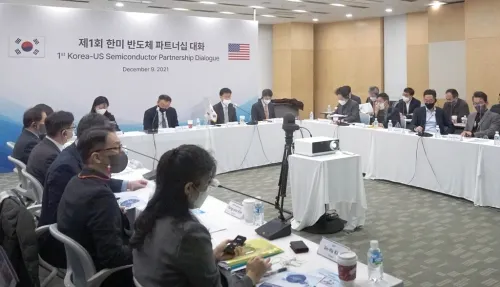
The supply-side anxieties come against a broader security backdrop. South Korea and the United States are set to hold their senior-level biannual defence dialogue — the Korea-U.S. Integrated Defense Dialogue (KIDD) — in the southeastern port city of Busan from Wednesday through Friday this week.
The talks will be led by Kim Hong-cheol, deputy defence minister for policy, and George Lemeur, U.S. deputy assistant secretary of war for East Asia, along with other senior defence and foreign affairs officials. This comes as Seoul is reportedly weighing a possible military deployment to the Strait of Hormuz, through which a significant share of global oil trade passes.
The defence ministry said the KIDD meeting is expected to cover a wide range of pending security issues, 'including (Seoul's) retaking of wartime operational control (OPCON), joint defence posture and cooperation in shipbuilding.'
Broader Middle East Context
The attack on the Saudi East-West pipeline is part of a broader pattern of incidents targeting energy infrastructure in the region. The pipeline, which connects the oil-rich Eastern Province to the Red Sea port of Yanbu, is a critical export bypass route that allows Saudi crude to reach European and other markets without transiting the Strait of Hormuz.
Analysts note that while short-term supply buffers appear adequate for South Korea, a sustained disruption — or further escalation in the Strait of Hormuz — could significantly alter the calculus, particularly for Asia-Pacific importers heavily reliant on Middle Eastern crude.
South Korean authorities say they will continue to monitor the situation closely and are prepared to activate additional contingency measures if conditions worsen.
Point of View
But it is essentially a lagging indicator — contracts signed before the attack rather than evidence that the market has absorbed the shock. The real risk is not September; it is what happens if the Strait of Hormuz becomes a flashpoint. Seoul is hedging both ways: soothing domestic markets while simultaneously weighing a Hormuz deployment that signals it takes the military escalation seriously. The convergence of energy security and defence posture in one week's worth of meetings tells the fuller story that the supply-buffer headline does not.
NationPress
14 Sept 2026
Frequently Asked Questions
What impact will the Saudi pipeline shutdown have on oil supply?
South Korea's industry ministry said on Monday the shutdown of Saudi Arabia's East-West pipeline is expected to have only a limited impact on short-term crude supply. Local refiners have already secured more than 90% of their crude requirements for September and October based on previous-year levels.
Which pipeline in Saudi Arabia was attacked?
The pipeline targeted is Saudi Arabia's East-West pipeline, a major artery that connects the oil-producing Eastern Province to the Red Sea port of Yanbu, enabling crude exports to bypass the Strait of Hormuz. It is considered one of the kingdom's most strategically significant energy infrastructure assets.
What measures is South Korea taking to manage supply risks?
The South Korean government has pledged to closely monitor supply conditions, support shippers using alternative routes, and deploy all available policy tools including a crude oil swap system with private companies. Vice Industry Minister Moon Shin-hak also said authorities would communicate closely with oil refiners and maritime shippers.
What are the Korea-US defence talks this week about?
The biannual Korea-U.S. Integrated Defense Dialogue (KIDD) is being held in Busan from Wednesday to Friday this week. Agenda items include Seoul's retaking of wartime operational control (OPCON), joint defence posture, cooperation in shipbuilding, and broader regional security issues amid Middle East tensions.
Is South Korea considering sending forces to the Strait of Hormuz?
According to reports, South Korea is weighing a possible military deployment to the Strait of Hormuz as regional tensions escalate. The matter is expected to be one of the security issues on the table during the KIDD talks with the United States this week in Busan.